
Beyond the Buffet
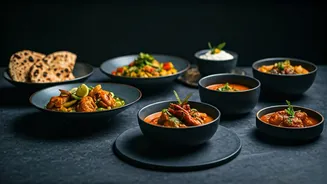
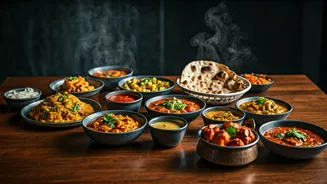
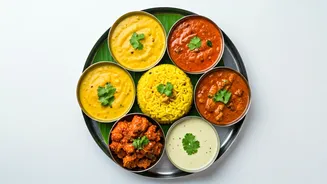
For many Americans, the experience of Indian food was long defined by the all-you-can-eat lunch buffet: a sprawling landscape of chicken tikka masala, saag paneer, and naan, with slight variations from one city to the next. It was comforting, affordable,
and deeply predictable. This model, however, presented a vast and diverse culinary universe—spanning dozens of distinct regional cuisines—as a single, monolithic entity simply called 'Indian food.' That era is rapidly coming to an end. The new guard of Indian restaurants in the U.S. is on a mission to dismantle this generalization. Instead of offering a greatest-hits medley, they are drilling down with obsessive focus on a specific state, village, or community. The goal is no longer to be a catch-all embassy for Indian cuisine, but to be a precise ambassador for the food of, say, Tamil Nadu, Maharashtra, or the Himalayan foothills. This shift from pan-Indian menus to hyper-regional specificity is the foundation of the cuisine’s premium evolution. It’s a declaration that the food is worthy of being understood on its own terms, not as a simplified collection of familiar favorites.
The Chef as a Narrator
At the heart of this movement are chefs who see themselves as storytellers, not just cooks. Take Chintan Pandya, the celebrated chef behind New York City hot spots like Dhamaka and Semma. His philosophy revolves around what he calls 'unapologetic' Indian food. Dhamaka’s menu focuses on the forgotten or overlooked dishes from rural India—the kind of food you’d find at a roadside stall or in a family home, but rarely in a restaurant. Each dish comes with a backstory, connecting it to a place and a people.
Similarly, Vijay Kumar, the chef at Semma (which earned a Michelin star), built his menu around the flavors of his childhood in Tamil Nadu, a southern state rarely represented in American restaurants. The dishes are intensely personal, telling stories of his family, his region’s ingredients, and its culinary traditions. By centering their own histories, these chefs are adding a layer of authenticity and cultural significance that was absent from the previous generation of Indian restaurants. The food isn't just delicious; it’s a direct transmission of a personal and cultural narrative.
A Story in Every Bite
This commitment to storytelling is woven directly into the dining experience. Menus have become narrative guides. A dish isn't just listed as 'goat curry'; it might be described as “Macher Jhol,” a Bengali fish stew made the way a chef’s grandmother prepared it, with specific notes on the use of mustard oil and panch phoran. At Dhamaka, the Gurda Kapoora (goat kidney and testicles) is presented not as a shock-value item but as a beloved street food from Delhi.
This context is crucial. It transforms the meal from a simple transaction into an educational and cultural experience. The diner isn’t just eating; they are participating in a story. This narrative framing invites curiosity and encourages patrons to venture beyond their comfort zones. It provides a 'why' for every dish, justifying its presence on the menu and giving the diner a richer appreciation for what’s on their plate. The story becomes an ingredient as essential as turmeric or cardamom.
The Price of a Good Story
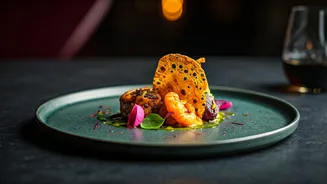
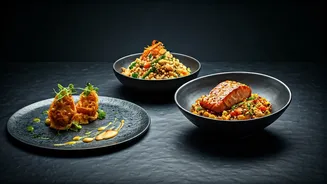
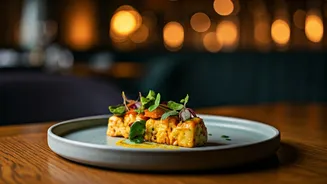
This elevation in storytelling comes with a corresponding elevation in status and price—the 'premium' factor. When a meal is framed as an immersive cultural journey curated by an expert, it commands a higher price than a simple, commoditized plate of food. Restaurants like Semma, Dhamaka, and Washington, D.C.'s Rania are not competing with the $15 lunch buffet; they are positioning themselves alongside other fine-dining establishments.
The strategy is working. Critical acclaim has followed, from rave reviews in The New York Times to coveted Michelin stars and James Beard Awards—accolades that were historically rare for Indian restaurants in the U.S. This recognition validates the cuisine’s place in the upper echelons of the culinary world. Diners are proving willing to pay for the experience, booking tables months in advance. The story, it turns out, creates value, transforming perception and proving that specificity, authenticity, and narrative are the key ingredients in taking Indian food to the next level.