




So, What Exactly Is It?
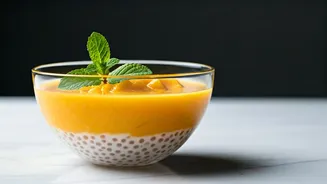
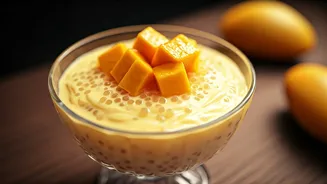
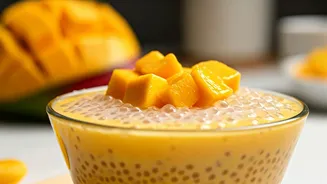
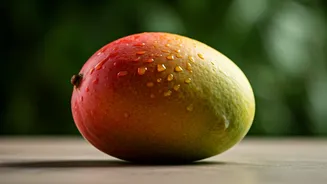
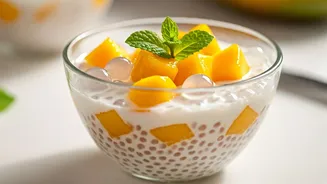
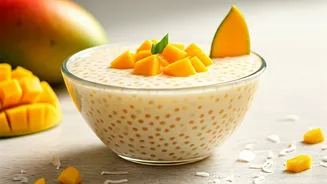
Imagine a vibrant, sun-yellow bowl that’s part pudding, part drink, and entirely delicious. At its heart, Mango Sago is a simple, no-bake dessert built on a few core ingredients. The star is, of course, mango—luscious, ripe, and pureed into a sweet, fragrant
base. This is blended with creamy coconut milk, creating a rich but refreshing liquid. Suspended throughout are tiny, translucent sago pearls, which look like miniature jewels and have a delightfully chewy texture similar to tapioca. To finish, it’s often garnished with fresh, diced mango and sometimes pomelo for a citrusy burst. It’s served chilled, making it the ultimate antidote to a sweltering day.
A Symphony of Textures
The magic of Mango Sago isn’t just its flavor; it's the texture. American desserts often lean into one dominant sensation—the creaminess of mousse, the crunch of a cookie, the density of cheesecake. Mango Sago, however, is a playground for your palate. With each spoonful, you get a complex combination of sensations. There’s the silky smoothness of the mango and coconut puree, followed by the soft, yielding chew of the sago pearls. Then, you hit a piece of fresh, firm mango, delivering a juicy burst that cuts through the creaminess. It’s this textural interplay that makes it so addictive. It’s never boring, and every bite feels like a small discovery.
The King of Fruits, The Star of Summer
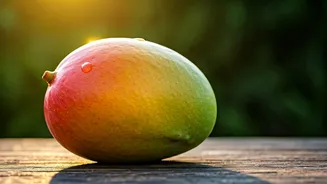
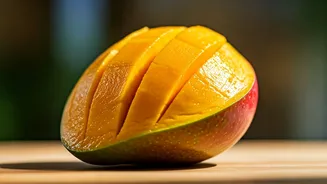
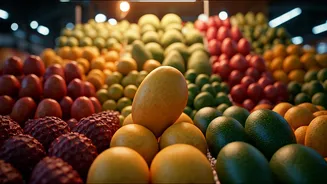
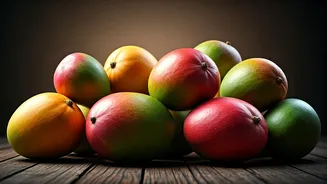
To understand Mango Sago’s dominance, you have to understand the mango’s place in Indian culture. In India, the mango isn’t just a fruit; it's the “king of fruits,” an obsession, and a definitive sign that summer has arrived. The mango season, which runs from March to June, coincides with the most punishingly hot months of the year. The arrival of fragrant Alphonso, Kesar, and Langda mangoes is a national event, a sweet reward for enduring the heat. Consequently, mango-based dishes and drinks aren't just food; they are a celebration of the season. From mango lassis to aamras (a simple puree), the fruit is everywhere. Mango Sago fits perfectly into this tradition, offering a modern, elegant way to enjoy the seasonal bounty.
The Ice Cream Comparison
So, does it really “rule” over ice cream? The headline’s fighting words are more about signaling a cultural shift than declaring a literal victory. Ice cream is a heavy-hitter, often rich with dairy and sugar, that can sometimes leave you feeling even thirstier. Mango Sago, on the other hand, feels profoundly hydrating and light. Since it's typically made with coconut milk, it’s often dairy-free, catering to a growing consumer base. While a scoop of chocolate fudge brownie is pure comfort, a bowl of Mango Sago is like a tropical vacation—bright, breezy, and restorative. It doesn't weigh you down. It cools you from the inside out, quenching thirst and satisfying a sweet tooth in one go.
A Global Phenomenon
While deeply rooted in Indian summers, Mango Sago’s story is pan-Asian. It was popularized in Hong Kong in the 1980s and is a staple dessert across Southeast Asia. Its recent surge in popularity is fueled by social media, where its vibrant color and photogenic nature make it an instant star. Food bloggers and TikTok creators have embraced it, sharing simple recipes that have demystified the dessert for a global audience. As a result, it’s popping up on menus in Indian, Chinese, and modern Asian restaurants across the United States, finding a new and enthusiastic audience ready for a different kind of summer refreshment.