


What Is a Transit, Anyway?
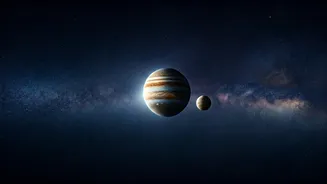
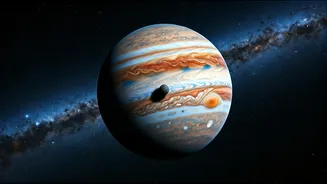
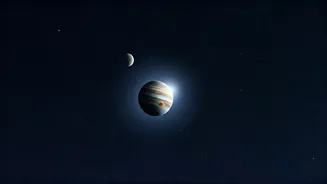
In astronomy, a transit is when one celestial body passes in front of another from the perspective of an observer. For us on Earth, this week’s events involve one or more of Jupiter’s four largest moons—Io, Europa, Ganymede, and Callisto—passing directly
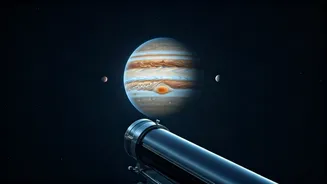
between us and the giant planet. Sometimes you’ll see the tiny, dark shadow of a moon gliding across Jupiter's bright, cloudy surface. Other times, you might see the moon itself as a slightly dimmer or brighter dot against the planet's distinct bands. These events happen regularly, but having multiple, easily observable transits in a single week offers a fantastic opportunity to see our solar system in motion. It’s a dynamic, real-time event, not a static picture in a textbook.
Recreating Galileo's Discovery
When Galileo Galilei first pointed his rudimentary telescope at Jupiter in 1610, he saw four pinpricks of light dancing around it. Night after night, he watched them shift their positions, concluding they were moons orbiting the giant planet. This was a monumental discovery that shattered the long-held belief that everything in the universe revolved around Earth. When you watch these moons today, you’re not just stargazing; you are a direct participant in one of science's most foundational observations. With even modest equipment, you can witness the same evidence that helped redefine humanity's place in the cosmos. It’s a powerful connection to scientific history, available to anyone willing to look up.
The Right Gear For the Show
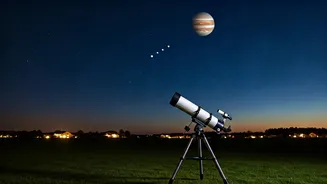
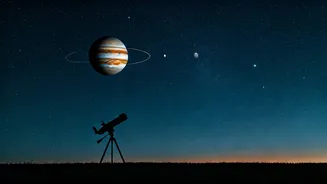
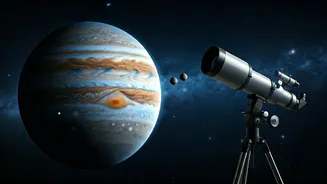
While you can easily spot Jupiter with the naked eye—it will be one of the brightest, most steadfast points of light in the night sky—you'll need some magnification to see its moons and their transits. A good pair of binoculars (10x50 is a great start) mounted on a tripod to keep them steady will be enough to reveal the four Galilean moons as tiny dots of light huddled near the planet. To actually see a moon’s shadow or the disk of the moon itself crossing Jupiter, however, you’ll need a telescope. Any small backyard telescope with at least 50x magnification will do the trick. The view of a tiny black dot marching slowly across the cloud tops of another world is an unforgettable sight.
How and When to Watch
Timing is everything. Jupiter is prominent in the evening sky for most of the U.S. right now, but the exact transit times depend on your specific location and the day you're observing. Don’t worry about complex charts. Your best friend here is a modern astronomy app or website. Free apps like Stellarium or SkyView, or websites like Sky & Telescope, allow you to enter your location and see exactly what the sky will look like at any given time. They will show you Jupiter's position and identify which moons are where. Most importantly, they can provide a minute-by-minute schedule of when transits, shadow transits, and occultations (when a moon disappears behind Jupiter) are set to occur for your specific time zone. Plan to start observing about 15-20 minutes beforehand to get your eyes adjusted and your equipment focused.
Bonus Target: The Great Red Spot
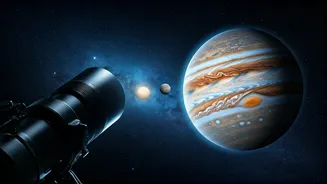
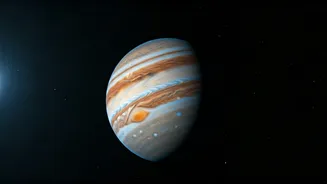
While you’re watching the moons, don’t forget about Jupiter itself. The planet is a spectacle, striped with atmospheric bands of ammonia clouds. Its most famous feature, the Great Red Spot—a colossal storm wider than Earth—also rotates into view. Like the lunar transits, the visibility of the Great Red Spot is predictable. Those same astronomy apps and websites that map the moons will also tell you when the storm will be facing Earth. Catching a moon’s shadow gliding past the edge of this iconic, centuries-old hurricane is an advanced-level observation that is surprisingly achievable for amateur astronomers. It’s a two-for-one deal that makes this week’s sky-watching even more rewarding.