






The Gut-Health Connection
At the heart of digestive wellness is your gut microbiome—a bustling community of trillions of bacteria in your digestive tract. A healthy balance of these microbes is crucial for everything from breaking down food and absorbing nutrients to supporting
your immune system. Probiotics are the “good” bacteria that help maintain this delicate balance. When our diet changes—think heavier foods in the winter or unfamiliar cuisine while traveling—or when stress levels rise, the balance can be disrupted, leading to bloating, irregularity, and general discomfort. This is where probiotic-rich foods and drinks can play a supportive role. By introducing beneficial bacteria, you can help reinforce your gut’s natural defenses and promote smoother, more comfortable digestion, making it easier to navigate those seasonal shifts.
Meet Your Fermented Tonics
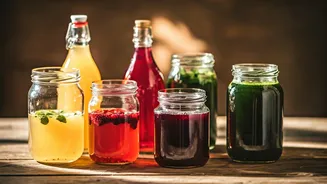
Fermented tonics are drinks that have undergone a process where natural bacteria and yeasts convert sugars into lactic acid, enzymes, and beneficial probiotics. They are, in essence, living beverages. While the idea might sound complex, the results are delicious and diverse. - **Kombucha:** Perhaps the most famous of the bunch, kombucha is a fizzy, slightly tart tea-based ferment. It’s made using a SCOBY (Symbiotic Culture of Bacteria and Yeast) and can be flavored with endless combinations of fruits and herbs. - **Water Kefir:** A lighter, often fruitier alternative, water kefir is made with “grains” (gelatinous structures of bacteria and yeast) that ferment sugar water. It’s dairy-free, fast to brew, and a fantastic starting point for beginners. - **Beet Kvass:** A traditional Eastern European ferment, this earthy, salty, and slightly sour tonic is made from beets, salt, and water. It’s a powerhouse of nutrients and offers a savory flavor profile unlike any other fermented drink.
Your First Brew: Simple Water Kefir
Ready to get started? Water kefir is one of the most forgiving and fastest ferments. You'll need water kefir grains (available online or at health food stores), sugar, and water. **Step 1: The First Ferment.** In a clean quart-sized glass jar, dissolve ¼ cup of cane sugar in 4 cups of non-chlorinated water. Once it’s cool, add your water kefir grains. Cover the jar with a coffee filter or cheesecloth secured with a rubber band. This keeps pests out while allowing carbonation to escape. Let it sit at room temperature for 24-48 hours. It’s ready when the water tastes less sweet and slightly tangy. **Step 2: The Second Ferment (for fizz and flavor).** Strain the kefir grains out and set them aside for your next batch. Pour the fermented liquid into airtight, fermentation-safe bottles (like flip-top Grolsch-style bottles). At this stage, you can add a splash of fruit juice, a few berries, or a slice of ginger for flavoring. Seal the bottles and let them sit at room temperature for another 24 hours to build carbonation. Be sure to “burp” the bottles once or twice to release excess pressure. Once fizzy, move them to the refrigerator to chill and stop the fermentation process. Enjoy your homemade probiotic soda!
Tips for Safe and Successful Fermenting
Home fermentation is a natural process, but food safety is paramount. Follow these simple rules for a successful brew every time. 1. **Start with Cleanliness:** Always use very clean jars, bottles, and utensils. Wash everything in hot, soapy water and rinse thoroughly. Avoid antibacterial soap, as its residue can harm your cultures. 2. **Use the Right Equipment:** Stick to glass for fermenting. Metal can react with the acids produced during fermentation, and plastic can harbor unwanted bacteria and leach chemicals. 3. **Trust Your Senses:** Your ferment should smell pleasantly yeasty, tangy, or vinegary. If you see fuzzy, colorful mold (blue, green, black) or if it smells rotten or “off,” discard the entire batch and start over with a fresh culture. Your safety is not worth the risk. 4. **Manage Carbonation:** During the second ferment, pressure builds up quickly. Keep bottles in a box or cabinet in case one breaks, and always refrigerate your finished tonic to halt fermentation and stabilize the carbonation.