






The Overlooked Superpower: Walking
The simple workout we’re talking about is walking. While it may not have the flashy appeal of a CrossFit class or a marathon, its power lies in its accessibility and consistency. For the vast majority of people, walking is a low-impact activity that can
be done almost anywhere, at any time, for free. It places minimal stress on the joints compared to running, making it a sustainable choice for people of all ages and fitness levels. Health authorities like the CDC consistently champion brisk walking as a key component of a healthy lifestyle, linking it to improved cardiovascular health, stronger bones, better balance, and reduced risk for a host of chronic diseases. It’s not just “better than nothing”—it’s a foundational pillar of lifelong fitness.
What You Actually Need to Start
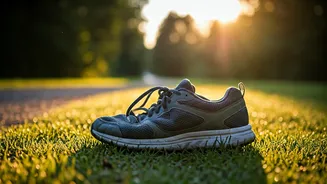
Forget expensive gear. The beauty of walking is its simplicity. The only essential item is a comfortable, supportive pair of shoes. They don’t have to be high-end running shoes; any pair that fits well, supports your arch, and cushions your heel will do. Ill-fitting shoes are the primary cause of discomfort and can lead to blisters or shin splints, so this is the one area worth a little attention. Beyond that, dress for the weather in clothes that allow you to move freely. While fitness trackers and apps can be motivating for tracking steps and distance, they are completely optional. Your goal is simply to get out the door. Don't let a lack of gadgets become an excuse to stay on the couch.
Mastering the Motion and Mindset
You already know how to walk, but a few small tweaks to your form can turn a casual stroll into a legitimate workout. Stand up tall, engaging your core slightly to support your back. Let your gaze fall naturally about 10 to 20 feet ahead of you, keeping your chin parallel to the ground to avoid neck strain. Swing your arms freely from your shoulders (not your elbows) with a slight bend. This arm motion helps power your walk and can increase your caloric burn. Most importantly, focus on your pace. A “brisk” walk means you can still hold a conversation, but you’re breathing noticeably harder. It’s about finding an intentional, energetic rhythm that elevates your heart rate. Your mindset is just as important: view this as dedicated time for your well-being, not just a way to get from one place to another.
Your First Week's Plan
The key to building a new habit is to start small and build momentum. Don’t try to walk five miles on your first day. Instead, aim for consistency. A great starting point is a 15- to 20-minute brisk walk, five days a week. Pick a time that works for you—a morning walk to clear your head, a lunchtime break to reset, or an evening walk to decompress. The goal for the first week isn't to hit a certain speed or distance, but simply to complete the walks you planned. If 15 minutes feels like too much, start with 10. If it feels too easy, push it to 25. Listen to your body and celebrate the act of showing up. Consistency is far more important than intensity when you're just getting started.
Beyond the Block: Making It a Challenge
Once you’ve established a routine, your body will adapt. To continue seeing progress, you’ll need to increase the challenge. There are several ways to do this. You can increase the duration, adding five minutes to your walk each week. You can increase the frequency, going from five days a week to six. Or you can increase the intensity. Try incorporating hills into your route, which is a fantastic way to build leg strength and boost your heart rate. You can also play with speed, alternating between three minutes of brisk walking and one minute of power-walking as fast as you can. Mixing up your route not only keeps things interesting mentally but also ensures your body is constantly adapting to new terrain.