






The Land of Perpetual Mist
Imagine living inside a cloud. That’s the daily reality in Cherrapunji, or Sohra as it’s locally known, a town perched on the edge of a plateau in India’s northeastern state of Meghalaya. For Americans accustomed to checking a weather app for a 30% chance
of precipitation, the sheer scale of Cherrapunji’s rainfall is almost incomprehensible. The town holds records for the most rainfall in a single year—over 900 inches, a figure that dwarfs the annual totals of even the rainiest U.S. cities like Mobile, Alabama (around 67 inches) or Seattle (around 38 inches). This isn’t a gentle drizzle. During the peak monsoon season, from roughly June to September, the rain can be a relentless, deafening force. But it’s the rain’s constant companion, the mist, that truly defines the landscape. Thick fog rolls through the valleys and streets, swallowing entire hillsides and then parting moments later to reveal a view that feels newly created. This constant dance between water and light gives every vista an ethereal, impermanent quality, as if you’re looking at a watercolor painting before the colors have fully set.
Waterfalls from the Heavens
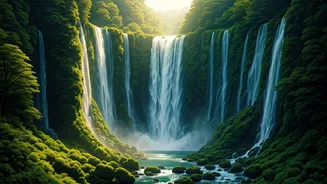
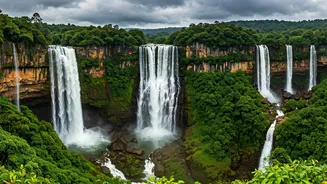
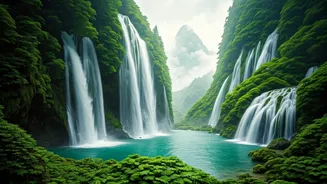
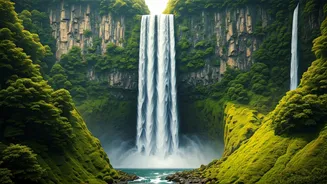
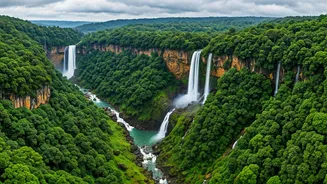
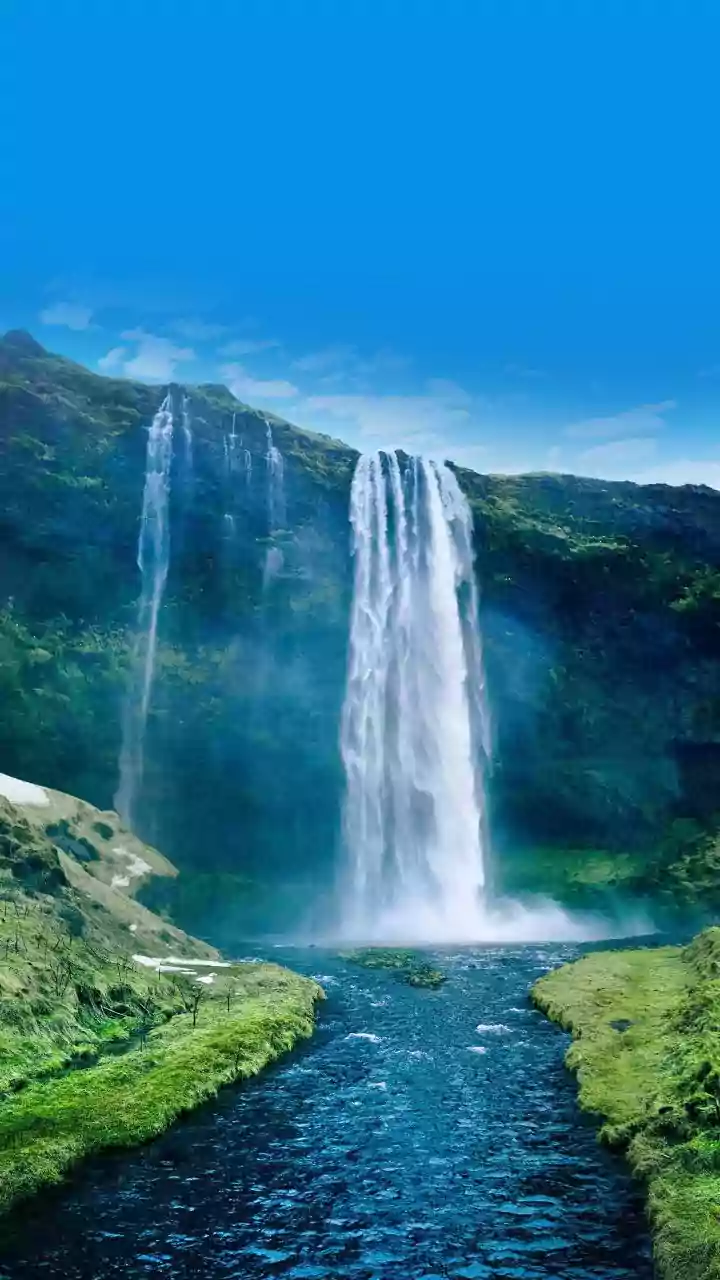
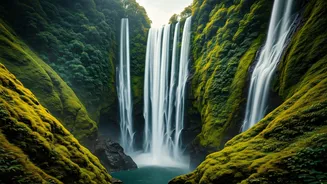
What happens when that much water meets sheer cliffs? It creates some of the most dramatic waterfalls on the planet. Cherrapunji is famous for its plunge waterfalls, which don’t just flow over the edge—they gush, roar, and explode from the clifftops. The most famous, Nohkalikai Falls, is a breathtaking single-drop waterfall that plummets over 1,100 feet into a turquoise pool below. Its origin story is tied to local Khasi legend, adding a layer of poignant history to its staggering beauty. Elsewhere, the Seven Sisters Falls (Nohsngithiang Falls) presents a different kind of spectacle: a series of seven distinct streams cascading side-by-side down a limestone cliff face. During the monsoon, these streams merge into a single, formidable curtain of water. These aren’t just tourist attractions; they are the landscape breathing. The water that falls today might have been a cloud over the plains of Bangladesh just hours before, swept up by the monsoon winds and forced to deposit its moisture by the Khasi Hills.
A World Painted Green
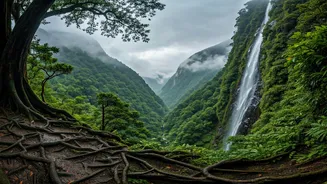
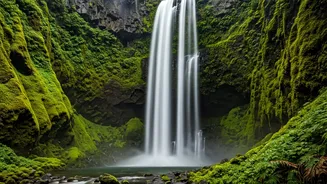
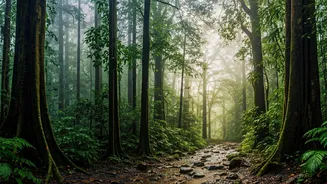
The relentless moisture saturates everything in an impossible spectrum of green. The hillsides are covered in a dense, lush vegetation that seems to vibrate with life. Mosses and ferns carpet tree trunks, ancient stones, and man-made walls, softening every edge and corner. This isn’t the muted green of a temperate forest; it’s a vibrant, almost fluorescent emerald, washed clean daily by the downpours. The air itself is thick with the smell of wet earth, blooming foliage, and petrichor—that distinct, pleasant scent of rain on dry soil. The auditory landscape is just as rich, a constant symphony of dripping leaves, rushing streams, and the distant hum of waterfalls. In this environment, life doesn’t just survive the rain; it thrives on it, adapting to a world where water is the most abundant resource.
The Living Root Bridges of Meghalaya
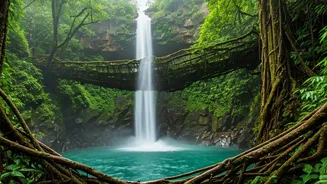
Perhaps the most profound example of human ingenuity in harmony with this wet world is found not in Cherrapunji itself, but in the surrounding villages: the living root bridges. For centuries, the indigenous Khasi and Jaintia peoples have learned to guide the aerial roots of the Ficus elastica tree across rivers and gorges. Instead of building structures that would rot and wash away in the monsoons, they cultivate them. Young roots are woven and directed through hollowed-out tree trunks or bamboo scaffolds until they reach the opposite bank and take hold. Over decades, these roots grow, thicken, and intertwine, forming a living bridge that is impossibly strong, self-repairing, and becomes more robust with each passing year. These bridges, some over a hundred feet long and capable of supporting dozens of people, are a testament to a philosophy of patience and adaptation. They are not built upon the land, but grown from it—a perfect symbol for a place where nature isn’t something to be conquered, but to be lived with.