




More Than Just a Sales Booth
For decades, the path for a new food or beverage product was a high-stakes gamble. An entrepreneur would spend months, even years, perfecting a recipe, investing heavily in packaging, production, and distribution, all before a single customer ever tasted
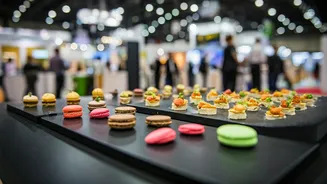
it. The launch was a moment of truth, and failure was expensive and common. Today, a new generation of food startups has flipped the script by using live events as their primary laboratory. Instead of a sterile focus group behind two-way glass, founders are getting unfiltered feedback directly from paying customers. A weekend food festival or a recurring spot at a local market like Brooklyn’s Smorgasburg isn't just a place to make a few thousand dollars in sales; it's a low-cost, high-value data-gathering mission. It transforms the booth from a simple storefront into an interactive research station.
The Live-Fire A/B Test
So what, exactly, are these entrepreneurs testing? Almost everything. A new hot sauce company might offer two versions of their flagship product—one slightly sweeter, one with more heat—and simply track which one sells out faster. They can listen to the exact words customers use to describe the flavor, invaluable intel for future marketing copy. Is it “smoky” or “earthy”? Does the spice “build slowly” or hit you “right away”? Pricing is another key variable tested in real time. Is $12 too much for that artisanal grilled cheese, even with truffle butter? Does a price drop to $10 dramatically increase volume? Founders can experiment with portion sizes, combo deals, and even the name of the dish itself, all while watching customer reactions. A confused look or a moment of hesitation before ordering is data. A customer returning for a second purchase is the ultimate validation. Even the branding—the logo on the tent, the design of the cup—is being beta-tested on a live audience.
De-Risking a Notoriously Tough Industry
The food and beverage industry is famously difficult. Margins are thin, competition is fierce, and consumer tastes are fickle. The traditional model required enormous upfront capital, putting it out of reach for many aspiring entrepreneurs. This new, agile approach dramatically lowers the barrier to entry. The cost of a booth for a weekend might be a few hundred or a few thousand dollars—a fraction of the cost of a commercial lease for a restaurant or the slotting fees required to get a product onto supermarket shelves. This “fail cheap, fail fast” mentality, borrowed from the tech industry, allows food founders to iterate on their product until they find a perfect market fit. If a concept doesn't work, the financial loss is manageable. If it shows promise, the founder now has proof of concept, sales data, and a small but loyal following to show potential investors or retail buyers.
From Food Stall to National Brand
This model has become a well-trodden path to success. Many beloved brands began their journey as a humble stall in a crowded market. They used the direct-to-consumer environment to refine their product, build buzz, and prove that demand existed. Think of a niche kombucha brewer who discovers their lavender-mint flavor consistently outsells all others, or a vegan cookie maker who realizes their packaging isn't catching the eye of their target demographic until they change the color scheme after feedback at a farmers market. This isn't just about small-batch artisans, either. The insights gained are scalable. The recipes that win over the festival crowd are the ones that get mass-produced. The branding that resonates at the pop-up becomes the logo on the grocery store packaging. By the time these products reach a wider audience, they aren't a gamble anymore; they are a proven success, validated by thousands of real-world interactions.