




The End of the Supersize Era
For decades, American dining, particularly at the casual level, operated on a simple principle: bigger is better. We were the land of the bottomless bread basket, the steak that lapped over the plate, and the Cheesecake Factory-sized portion that guaranteed
leftovers for days. Value was measured in volume. Getting your money’s worth meant feeling physically full, even uncomfortably so. But a quiet revolution has been taking place, one that’s recalibrating our definition of a satisfying meal. Slowly but surely, restaurants are offering a new kind of luxury—the luxury of less. You’ll see it as a “half portion” of pasta, a smaller cut of the signature fish, or a “light” version of a classic entree. This isn't just a sad, downsized version of your favorite dish; it's being positioned as a sophisticated choice. And diners are buying in.
An Antidote to Inflation
Let’s start with the least romantic reason: money. Restaurant operating costs have skyrocketed. The price of everything from cooking oil and chicken to labor and rent has forced owners into a difficult corner. They can either raise menu prices dramatically and risk scaring away customers, or they can get creative. The half-size portion is a brilliant piece of financial jujitsu. By offering a smaller version of an entree for, say, 65-70% of the price, restaurants can maintain a more accessible price point. The diner feels like they’re getting a deal, while the restaurant preserves its precious profit margin. It allows chefs to continue using high-quality ingredients without having to charge $50 for a full-size pasta dish. In a world of spiraling costs, the small plate offers a path to survival that feels like an upgrade, not a downgrade.
The Way We Want to Eat Now
This trend wouldn't work if diners weren't ready for it. The shift toward smaller portions perfectly aligns with modern eating habits. Firstly, there's the desire for variety. We live in a tapas and tasting menu world. Why commit to one enormous bowl of carbonara when you could have a small portion of that *and* a half-order of the cacio e pepe? It transforms a standard dinner into a more exploratory, personalized tasting experience. Secondly, it caters to a growing awareness around health and food waste. Many people don't want or need a 2,000-calorie entree. The ability to order a reasonably sized meal that you can actually finish feels responsible and mindful. It grants the diner control—over their budget, their caloric intake, and their experience—which is a powerful currency in today's market.
The True Culinary Flex
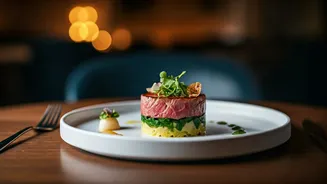
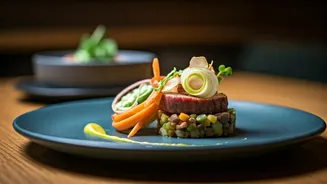
Here's where the "flex" really comes in. For a chef, hiding behind a mountain of food is easy. The true test of skill is making a smaller amount of food utterly memorable. The half-size portion shifts the focus from quantity to quality and execution. It’s a statement of confidence. A chef offering a four-ounce filet instead of a ten-ounce slab is betting that the perfect sear, the exquisite sauce, and the quality of the meat will be so impressive that you won't even think about the size. It's an invitation to pay attention to the details, the technique, and the flavor composition. In this context, offering a smaller portion isn’t about being stingy; it’s about being proud. It says, “This dish is so good, you only need this much to understand what we’re about.” It’s the culinary equivalent of a quiet, confident whisper in a room where everyone else is shouting.