





So, What's the Big Deal?
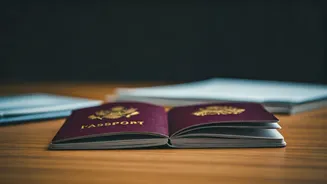
In a widely watched annual survey, the Indian passport recently climbed from 87th to 80th place in the Henley Passport Index, one of the most respected global mobility rankings. This wasn't just a minor shuffle. The improvement meant that Indian passport holders
gained visa-free access to five new countries, bringing their total to 57 destinations. While that number may seem modest compared to the 190+ destinations available to citizens of top-ranked countries like Singapore or Japan, the upward trajectory is what has analysts and travelers talking. It signals a tangible shift in how the world is opening its doors to Indian citizens, reflecting a broader story about the country's growing diplomatic and economic footprint.
The 'Passport Power' Index, Explained
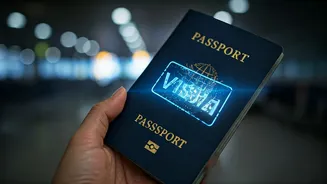
To understand the significance of this jump, you first have to know what the Henley Passport Index measures. Think of it as the 'Dow Jones' of passport power. Published by a London-based advisory firm, the index ranks 199 different passports based on the number of destinations their holders can access without a prior visa. The data is pulled from the International Air Transport Association (IATA), the world's largest database of travel information. A country gets a point for every destination it can access 'visa-free,' with a visa-on-arrival, or via a simple electronic travel authority (ETA). A country gets zero points if a full, pre-approved visa is required. In essence, a higher score means more freedom of movement and less bureaucratic red tape for a country's citizens.
What Fueled India's Climb?
A ten-place jump doesn't happen by accident. It’s the direct result of diplomatic legwork. The improved ranking was driven by India securing new visa-waiver agreements. While the list of countries fluctuates, these agreements are typically forged with nations looking to boost tourism, trade, and investment from India's massive and increasingly affluent population. For instance, countries like Senegal, Indonesia, and Thailand have historically offered easy access to encourage Indian tourists. The recent gains often come from similar nations in Asia, Africa, and the Caribbean recognizing the economic benefit of streamlining entry for Indian travelers. Each new agreement is a diplomatic win that adds another point to India's score and another pin on the map for its citizens.
More Than Just Easier Vacations
For the average person, the immediate benefit is obvious: less paperwork and more spontaneity in travel. But the implications run much deeper. For business professionals, a stronger passport means the ability to attend a last-minute conference in another country without a lengthy visa process. For students, it can simplify studying abroad or attending academic events. For the vast Indian diaspora, particularly in the U.S., it can mean easier family reunions in third countries or simpler global travel for relatives visiting from India. A stronger passport effectively reduces the 'friction' of global mobility, saving time, money, and administrative headaches for millions of people. It’s a practical enhancement of personal and economic freedom.
A Barometer of Global Standing
Ultimately, a passport's rank is a powerful barometer of a country's soft power and geopolitical standing. A nation with strong diplomatic ties, a stable political environment, and a reputation as a reliable partner will find more countries willing to open their borders. India's steady, if sometimes slow, climb in the rankings mirrors its rise as a global economic player and a key voice in international forums. While still far behind the passports of the U.S. (currently ranked 7th) or most of Europe, India has pulled ahead of some neighbors and is closing the gap with other major emerging economies like China (ranked 63rd). The passport index, in this sense, provides a simple, data-driven snapshot of a complex geopolitical reality: as India's global influence grows, so does the power of the document its citizens carry.