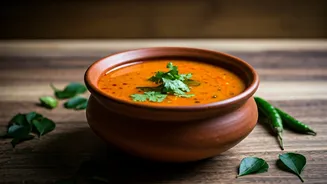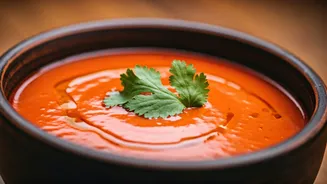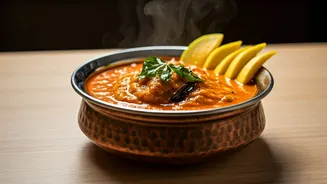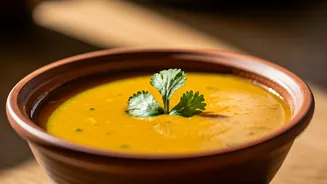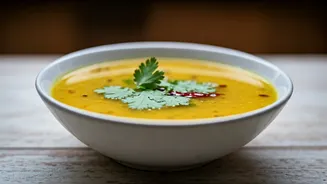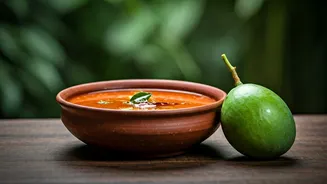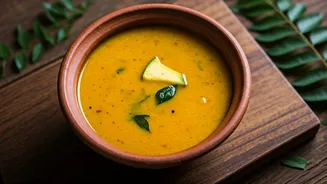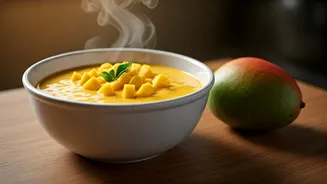




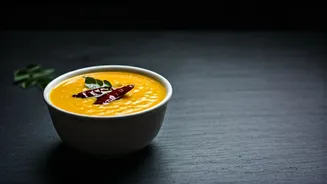
First, What Is Rasam?
Before we get to the mango, let’s talk about rasam itself. In the U.S., we tend to lump all liquidy bowl-based dishes into the “soup” category. But in South India, rasam occupies its own unique space. It’s not an appetizer you have before the meal; it’s
a crucial part of the main course. The name comes from the Tamil and Sanskrit word for “juice” or “essence,” and that’s the perfect description. It’s a thin, watery broth, but it’s absolutely packed with flavor. The traditional base is a tart tamarind broth infused with a potent mix of black pepper, cumin, tomatoes, and garlic. It’s peppery, sour, and deeply savory. Served in small portions, it’s often mixed with plain steamed rice or sipped on its own between courses to cleanse the palate and aid digestion. Think of it less like a bisque and more like a flavor-blasted consommé with a purpose.
The Summertime Glow-Up
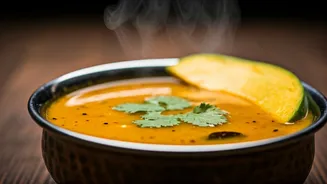
So, where does the mango come in? That’s the genius, seasonal twist that elevates this dish from a staple to a celebration. Known as *Mambazha Rasam* in parts of South India, this version is typically made only when ripe, sweet mangoes are at their peak. It’s not about using any mango; it’s about using the intensely fragrant, honey-sweet ones that define the summer season. The sweet mango pulp is blended into the traditional rasam base, creating a spectacular collision of flavors. The natural sweetness of the fruit doesn’t overpower the dish. Instead, it dances with the sour tamarind and the spicy heat of the pepper, creating a perfect trifecta of sweet, sour, and spicy that is utterly addictive. This isn’t some year-round menu item; its fleeting seasonality is part of what makes it so special.
A Symphony of Flavor and Aroma
Describing the taste of mango rasam is like trying to describe a color. It’s a full-sensory experience. You get the immediate tangy punch from the tamarind, quickly followed by the luscious, fruity sweetness of the mango. Then comes the slow-building heat from freshly ground black pepper and perhaps a dried red chili. But the complexity doesn’t stop there. The final step in making any good rasam is the *tadka* (or tempering), a technique where whole spices are bloomed in hot ghee or oil and poured over the dish at the very end. For mango rasam, this often includes mustard seeds that pop and release a pungent warmth, cumin for earthiness, and fragrant curry leaves that sizzle and perfume the entire broth. The result is a dish with layers of flavor that unfold with every sip—bright, spicy, sweet, savory, and aromatic all at once.
It's Not Just a Soup, It's an Experience
If you see mango rasam on a menu, don’t treat it like a bowl of lentil soup. You’re not meant to dunk crusty bread in it or eat it as a standalone meal. The traditional way to enjoy it is in a small bowl or cup. You can pour a little over a mound of hot basmati rice, using your fingers or a spoon to mix it in, creating a perfectly seasoned, soupy rice for each bite. Alternatively, you can simply sip it. Its light consistency and digestive spices make it an ideal palate cleanser, preparing your taste buds for the next course or providing a comforting, satisfying end to a rich meal. It’s a moment of bright, intense flavor, not a heavy, filling dish. It’s a reset button for your palate that happens to be outrageously delicious.