
First, What Is a Kairi?
Before we get to the peel, let’s talk about the fruit. ‘Kairi’ is the Hindi word for a raw, green mango. Unlike the sweet, juicy orange mangoes that signal summer in the U.S., kairi is tart, firm, and bracingly sour. For centuries, it has been a cornerstone
of Indian and Southeast Asian cuisine, prized for its ability to cut through richness and add a puckering tang to everything it touches. It’s the star ingredient in refreshing summer drinks like *aam panna*, the foundation of countless pickles (*achar*), and the sour secret weapon in chutneys and curries. While the sweet mango is a dessert, the raw kairi is a culinary workhorse.
The Traditional Role of the Peel
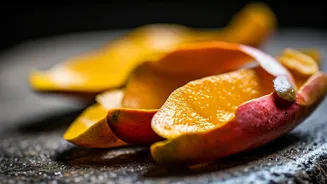
In most Western preparations, the fruit peel is the first thing to go. But in many culinary traditions, particularly those focused on minimizing waste, peels are an integral part of the recipe. In the context of kairi, the peel is often left on when making whole-mango pickles. It softens during the pickling process, absorbing the spices and oil while contributing its own unique, slightly bitter flavor and fibrous texture. This isn’t a new health hack; it’s a centuries-old practice rooted in frugality and a deep understanding of the ingredient. The peel adds complexity and structure, proving that the parts we often discard hold their own kind of value.
The Modern 'Main Character' Glow-Up
So how did a supporting player in traditional pickles suddenly get top billing? Enter the modern wellness and food-waste-reduction movements. On platforms like TikTok and Instagram, a new generation of creators is 'discovering' the potential of fruit scraps. Kairi peels, or more broadly, mango peels, are being touted for their hidden nutritional benefits. We’re seeing them blended into smoothies for extra fiber, steeped in hot water to create a 'detox' tea, or dehydrated and ground into a powder to be sprinkled on yogurt bowls. This isn’t about making pickles; it’s about extracting every last drop of perceived nutritional value in the most aesthetically pleasing way possible. The humble peel has been rebranded as a bio-hack.
The Nutritional Lowdown (and a Reality Check)
There is some science to back up the hype. Mango peels are rich in polyphenols, carotenoids, and fiber. They contain a significant amount of mangiferin, a powerful antioxidant being studied for various health benefits. So, from a purely nutritional standpoint, tossing the peel means tossing out some valuable compounds. However, there are some major caveats. Non-organic mango peels can have pesticide residues that are difficult to wash off completely. Furthermore, mango skin contains urushiol, the same compound found in poison ivy. While the concentration is low, it can cause an allergic reaction known as contact dermatitis in sensitive individuals. And let's be honest: for most people, the taste is intensely bitter and the texture is tough and fibrous—a far cry from the sweet flesh.
Should You Actually Try It?
If you’re curious to explore the world of kairi peels, it’s best to dip your toe in the water with tradition rather than diving headfirst into a wellness fad. Instead of gnawing on a raw peel, start by seeking out a South Asian grocery store. Buy some firm, green kairi and look up a recipe for a classic Indian pickle that uses the whole fruit. This way, you experience the ingredient as it was meant to be eaten—its bitterness balanced by salt, spice, and oil, its texture transformed by time. If you do want to experiment, be sure to use organic mangoes and wash them thoroughly. Steeping a small piece of the peel in tea might be a good starting point to see how your body, and your taste buds, react.