


Know the Flash Flood Rules
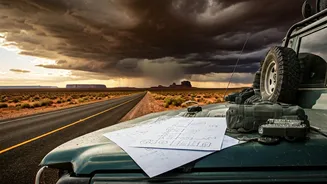
The number one danger of monsoon season isn't the rain itself, but where it goes. The baked, hard-packed desert soil can't absorb water quickly, turning dry riverbeds (arroyos or washes) and canyons into raging torrents in minutes. The National Weather
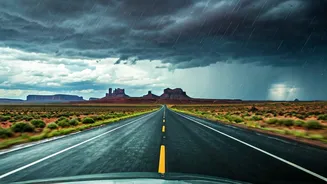
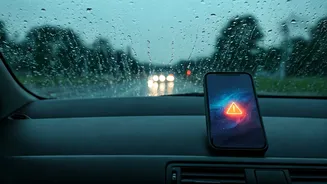
Service’s mantra is your best friend: “Turn Around, Don't Drown.” It takes only six inches of moving water to knock you off your feet and just a foot to sweep a vehicle away. Never drive through a flooded roadway, no matter how shallow it looks. The road beneath could be completely washed out. Be especially cautious when hiking in slot canyons; a storm miles upstream can send a deadly wall of water your way with no warning. Check flash flood forecasts before you even leave your hotel.
Master the Dust Storm Drill
A towering wall of dust, known as a haboob, can reduce visibility to zero in seconds. If you see one approaching on the highway, do not try to outrun it. The Arizona Department of Transportation has a life-saving protocol: “Pull Aside, Stay Alive.” Immediately pull your vehicle as far off the road as possible. Turn off your engine and, most importantly, turn off all your lights—including your hazard lights. Why? In a dust storm, drivers often instinctively follow the tail lights ahead of them, which can lead them to crash into your parked car. With your lights off, you’re no longer a target. Keep your foot off the brake pedal (so your brake lights are off) and wait for the storm to pass. It’s usually over in a few minutes.
Check Your Vehicle Twice
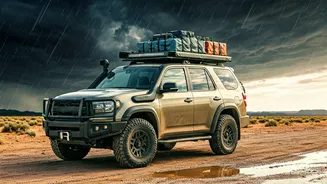
Your car is your lifeline. Before you go, give it a thorough inspection with monsoon conditions in mind. First, your tires. Worn treads are a massive liability when a sudden downpour hits hot, oily asphalt, creating an incredibly slick surface. Ensure your tires have adequate tread depth and are properly inflated. Second, your windshield wipers. Don’t wait to discover your wipers are cracked and useless in the middle of a blinding deluge. Replace them if they’re even slightly worn. Finally, top off all your fluids, especially windshield washer fluid, which you’ll need to clear away the mud and grime that gets kicked up onto your windscreen after a storm.
Build a Real Survival Kit
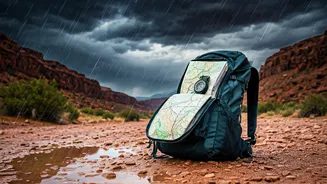
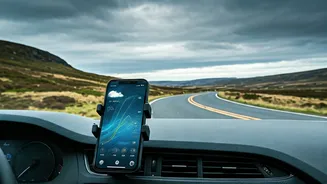
A standard roadside emergency kit is a good start, but a monsoon trip requires upgrades. The most critical addition is extra water—at least one gallon per person, per day. A storm might trap you for hours, and the desert heat returns quickly. Also pack non-perishable, high-energy snacks. Your GPS and phone maps may fail when you lose a signal in a remote area or the cell network is down, so pack a physical paper map of the region as a backup. A portable power bank for your phone is essential for when you can get a signal to call for help or check weather updates. Throw in a good first-aid kit, a powerful flashlight with extra batteries, and a blanket.
Embrace the Flexible Itinerary
This is not the trip for a rigid, minute-by-minute schedule. Roads will close. Trails will become impassable. Your plan to visit a national park might be thwarted by a lightning advisory. The key to a successful monsoon trip is flexibility. Check road conditions (using state DOT websites or apps like 511) and weather forecasts constantly, not just in the morning. Have backup routes and alternate points of interest in mind. If a storm is brewing, don’t race to your next destination; find a safe place in a town to wait it out. A coffee shop is a much better place to spend an hour than the shoulder of a highway.
Respect the Lightning
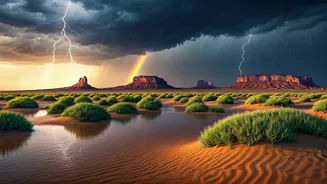
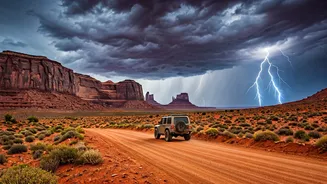
The desert sky puts on an incredible lightning show during a monsoon, but it’s best enjoyed from a safe distance. The Southwest is one of the most lightning-prone regions in the country. If you can hear thunder, you are close enough to be struck. Avoid being the tallest object in an open area. Get off high ridges, stay away from isolated trees, and seek shelter in a substantial building or a hard-topped vehicle. A scenic overlook is the last place you want to be when a storm rolls in. The epic photo isn’t worth the risk.