




A Warning from Abroad
Recently, the Food Safety and Standards Authority of India (FSSAI) issued a public warning that has mango lovers paying closer attention. The alert targeted the illegal use of calcium carbide to artificially ripen mangoes. While this is an issue highlighted
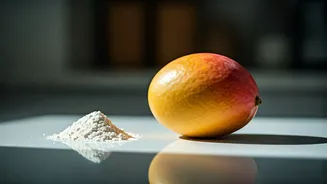
in India, a major global supplier of mangoes, it serves as a crucial lesson for consumers everywhere about the complexities of our global food chain. Calcium carbide is a cheap, effective chemical that produces acetylene gas when mixed with moisture. This gas mimics the effects of ethylene, a natural plant hormone that triggers ripening. For unscrupulous sellers, it’s a way to rush green, hard mangoes to market, making them appear perfectly yellow and ready to eat long before they naturally would be. The problem is that this cosmetic trick comes with serious health baggage.
The Real Dangers of Calcium Carbide
The danger isn’t just that you’re eating a bland, unripe mango disguised as a sweet one. The industrial-grade calcium carbide used for this process is often contaminated with heavy metal impurities, including traces of arsenic and phosphorus. These are toxic compounds that you don’t want anywhere near your food. According to food safety experts and health agencies, exposure to these contaminants can lead to a range of health issues. Short-term effects can include stomach upset, dizziness, headaches, and mouth ulcers. Long-term or repeated exposure raises more severe concerns, with potential neurological effects and carcinogenic risks. The FSSAI has banned the use of calcium carbide for ripening fruit, but enforcing this ban across countless farms and markets remains a significant challenge. This makes consumer awareness the most effective line of defense.
Your Five-Sense Mango Inspection
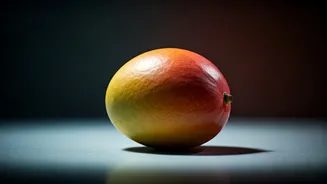
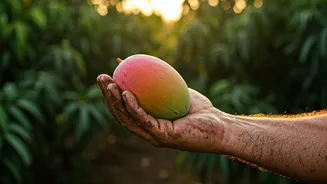
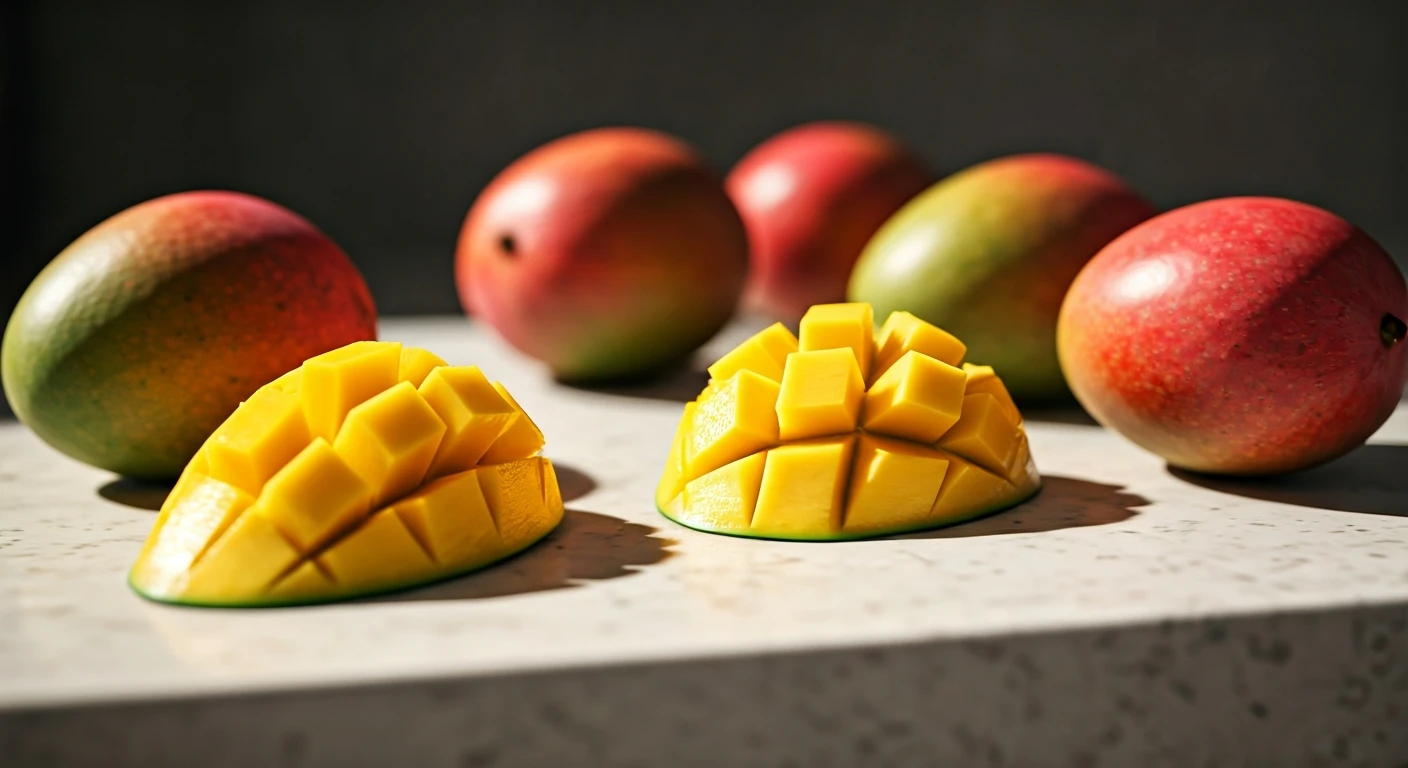
So, how can you tell a naturally ripened mango from a chemically-forced one? You don’t need a chemistry set—just your senses. Health officials and mango experts suggest a few simple checks. First, look at the color. A naturally ripened mango will have a gradual, uneven blend of yellow, green, and even some reddish tones. A carbide-ripened mango often has a suspiciously uniform, almost painted-on yellow color, sometimes with green patches that are distinctly separate from the yellow, indicating the flesh underneath is still raw. Next, smell it. A natural mango has a sweet, fruity aroma, while a chemically ripened one might have a faint, pungent, garlic-like scent. Finally, press it gently. A carbide-ripened fruit might look soft but feel hard underneath. Some vendors also suggest a folk test: place the mango in a bucket of water. Naturally ripened ones typically sink, while those ripened with artificial agents may float, though this isn't a foolproof method.
What This Means for Your U.S. Grocery Cart
While the FSSAI alert is specific to India, the U.S. imports a significant volume of mangoes from various countries, including Mexico, Peru, Ecuador, and Brazil. The Food and Drug Administration (FDA) regulates produce sold in the United States and has standards for pesticide residues and contaminants. However, with a globalized supply chain, awareness is still a consumer’s best tool. The best practice is to buy from reputable grocers and farmers' markets where you can ask about sourcing. Look for fruit that isn't perfectly uniform, and trust your nose. Washing your mangoes thoroughly under running water before cutting into them is always a good idea, as it can help remove any surface contaminants. While the risk in major U.S. supermarkets is likely low due to stricter import checks, being a vigilant shopper is never a bad policy, especially if you buy from smaller, independent international markets.