
The Benchmark: Table Sugar (Sucrose)
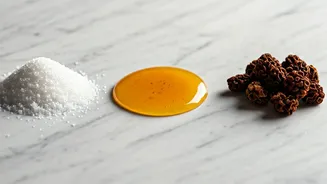
Let's start with the one we all know. Regular white table sugar, or sucrose, is the gold standard by which all other sweeteners are judged—often for its downsides. Composed of 50% glucose and 50% fructose, it provides a quick, intense sweetness. When
it comes to health metrics, this is your baseline. It contains about 16 calories per teaspoon and has a glycemic index (GI) of around 65, meaning it causes a moderately high and rapid spike in blood sugar. This spike is followed by an insulin surge to move that sugar out of your bloodstream and into your cells. Over time, a diet high in added sugar is linked to a host of issues, including weight gain, inflammation, and an increased risk for type 2 diabetes and heart disease. There are no vitamins, minerals, or health benefits here—it's purely a source of empty calories and quick energy.
The Ancient Staple: Raw Honey
Honey is often marketed as a healthier, more 'natural' alternative to sugar. Chemically, it's not wildly different; it’s primarily composed of fructose and glucose, just like sugar, but in slightly different ratios and with more water. A teaspoon of honey has more calories than sugar (about 21), but it's also sweeter, so you might use less. Its main advantage lies in its glycemic index, which is typically lower than sugar's, hovering around 58. This means it raises blood sugar a bit more gradually. Furthermore, raw, unfiltered honey contains trace amounts of pollen, enzymes, antioxidants, and minerals that are stripped from processed sugar. These compounds are associated with anti-inflammatory and antibacterial properties. However, let’s be clear: your body still metabolizes it as sugar. It’s a marginally better choice, not a free pass to indulge.
The Modern Challenger: Monk Fruit
Monk fruit sweetener is the new kid on the block, and its stats are impressive. Extracted from a small green gourd native to Southern China, its sweetness comes from compounds called mogrosides, which are intensely sweet but contain no calories. This gives monk fruit extract a glycemic index of zero. It will not raise your blood sugar or trigger an insulin response, making it an excellent option for people managing diabetes or on very low-carb diets. But there’s a crucial catch: because monk fruit extract is up to 250 times sweeter than sugar, it’s almost always mixed with a bulking agent to make it usable in a 1:1 ratio for baking and cooking. The most common agent is erythritol, a sugar alcohol. While generally safe, erythritol can cause digestive issues like gas and bloating in some people, especially in larger quantities.
The Final Ranking: Which Is Best?
A single 'best' is misleading. The right choice depends entirely on your health goals. Let's rank them by what matters most to you. **For Blood Sugar Control:** 1. **Monk Fruit:** The clear winner. With a GI of zero, it has no impact on blood glucose. 2. **Honey:** A distant second. Its lower GI is slightly better than sugar, but it still requires a significant insulin response. 3. **Sugar:** The one to avoid. Its high GI causes the sharpest spikes. **For Calorie Reduction:** 1. **Monk Fruit:** Again, the winner. It has zero calories. 2. **Sugar:** At 16 calories per teaspoon, it’s the lower-calorie option between the two traditional sweeteners. 3. **Honey:** The most calorie-dense per teaspoon, though its intense sweetness may lead you to use less. **For 'Natural' & Minimally Processed:** 1. **Raw Honey:** The winner if your goal is an unprocessed, whole-food sweetener with potential micronutrient benefits. 2. **Sugar:** While derived from plants (cane or beets), it is highly refined and stripped of all nutrients. 3. **Monk Fruit:** Despite its 'natural' origin, the final product is a highly processed extract often blended with a sugar alcohol. It's not something you could make in your kitchen.