



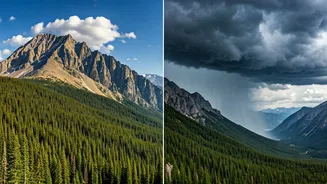
The Mountaintop Inversion
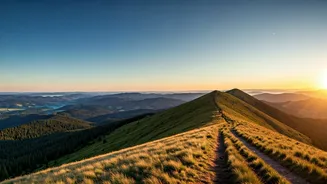
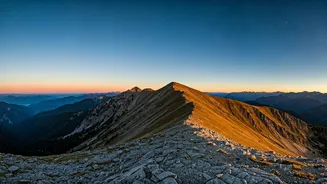
There are few views more surreal than standing on a mountain peak looking down on a solid sea of clouds. This phenomenon, known as a temperature inversion, happens when a layer of warm air traps cooler, denser air—and clouds—in the valley below. It feels
like you’re on an island in the sky. For a few hours, the familiar world vanishes, replaced by a silent, rolling ocean of white. The rising or setting sun paints the clouds in impossible shades of pink, orange, and gold, creating a scene so perfect it feels scripted. It’s a moment of profound quiet and perspective, reminding you just how vast the world really is. **Where to see it:** The summit of Haleakalā on Maui is world-famous for its otherworldly sunrise-over-the-clouds experience. On the mainland, early mornings at high-elevation spots in national parks like Shenandoah in Virginia or Mount Rainier in Washington can offer similar, breathtaking inversions, especially in the fall and winter.
The Coastal Fog Blanket
Driving along a coastal highway, you ascend a cliffside road and suddenly break through the marine layer. Below you, a thick, pillowy blanket of fog swallows the coastline, with only the tops of redwood trees or rocky headlands peeking through. This isn’t the dreary, socked-in feeling of being inside the fog; this is the majestic, god’s-eye view of it. The way the fog silently pours into bays and valleys is a slow-motion special effect, transforming a scenic drive into a journey through a dreamscape. The muffled sound of the surf from below and the brilliant sun above create a powerful sensory contrast that makes the moment stick in your memory. **Where to see it:** California’s Highway 1, particularly through Big Sur, is the quintessential location for this experience. The winding roads and dramatic cliffs provide countless overlooks. Similarly, stretches of Oregon’s coast and the scenic drives in Acadia National Park in Maine offer stunning opportunities to get above the rolling sea fog.
The View from Above the City
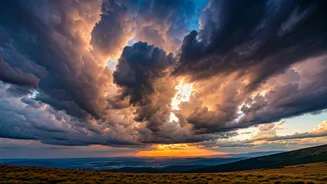
You don’t always need a mountain to feel like you’re in the heavens. A well-placed hotel room or observation deck in a major city can provide an equally cinematic cloud experience, especially during a passing storm or on a moody, overcast day. From 50 stories up, you can watch storm cells move across the skyline, see rain curtains sweep through downtown, or find yourself literally inside a cloud. The city lights below diffuse into an abstract glow, turning the familiar grid of streets into a futuristic metropolis from a sci-fi film. It’s a powerful way to feel connected to both the raw energy of nature and the electric pulse of human creation. **Where to see it:** Booking a high-floor room in a skyscraper hotel in cities like Chicago or New York offers a private viewing of this urban drama. The observation decks at the Willis Tower in Chicago or SUMMIT One Vanderbilt in New York are designed to maximize this very feeling of floating above it all.
The High-Altitude Drive
Some of the most memorable road trips are the ones that take you up, up, and away. Scenic byways that climb to high elevations often put you at eye-level with the clouds themselves. One moment you’re driving in bright sunshine, and the next you’re enveloped in a soft, ethereal mist as you pass through a low-hanging cloud, only to emerge again into brilliant blue sky. This constant change in perspective is incredibly dynamic. The road ahead disappears and reappears, and the landscape is framed by wisps of white. It’s less about a single viewpoint and more about a continuous, unfolding narrative—your car is the camera, and the journey itself is the film. **Where to see it:** The Blue Ridge Parkway in North Carolina and Virginia is famous for its misty, cloud-level driving. Colorado's Trail Ridge Road in Rocky Mountain National Park, the highest continuous paved road in North America, takes you to over 12,000 feet, offering an entire trip spent dancing with the clouds.