



The Unedited Director's Cut
Let’s be honest: real-time travel is often a series of minor catastrophes punctuated by moments of genuine wonder. It’s the three-hour wait in a rental car line after a red-eye flight. It’s discovering the ‘charming, rustic’ Airbnb has no hot water. It’s the palpable
tension of trying to navigate a foreign subway system with a partner whose patience is wearing thinner than a crepe. These moments are stressful, uncomfortable, and decidedly not what you see on Instagram. In the thick of it, you might find yourself wondering why you ever left your couch. This is the raw footage of travel—the logistical friction, the physical exhaustion, the emotional strain. It’s the part of the story that rarely makes it into the highlight reel we play for our friends, or even for ourselves.
Your Brain's Built-In Instagram Filter
So why does that disastrous trip to Paris, the one that involved a lost wallet and a week of rain, now feel like a romantic, character-building adventure? The answer lies in a psychological quirk called ‘rosy retrospection.’ Our brains are wired to smooth over the rough edges of the past. We tend to remember past events more fondly than we experienced them at the time. Negative feelings fade faster than positive ones. The annoyance of a delayed train dissipates, but the memory of the stunning view you saw when you finally arrived sticks around. Psychologists also talk about the ‘peak-end rule,’ which suggests we judge an experience based on its most intense point (the peak) and its end. As long as the trip included a spectacular moment—like seeing the Grand Canyon at sunrise—and ended on a reasonably pleasant note, your brain is likely to file the whole thing under ‘amazing,’ conveniently forgetting the hours of tedious driving and cheap motel coffee that led up to it.
Crafting the Perfect Story
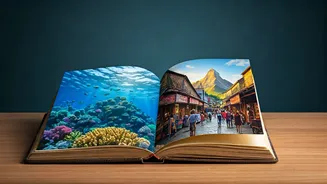
We are all natural-born storytellers, and our travels provide the best raw material. The process of turning a chaotic experience into a cherished memory is an act of narrative curation. We select the best photos, crop out the overflowing trash can, and apply a filter that makes the sunset pop. We craft the anecdote about the funny misunderstanding with the waiter, leaving out the part where we were genuinely frustrated. This isn't necessarily dishonest; it's human. We're not just creating a story for our social media followers; we're creating it for ourselves. We're taking the messy, sprawling reality of an experience and distilling it down to its meaningful essence. The story becomes the memory. That’s why a challenging hike, miserable in the moment, becomes a tale of perseverance. The travel disaster becomes a hilarious bonding experience. We are the editors of our own past.
The Souvenir We Actually Keep
Perhaps the idea that our memories are ‘better on paper’ isn't a sign of delusion, but a feature, not a bug, of the human experience. If we remembered every single frustrating, boring, or uncomfortable moment with perfect clarity, who would ever travel again? The edited, romanticized memory is the true souvenir. It’s the thing we carry with us long after the cheap trinkets are lost or broken. It’s what inspires us to book the next flight, to believe that despite the inevitable hassles, it will all be worth it in the end. And sometimes, the best stories come from the moments that went wrong. No one wants to hear about your perfectly on-time flight. They want to hear about the time you accidentally boarded a train to the wrong country. The imperfect reality provides the texture, but the polished memory provides the lasting joy.