





Ignoring Your Tires
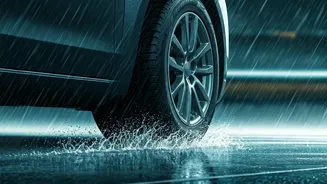
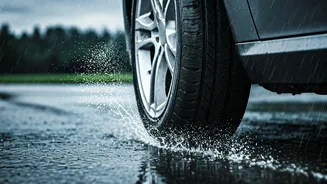
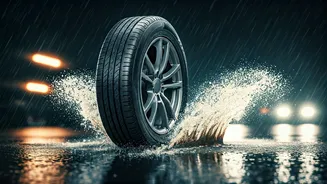
Your tires are the only part of your car that touches the road, and in the rain, their condition is paramount. The deep grooves in your tires are designed to channel water away, allowing the rubber to maintain contact with the pavement. When tread is worn
down, that water has nowhere to go. This creates a thin film of water between your tire and the road, leading to a loss of traction—the primary cause of hydroplaning. Check your tread depth regularly using the “penny test”: place a penny upside down in a tread groove. If you can see all of Abraham Lincoln's head, your tires are dangerously worn and need immediate replacement. Also, ensure your tires are inflated to the manufacturer's recommended pressure, which you can find on a sticker inside the driver’s side door jamb.
Using Cruise Control
Cruise control is a fantastic feature for long, dry highway drives. In the rain, it’s a disaster waiting to happen. The system’s goal is to maintain a constant speed. If your car begins to hydroplane, the wheels lose traction and can start spinning faster. Your cruise control system might misinterpret this as a need to slow down, or worse, it could continue trying to apply power. The most dangerous part is that when a driver finally disengages cruise control by tapping the brakes—the instinctive reaction for many—it can cause a sudden, jerky change in speed that completely upsets the car’s balance on the slippery surface, potentially leading to a spin. In wet weather, your foot needs to be the one controlling the throttle. Full stop.
Following Too Closely
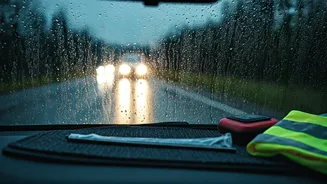
That three-second following distance rule you learned in driver’s ed? Double it. Or even triple it. Water on the road surface drastically increases the distance your vehicle needs to come to a complete stop. Your brakes are working against not just momentum, but a slippery surface that reduces the grip your tires can achieve. Tailgating in the rain is more than just aggressive; it’s a gamble that you can stop in time if the person ahead of you slams on their brakes. By giving yourself five or six seconds of following distance, you give yourself the time and space to react smoothly, brake gently, and avoid a chain-reaction collision.
Panicking During a Hydroplane
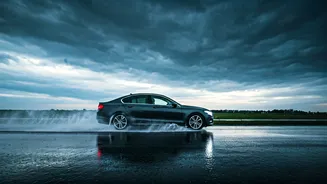
It’s a terrifying sensation: you turn the steering wheel, but the car keeps going straight. This is hydroplaning, and your first instinct is almost certainly the wrong one. Do not slam on the brakes. Do not yank the steering wheel. Both actions can unsettle the car and turn a momentary slide into an uncontrollable spin. The correct procedure is counterintuitive but effective: calmly ease your foot off the accelerator. Keep the steering wheel pointed in the direction you want the car to go. As the car slows, the tires will regain contact with the road, and you will feel steering control return. The entire event may only last a second or two, and the key is to stay calm and make no sudden inputs.
Underestimating Standing Water
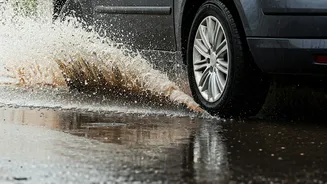
That large puddle across the road might look harmless, but it's a complete unknown. Is it a six-inch-deep puddle or a two-foot-deep, axle-breaking pothole? You have no way of knowing. Driving through standing water at speed can cause a violent hydroplane. Worse, if the water is deep enough to reach your engine's air intake (which is often lower than you think), it can be sucked into the engine, causing catastrophic and costly damage—a condition known as hydrolock. And it only takes about six inches of moving water to sweep a person off their feet, and a foot of water can float many vehicles. If you can’t see the painted lines on the road beneath the water, it’s too deep. Don't risk it. Find another route.
Forgetting to See and Be Seen
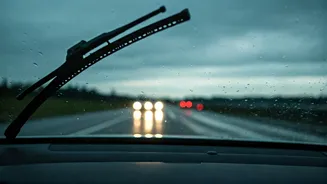
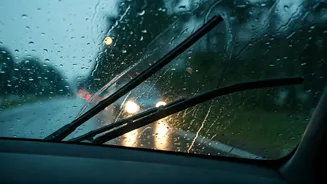
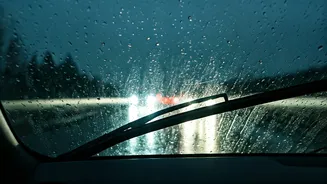
Rainy conditions mean low light and reduced visibility for everyone. Turning on your headlights isn't just about helping you see the road; it's about helping other drivers see you. In many states, it’s the law to have your headlights on whenever your windshield wipers are in use. Don't rely on automatic headlights, as they may not activate in daytime rain. Manually switch to your low beams (high beams will reflect off the raindrops and worsen your own visibility). Ensure your wiper blades are in good condition, replacing them every 6-12 months. A smearing, chattering blade is a safety hazard. Clear visibility is a non-negotiable part of safe wet-weather driving.