


The Trail Is All Yours
Remember that popular trailhead you avoided all summer because the parking lot was full by 7 a.m.? The one where the main viewpoint felt more like a crowded subway platform? In the cooler months, that all changes. The end of summer vacation and the return
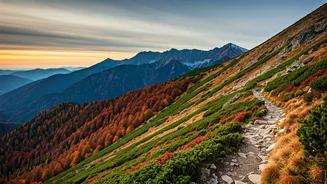
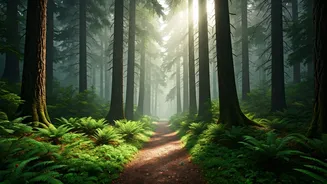
to school schedules thins the herds dramatically. Suddenly, popular routes become quiet, contemplative paths. You can hear the crunch of leaves under your boots instead of a dozen overlapping conversations. The solitude that many of us seek in nature is no longer a rare commodity but the default setting. This peace allows for a deeper connection to the landscape, turning a simple hike into a genuinely restorative experience. You’re sharing the mountain with the elements, not the masses.
No Sweat, All Reward
Let’s talk about the physical reality of a summer hike. For every glorious, sun-drenched summit photo, there’s the untold story of battling dehydration, slathering on sunscreen every 45 minutes, and feeling like you’re climbing inside a sauna. Cooler weather removes these discomforts entirely. A crisp 50-degree day is objectively perfect for physical exertion. You can wear comfortable layers, work up a pleasant warmth without immediately overheating, and focus on the rhythm of your stride. The threat of heat exhaustion and sunstroke vanishes, replaced by the simple, invigorating challenge of the trail itself. Every calorie you burn goes into the ascent, not into your body’s desperate attempt to cool itself. The result? Longer, more ambitious hikes feel more manageable and far more enjoyable.
Nature's Unwanted Guests Go Home
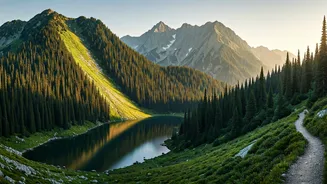
There are two tiny words that can ruin an otherwise perfect mountain evening: mosquitoes and ticks. Summer is their season, forcing us to douse ourselves in sticky bug spray and perform meticulous post-hike checks. But the first good frost is a godsend, acting as a natural pest control service. With the arrival of cooler temperatures, the buzzing swarms of mosquitoes vanish, and the threat of ticks diminishes significantly. You can sit by a lake without swatting at your own face. You can stop for a snack on a log without worrying about what’s crawling up your leg. This freedom from insects is a small but profoundly liberating change that makes every moment outdoors more relaxing.
Visibility for Miles and Miles
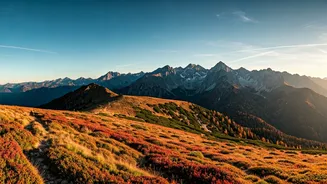
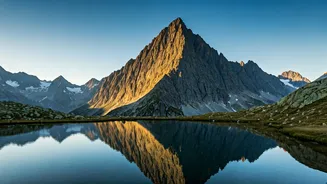
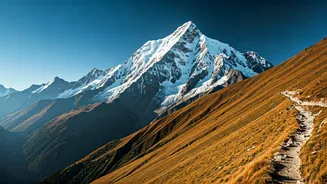
Summer air is often thick with humidity and haze, a fine soup of moisture and pollutants that can obscure distant peaks and mute the landscape’s colors. It’s a classic mountain disappointment: you climb 3,000 feet for a panoramic view only to be met with a milky, indistinct horizon. Cool, dry air changes the game completely. Autumn and early winter bring a clarity that is simply unrivaled. The atmosphere is scrubbed clean, making distant mountain ranges appear shockingly close. The colors are sharper, the shadows are deeper, and the sky is a more intense shade of blue. If the whole point of climbing a mountain is the view from the top, then cooler weather offers the highest-definition version possible.
The Undeniable Cozy Factor
Finally, there’s the intangible but powerful appeal of coziness. Mountain adventures in cooler weather are bookended by satisfying rituals. It’s the joy of pulling on a favorite fleece or a down jacket that feels like a warm hug. It’s the steam rising from a thermos of hot coffee or soup at a windy overlook. If you’re camping, it’s the magnetic pull of a crackling campfire, a truly comfortable experience when the air has a bite. After a long day of challenging your body in the cold, the reward of returning to a warm car, a rustic cabin, or just a hot shower feels exponentially more satisfying than it does in the summer. It’s a feeling of well-earned comfort that completes the entire experience.