

What Are Soilless Plants, Exactly?
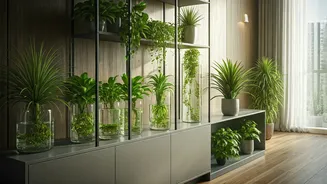
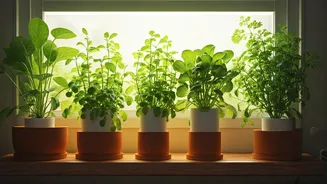
The term 'soilless plants' might conjure images of futuristic labs, but the reality is much more accessible and elegant. It’s a broad category for any houseplant grown without traditional potting soil. The most common methods involve hydroponics, semi-hydroponics,
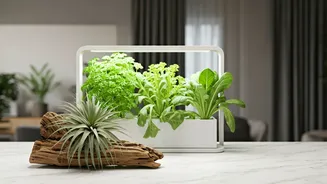
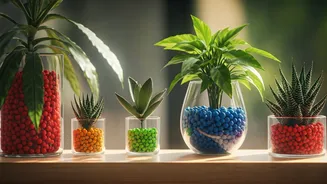
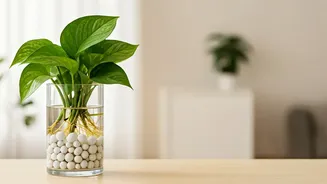
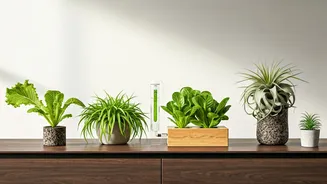
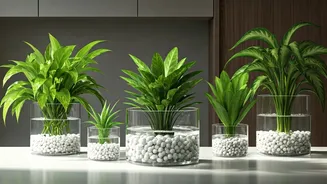
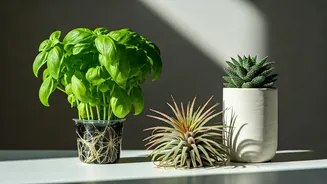
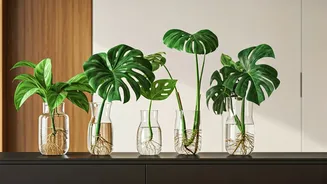
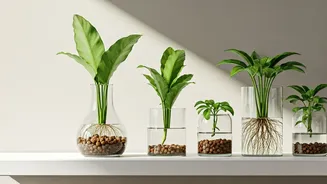
and epiphytes. In a simple hydroponic setup, a plant’s roots are suspended directly in water fortified with liquid nutrients. Semi-hydroponics uses an inert medium like LECA (Lightweight Expanded Clay Aggregate)—small, porous clay balls that wick water up to the roots, providing support and aeration without the mess of soil. Finally, there are epiphytes, like the popular Tillandsia, or air plants. These fascinating plants have evolved to absorb all the moisture and nutrients they need from the air through specialized scales on their leaves, requiring no soil or substrate at all.
The End of Mess and Mystery
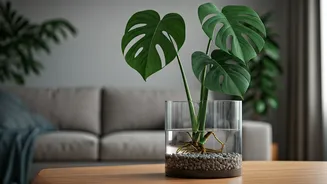
A significant part of the 'peace' soilless plants offer comes from subtraction. First, they subtract the dirt. There’s no more spilled soil on your windowsill, no muddy water stains on the floor, and no gritty residue under your fingernails after repotting. This cleanliness alone reduces a major source of low-grade domestic friction. Second, they subtract the mystery that frustrates so many aspiring plant parents. One of the biggest killers of houseplants is improper watering. With a plant in a clear glass vase of water or LECA, the guesswork is gone. You can literally see the water level. You can see the roots, watching them grow and checking for signs of trouble. This transparency demystifies plant care, transforming it from a game of chance into a straightforward process and eliminating the nagging anxiety of, 'Did I just kill another succulent?'
A Minimalist’s Dream Aesthetic
Beyond the practical benefits, soilless plants align perfectly with modern design sensibilities, particularly minimalism. Growing a plant in a clear glass vessel turns the entire organism into a living sculpture. The intricate web of roots, normally hidden, becomes a beautiful and fascinating part of the display. This aesthetic emphasizes clean lines, natural forms, and intentionality. Unlike a bulky, opaque pot, a simple vase or jar feels light and unobtrusive, allowing the plant itself to be the star. For those curating a calm, uncluttered home, soilless plants are not just decorative items; they are a statement of purpose. They embody a desire for simplicity, transparency, and beauty without excess, making them the perfect biophilic accessory for a thoughtfully designed space.
The Ritual of Simple Care
With the typical stressors of plant ownership removed, what’s left is a simple, meditative ritual. The care routine for soilless plants is often a gentle, rhythmic process. It might be the weekly task of changing the water in your Pothos cutting’s vase, the satisfying clatter of rinsing LECA beads, or the quiet moment spent misting an air plant. These actions are predictable, manageable, and offer a tangible connection to a living thing. In a life dominated by screens and abstract tasks, these small, physical interactions can be incredibly grounding. They provide a moment of focus and a sense of nurturing without the heavy burden of responsibility. This is the 'peace' in action: a quiet, ten-minute ritual that brings you back into the present moment and connects you to the natural world in the simplest way possible.
More Life, Less Labor
Ultimately, the appeal of soilless gardening is about getting the maximum psychological benefit of nature with minimal effort and stress. We know that greenery in our homes can reduce stress, improve air quality, and boost our mood. Yet for many busy people, the labor involved in traditional plant care feels like just another chore on an endless to-do list. Soilless plants hack this equation. They offer the lush, vibrant presence of a living thing without the risk of fungus gnats, the mess of repotting, or the daily worry about watering. It’s the joy of watching something grow, optimized for a modern life that demands convenience and calm. It allows you to be a successful plant owner on your own terms, fostering life without it taking over your own.