

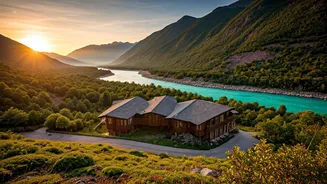



The Land Where Rain Forgets to Fall
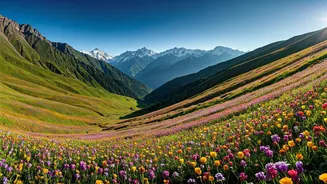
Imagine a place so high and remote it’s often called “Little Tibet.” This is Spiti Valley, a cold desert mountain valley nestled in the Indian Himalayas. Its landscape is a breathtaking canvas of browns, ochres, and grays, punctuated by patches of green
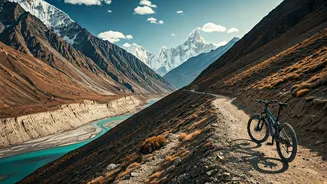
barley fields and the deep blue of the Spiti River. Jagged peaks pierce the sky, ancient Buddhist monasteries cling to cliff faces, and tiny villages seem frozen in time. Unlike the lush, green slopes most people associate with the Himalayas, Spiti is stark, windswept, and raw. Its beauty isn’t gentle; it’s a profound, powerful desolation that speaks to the soul of anyone who craves true wilderness.
The Monsoon Escape Hatch
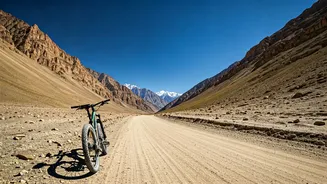
Herein lies the paradox that draws backpackers during India’s wettest season. From June to September, when most of the country is hammered by monsoon rains, rendering trekking and travel impossible in other mountain regions, Spiti remains almost completely dry. The reason is geography. The valley sits in a rain shadow, sheltered by the main Himalayan range which blocks the moisture-laden clouds from the south. While trails elsewhere turn to mud and rivers swell dangerously, Spiti’s gravel roads and dirt tracks are dusty and prime for adventure. This climatological quirk transforms the valley into a unique sanctuary, a high-altitude playground accessible only when other destinations are off-limits. For thrill-seekers looking for a summer adventure, Spiti isn't just an option; it's the answer.
Two Wheels on the Roof of the World
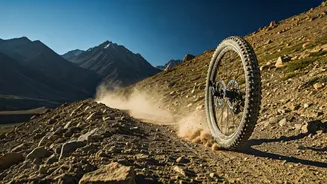
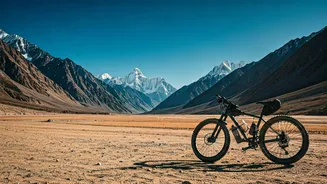
For mountain bikers, Spiti is a pilgrimage. The terrain is the stuff of legends: a network of unpaved roads, single tracks, and punishing high-altitude passes. The classic route often involves the journey from the bustling town of Manali, over the treacherous Rohtang and Kunzum passes, and into the valley itself. The ride is not for the faint of heart. It means battling thin air, navigating bone-jarring gravel roads known as “jeep tracks,” and fording glacial meltwater streams that cut across the path. But the payoff is immeasurable. Bikers are rewarded with complete solitude, panoramas that stretch for miles under a brilliant blue sky, and the profound satisfaction of propelling themselves through one of the world's most formidable landscapes. Each pedal stroke is a meditation, each conquered pass a victory.
More Than Just the Ride
The allure of Spiti extends far beyond the adrenaline of the ride. The journey is also a deep cultural immersion. The region is a bastion of Tibetan Buddhism, and the landscape is dotted with some of the oldest and most spectacular monasteries in the world, like Key Gompa, perched dramatically on a hilltop, and the Tabo Monastery, a UNESCO World Heritage site known for its ancient murals. Backpackers often stay in local homestays, sharing meals of momos (dumplings) and thukpa (noodle soup) with Spitian families. This connection provides a grounding counterpoint to the physical challenge of the day. It’s in these quiet moments—sipping butter tea with a monk or watching the sunset paint the barren mountains in shades of pink and gold—that the true spirit of the valley reveals itself.
The Challenge Is the Reward
Spiti makes no apologies for its difficulty. There is no luxury here. Accommodations are basic, the food is simple, and the risk of Acute Mountain Sickness (AMS) is very real. Roads can be blocked by landslides, and mechanical failures can leave you stranded miles from the nearest village. But for the thrill-seeking backpackers who flock here, these challenges are not deterrents; they are integral to the experience. They are filters that weed out casual tourists, preserving the valley's raw authenticity. The hardship forges a powerful bond among travelers and creates stories that last a lifetime. In Spiti, you don’t just see the landscape; you earn it.