



A Himalayan Hideaway
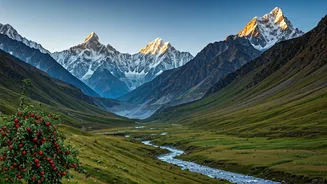
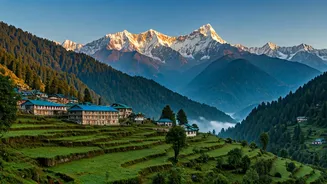
Imagine a place so pristine it feels like a secret whispered between mountains. That’s Harsil. Situated in the Uttarkashi district of Uttarakhand, India, this small village sits at an altitude of about 9,000 feet, nestled in a valley carved by the Bhagirathi
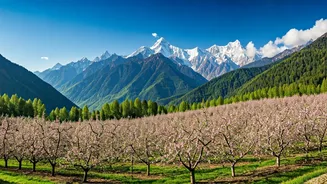
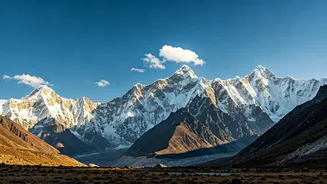
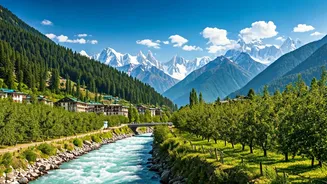
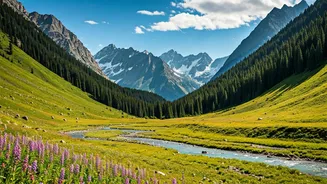
River. For American travelers seeking an authentic, off-the-grid alternative to the well-trodden paths of Rishikesh or Shimla, Harsil offers a rare glimpse into a quieter, more contemplative side of the Himalayas. It’s a key stop for pilgrims heading to the holy site of Gangotri, the source of the Ganges River, but it has gracefully retained its identity as a tranquil haven rather than a bustling way station. Surrounded by dense deodar forests and snow-capped peaks, the village is a canvas of deep greens, river blues, and, depending on the season, the vibrant red of ripening apples.
The Song of the Bhagirathi
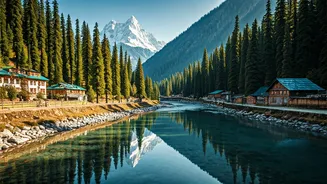
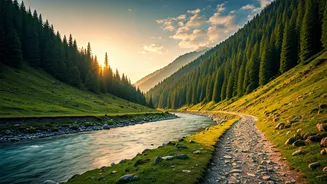
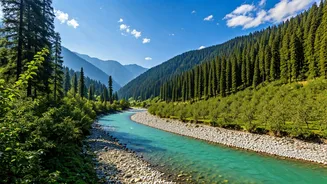
The lifeblood of Harsil is the Bhagirathi River, which flows through the valley with a powerful, meditative grace. One of the two main headstreams of the Ganges, its waters are crystal clear and shockingly cold, carrying the purity of the glaciers from which they descend. The 'river walks' mentioned in its reputation are not organized tours but simple, personal journeys along its banks. Strolling along the pebble-strewn shores, you’re accompanied by the constant, soothing roar of the water. The path is flanked by tall pines, their scent mingling with the damp, earthy smell of the riverbank. It’s here that the village’s charm solidifies. There are no vendors, no tourist traps—just you, the river, and the immense scale of the mountains. It’s an experience that encourages you to stop, sit on a sun-warmed boulder, and simply watch the world flow by.
An Apple-Scented Paradise
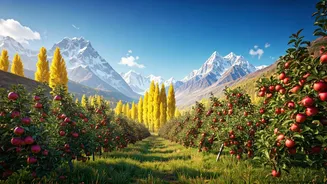
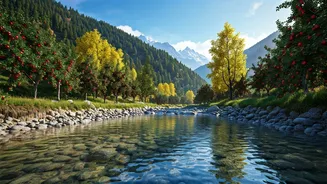
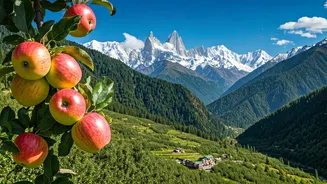
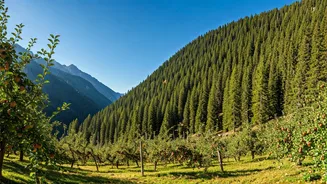
The other pillar of Harsil’s identity is its sprawling apple orchards. The story goes that Frederick “Pahari” Wilson, a British adventurer who settled in the area in the 19th century, was the first to introduce apples to this valley. The venture was a stunning success. Today, Harsil apples are famous across India for their crispness and sweet-tart flavor. Walking through the orchards is a sensory delight. In spring, the valley is awash in a sea of delicate white and pink blossoms, a stunning contrast against the rugged mountain backdrop. By late summer and early autumn, the branches hang heavy with fruit, and the air carries a sweet, fermented fragrance. The orchards aren't just an agricultural feature; they are the economic and cultural heart of the community, defining the rhythm of the year from bloom to harvest.
Beyond the Postcard Views
While the river and orchards are Harsil’s main draws, the village offers more subtle charms for the curious traveler. The local culture is a unique blend of Garhwali and Tibetan influences, visible in the architecture and the faces of the people. Nearby, the village of Mukhba serves as the winter home for the idol of the goddess Ganga when the Gangotri temple closes due to heavy snow. A short drive or a scenic trek can take you to Sattal, a group of seven interconnected lakes hidden in the woods. Harsil also serves as a gateway to Gangotri National Park, a protected area of stunning biodiversity. This isn’t a destination packed with attractions to be checked off a list. Instead, it’s a place that rewards slow, mindful exploration, revealing its secrets to those willing to wander without a fixed itinerary.