






Olympic Peninsula Loop, Washington
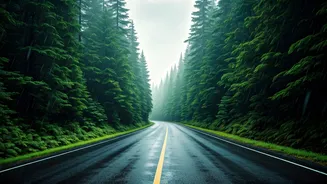
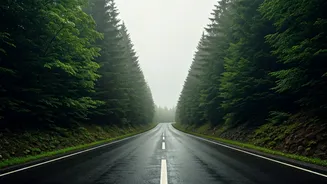
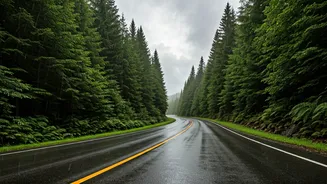
Nowhere in the Lower 48 embraces rain quite like Washington’s Olympic Peninsula. This is, after all, home to the Hoh Rainforest, a place that receives an average of 140 inches of rain per year. A downpour here isn’t an event; it’s the engine of the entire
ecosystem. When it rains, the forest comes alive. The mosses and ferns covering every surface deepen into an almost impossibly vibrant green. The air grows thick with the smell of wet earth and cedar. Driving the loop, you’ll see fog clinging to the giant Sitka spruce and Western hemlocks, creating a primeval atmosphere that feels worlds away from modern life. The coastal sections, like Rialto or Ruby Beach, become even more dramatic, with moody gray waves crashing against sea stacks shrouded in mist. This isn't a drive you endure in the rain; it's a drive you take *for* the rain.
Blue Ridge Parkway, North Carolina & Virginia
The Blue Ridge Mountains are named for the characteristic blue haze that hangs over their rolling peaks. Rain and fog amplify this effect tenfold, transforming a pleasant scenic drive into a journey through the clouds. While a sunny day offers expansive, clear views, a rainy one provides an intimate, mysterious experience. The world shrinks to just the road ahead and the ghostly silhouettes of mountains fading in and out of the mist. The parkway’s famous overlooks become less about distance and more about atmosphere. You’ll find yourself pulling over not to see for miles, but to listen to the silence broken only by rainfall and to watch the clouds slowly drift through the valleys below. It’s a quieter, more contemplative version of a drive that is often bustling with tourists, allowing for a more personal connection with the ancient, weathered soul of Appalachia.
Columbia River Gorge, Oregon
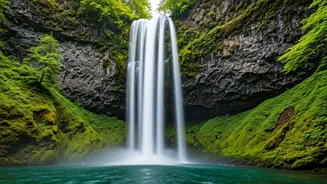
The Historic Columbia River Highway is a masterpiece of road engineering, famous for one main reason: waterfalls. And what do waterfalls need? Water. A drive through the gorge after a good rain is a completely different experience. Trickles become torrents. Familiar sights like Multnomah Falls, already a giant, feel exponentially more powerful as spray billows from its base. Lesser-known falls that are barely there in the dry summer months spring to life along the roadside. The rain saturates the basalt cliffs, turning them a deep, dramatic black that provides a stunning contrast to the electric green of the water-logged mosses. It’s a drive that becomes a dynamic, thundering spectacle, reminding you of the raw power of nature that carved this incredible landscape.
Redwood Highway (US-101), Northern California
Driving among the tallest trees on Earth is already a humbling, almost spiritual experience. Add rain, and it becomes truly transcendent. The canopy of the old-growth redwood forest is so dense that a light rain may not even reach the forest floor directly, instead creating a constant, gentle drip from the high branches. The sound is mesmerizing, turning the forest into a natural cathedral. Fog weaves between the colossal trunks, obscuring their tops and making them seem infinitely tall. The damp air carries the rich, loamy scent of the forest floor and the sharp, clean fragrance of the redwoods themselves. On a sunny day, you look up in awe. On a rainy day, you feel completely enveloped by the ancient forest, a small part of a living, breathing system that has been there for millennia.
Kancamagus Highway, New Hampshire
While best known for its fiery fall foliage, the “Kanc” offers a different kind of beauty on a wet day. The rain acts as a natural color saturation filter, deepening the reds and golds of autumn leaves and making the evergreen forests appear richer and darker. The granite outcroppings that line the road glisten, and the Swift River, which the highway follows, runs faster and louder. In the summer, the rain washes the dust off the lush green canopy, making the whole forest gleam. But the real magic is the fog that settles in the notches and valleys of the White Mountains. It creates a moody, painterly landscape that feels quintessentially New England. It’s a drive that swaps long-distance vistas for close-up details: the texture of wet bark, the sound of the river, and the vibrant colors of a landscape washed clean.