


The End of the Gallery Wall
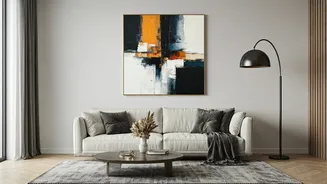
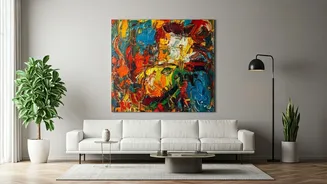
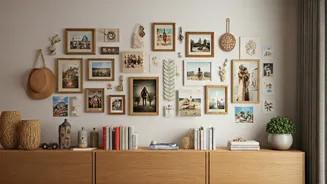
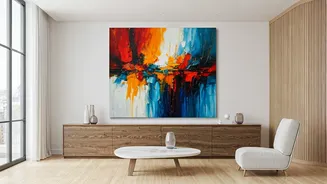
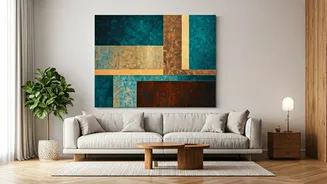
Walk through any recently decorated home, and you’re increasingly likely to encounter it: a single, colossal piece of art that commands the entire room. This marks a significant departure from the dominant interior design trend of the 2010s. For the better
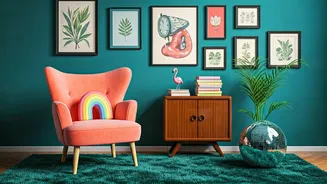
part of a decade, the aspirational look, heavily promoted on Pinterest and Instagram, was the meticulously curated gallery wall. It involved an almost neurotic arrangement of small- to medium-sized prints, family photos, and inspirational quotes, all balanced in perfect asymmetry. While charming, this aesthetic often resulted in a space that felt busy rather than bold, curated rather than confident. The shift toward oversized art is a direct reaction to this. Instead of a collection of whispers, designers and homeowners are opting for a single, powerful shout. It’s a declaration that a room can have one focal point, one conversation starter, one piece that sets the definitive mood.
The Psychology of Scale
So, why the sudden embrace of massive canvases and colossal prints? The trend speaks to a broader cultural shift in how we relate to our homes. After years of spending more time within our own four walls, there’s a growing desire to make our spaces more personal, more impactful, and more emotionally resonant. A large piece of art is not just decoration; it’s an architectural element. It has the power to anchor a room, define a zone in an open-plan space, and create a sense of drama and sophistication. There's a confidence baked into the choice. Selecting one large-scale work requires conviction. It says, 'This is what I love. This is the feeling I want to live with every day.' Unlike a gallery wall, which can be easily tweaked, an oversized piece is a commitment. It’s an investment in a specific vision, turning a simple living room or bedroom into a space with a distinct point of view.
More Than Just a Painting
When you hear “oversized art,” your mind might jump to an expensive, gallery-sized abstract painting. But the beauty of this trend is its versatility. The 'art' in question can take many forms, making it accessible at various price points and for different tastes. Large-scale photography can transport a room to a different landscape, from a serene coastal scene to a gritty urban panorama. Woven tapestries and textile art add texture, warmth, and a touch of bohemian craft. Even a diptych or triptych—a series of two or three panels that form a single image—can create the same commanding effect. For the budget-conscious, high-quality oversized prints are more available than ever, and framing a large swath of beautiful wallpaper or fabric can create a custom look for a fraction of the cost. The key isn't the medium, but the scale. It's about choosing something that feels substantial and intentional.
How to Make It Work
The prospect of hanging a giant piece of art can be intimidating. Will it overwhelm the room? The secret, according to designers, lies in respecting the principle of negative space. An oversized piece often works best when it has room to breathe. Don't crowd it with other wall decor or bulky furniture. Let it be the star. The classic placement is over a sofa or a bed, where it can anchor the room's main feature. In a dining room, a tall vertical piece can create an illusion of height. When choosing a piece, consider the room's existing color palette. The art can either complement the colors or provide a jolt of bold contrast. A good rule of thumb is that the artwork should be about two-thirds the width of the furniture it hangs above. But rules in design are made to be broken. The most important factor is how the art makes you feel. If it brings you joy and makes your home feel more like you, you’ve gotten it right.