








The Roof: Your First Line of Defense
The story of catastrophic monsoon damage rarely starts with a dramatic collapse. It begins with something small and ignored: a few cracked or sun-scorched shingles, a loose piece of flashing around a vent, or a gutter slowly filling with brittle leaves.
These are the easy-to-overlook signs of neglect. During the dry months, they seem cosmetic. But under the punishing force of a monsoon downpour—which can drop an inch or more of rain in under an hour—they become entry points for disaster. That tiny crack in a tile allows water to seep into the underlayment. Clogged gutters, unable to direct the deluge, overflow and send water cascading down walls and pooling against the foundation. A small, inexpensive roof tune-up in May, involving sealing cracks and clearing debris, can cost a few hundred dollars. The post-monsoon repair for a saturated attic, rotted roof decking, and interior water damage can easily run into the tens of thousands.
The Foundation: A Problem From the Ground Up
Water is relentless; it will always find the lowest point. If your property isn't graded to direct water away from your house, the lowest point becomes your foundation. The neglect here is often invisible. It’s the gradual erosion of soil near the base of your home or the concrete patio that has subtly settled over the years, now tilting toward the house instead of away from it. When monsoon rains hit, this poor grading creates a moat of pooling water. Hydrostatic pressure builds against the concrete, forcing moisture through microscopic fissures. Over time, this can lead to sprawling cracks in the foundation, structural instability, and a damp, mold-prone crawl space or basement. The preventative fix? Ensuring your yard has a gentle, consistent slope away from the house and that downspouts extend at least six feet from the foundation. The cost of a few bags of topsoil or a plastic downspout extender is negligible compared to the astronomical cost of foundation repair, which is one of the most expensive and disruptive projects a homeowner can face.
Windows and Doors: The Small Gaps That Cost Big
During a fierce monsoon storm, wind-driven rain doesn't fall politely downwards. It attacks your home from every angle. The weak points are almost always the seals around your windows and doors. The neglect is the cracked, peeling caulk you’ve been meaning to fix or the worn-out weatherstripping at the bottom of the door. In the dry heat, these imperfections might let in a little dust or a few extra degrees of heat. During a monsoon, they become funnels for water. A steady drip from a window frame might not seem like much, but over the course of a storm, it can saturate drywall, ruin flooring, and warp the wooden frame itself. What starts as a leaky seal can end with you needing to replace a section of wall, repaint an entire room, and battle a stubborn mold infestation. Re-caulking a window is a weekend DIY project that costs less than $20. Ignoring it can lead to hundreds or thousands in cascading repairs.
The Yard: From Landscaping to Liability
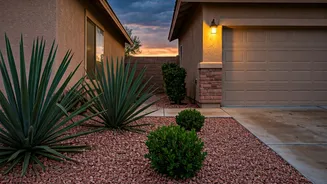
Your yard is more than just decorative; it’s a critical part of your home’s water management system. Neglecting it can have serious consequences. A dead tree with brittle branches, left untrimmed, is a hazard waiting for a 60-mph monsoon gust to send it crashing into your roof or your neighbor’s car. A decorative gravel lawn that has become compacted and uneven can turn into a riverbed, directing a torrent of water and debris straight toward your sliding glass door. Even something as simple as a clogged storm drain on the street in front of your house, which your HOA or city is responsible for but you could have reported, can cause water to back up and flood your driveway and garage. Monsoon prep isn’t just about the structure of the house itself. It’s about taking a clear-eyed look at your entire property and seeing potential projectiles, blockages, and water-flow problems before the wind and rain arrive.