


The Rise of the Playful Curve
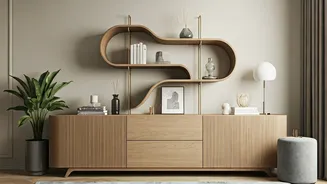
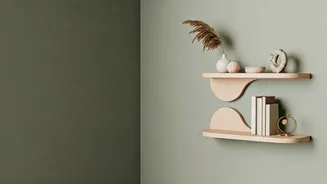
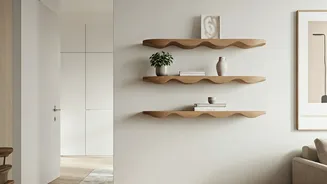
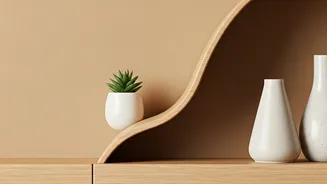
First, let's define the star of the show. Scalloped shelving—also called wavy or rickrack shelving—rejects the straight, severe lines of traditional storage. Instead, its edges feature a series of soft, undulating curves. This design detail can be subtle,
like a gentle wave along a single floating shelf, or more pronounced, with deep, repeating half-moon shapes. The trend is part of a larger movement in interior design away from stark minimalism and toward more organic, whimsical, and personalized spaces. It taps into a desire for softness and playfulness, turning a utilitarian object into a piece of art. Whether crafted from natural wood, painted in a bold color, or finished in sleek acrylic, the scalloped edge adds an immediate dose of personality and handmade charm to a room.
From Functional to Fabulous
The true magic of scalloped shelving lies in its transformative power. Standard shelves, like the ubiquitous floating rectangles or bracketed planks, are designed to disappear. They are purely functional, meant to hold your belongings without drawing attention to themselves. But in a small studio, where every wall is visible from almost every angle, this can contribute to a sterile or uninspired feel. Scalloped shelving does the opposite: it invites you to look. It turns a boring necessity into an intentional design choice. The soft curves break up the monotony of straight lines and hard angles found in most architecture and furniture. This simple visual trick adds movement and rhythm to a wall, making the entire space feel more dynamic, curated, and thoughtfully designed. It's a statement that says, “Even my storage is considered.”
The Small-Space Secret Weapon
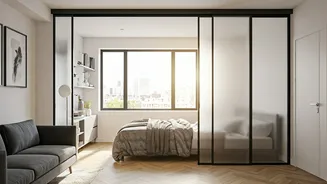
For studio dwellers, this trend is more than just an aesthetic upgrade; it’s a strategic design tool. When you live in one room, creating distinct “zones” for sleeping, working, and living is crucial for sanity. A set of scalloped shelves can help define these areas without erecting a physical barrier. A wavy shelf above a desk carves out a dedicated workspace, while a collection of them in a corner can create a mini-library or a display for cherished objects. Because the shelves themselves are a decorative element, they reduce the need for other wall art, saving valuable visual real estate and preventing the space from feeling cluttered. This efficiency is key in a studio, where every square inch matters. You’re getting two-for-one value: a place to put your books and a captivating feature that elevates your decor.
Putting the Scallop to Work
Integrating this trend into your studio is surprisingly simple. You don't need a full wall of waves to make an impact. A single, strategically placed scalloped shelf can be enough. Consider installing one above your entryway console as a charming catch-all for keys and mail. In a kitchenette, a set of short, wavy shelves can become a stylish spice rack or a place to display your favorite mugs. In the bathroom—often the most sterile room in an apartment—a scalloped shelf can hold toiletries and add a spa-like, whimsical touch. You can even find them in picture-ledge styles, perfect for displaying art prints without committing to a full gallery wall. Whether you buy them pre-made or take on a simple DIY project by adding scalloped trim to an existing plank, it’s an accessible way to make a big impact with a small change.