





The World as a Film Set
There's a reason the arrival of rain is a pivotal moment in so many films. It washes things away, forces characters indoors, and changes the entire mood of a scene. Experiencing a real-life monsoon, whether in the deserts of the American Southwest or the jungles
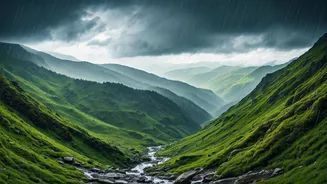
of Southeast Asia, feels like stepping onto a meticulously designed film set. The landscape, once familiar, is instantly transformed. A dusty canyon becomes a stage for temporary waterfalls. A bustling city street, reflected in growing puddles, takes on a moody, noir quality. The rain acts as a great director, calling “Action!” on a version of the world that is dramatic, intense, and deeply atmospheric. It’s a sensory overhaul, where the ordinary is rendered epic and every vista feels like a carefully composed wide shot.
A Saturated Color Palette
Forget the bright, sunny colors of a standard travel brochure. Monsoon travel operates on a different visual spectrum, one that feels intentionally color-graded by an unseen artist. The rain washes the dust off leaves, deepening them to an impossible, cinematic green. Red rocks and clay soil, dampened by a downpour, become rich and burnished, their hues more saturated than they ever appear under the harsh sun. The sky itself is rarely a simple gray; it’s a complex canvas of charcoal, lavender, and bruised purple. This muted, jewel-toned world forces you to notice textures and shades you’d otherwise miss. Everything is slick, reflective, and alive with a quiet intensity. It’s the visual language of a pensive indie film, where mood is conveyed not through grand gestures, but through the subtle shift of light and color.
An Immersive Soundscape
A monsoon trip isn’t just a visual experience; it’s an acoustic one. The sound design is as powerful as any orchestral score. It begins with the pre-storm silence, a heavy, expectant quiet where the only sound is the wind picking up. Then comes the rain itself—a thousand different compositions. It can be a soft, percussive tapping on a tin roof, perfect for introspection. It can be a roaring, deafening downpour that drowns out all other noise, isolating you completely in the moment. The sound of a monsoon is all-encompassing, a physical presence that you feel in your chest. And just as powerful is the silence that follows, a clean, ringing quiet broken only by dripping leaves and the distant rumble of retreating thunder. This natural soundscape creates its own dramatic tension and release, far more compelling than anything you could add in post-production.
Moments of Intimate Focus
Rain has a way of shrinking the world. The mist and downpour obscure distant views, forcing your attention to what’s right in front of you. A single flower, heavy with raindrops. The intricate pattern of a spider’s web, jeweled with water. The faces of people huddled under an awning, sharing a brief, communal moment. This is the cinematic close-up. In these moments, the grand, sweeping landscape gives way to small, intimate dramas. You become more aware of your immediate surroundings and the life unfolding within them. The world feels both cozier and more mysterious, as if secrets are hiding just beyond the curtain of falling water. These are the scenes that build character and add depth to the story, turning a simple trip into a personal narrative.