







More Than Just One Giant Leap
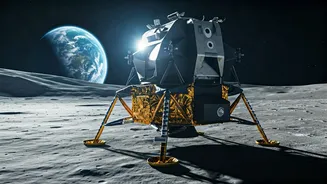
For many Americans, India’s space program seemed to appear out of nowhere. One moment, the major players were the U.S., Russia, and China. The next, India was the fourth country ever to land on the Moon—and the first to reach the treacherous, resource-rich
south pole. But this success was built on a long history of ambitious, cost-effective missions. The Indian Space Research Organisation (ISRO) has been quietly racking up wins for years. In 2014, its Mars Orbiter Mission (Mangalyaan) successfully entered Martian orbit on its first try, a feat no other nation had accomplished. In 2017, ISRO set a world record by launching 104 satellites on a single rocket. These milestones weren’t just technical achievements; they were statements of intent. India wasn’t just participating in space exploration; it was establishing itself as a leader with a distinct and highly effective playbook.
The Secret Sauce: Frugal Innovation
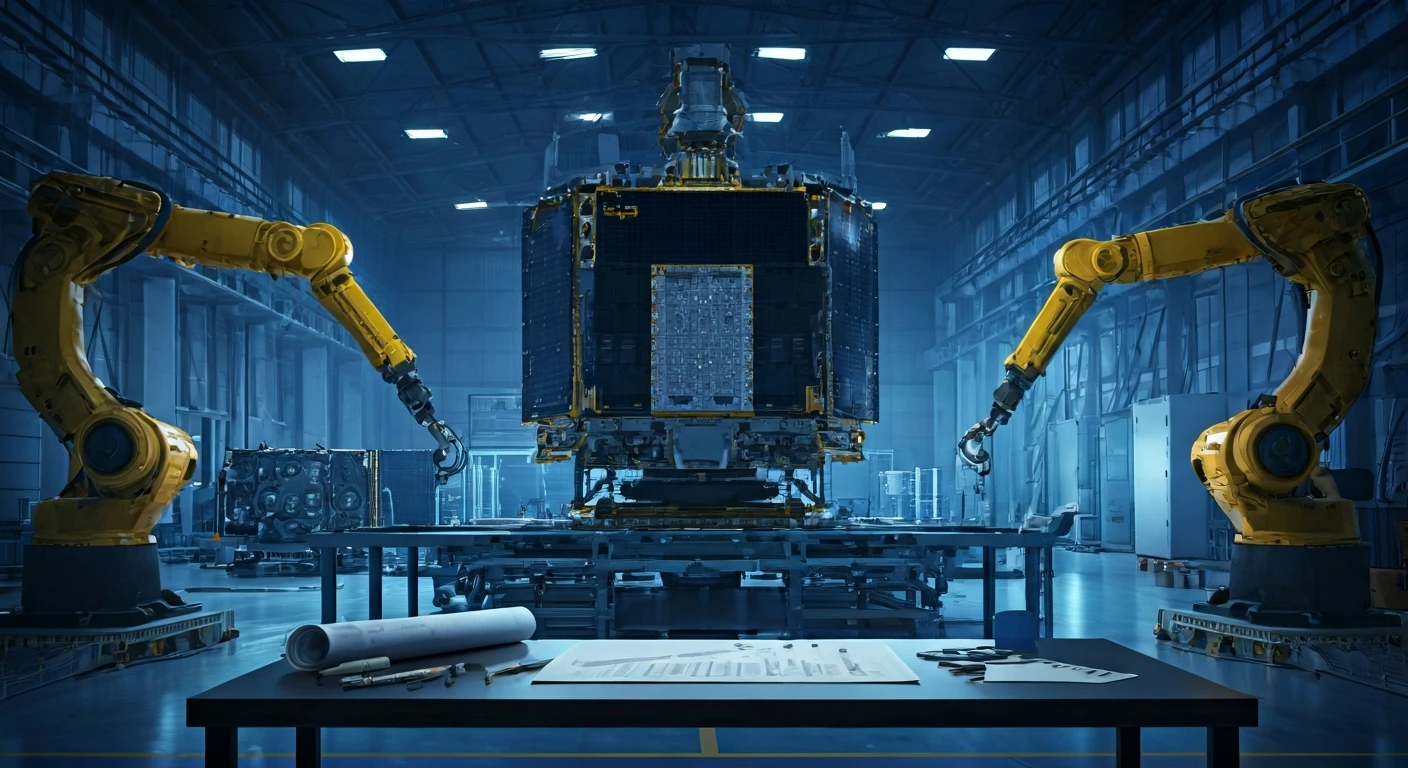
The most stunning aspect of India's space program is its price tag. The triumphant Chandrayaan-3 moon mission cost an estimated $75 million. For perspective, that’s less than the production budget for the Hollywood movie *Gravity*. NASA’s own lunar programs often run into the billions. The Mars Orbiter Mission cost just $74 million, famously cheaper than the movie *The Martian*. This isn’t about cutting corners; it’s about a philosophy deeply embedded in Indian culture known as “Jugaad”—a sort of flexible, frugal ingenuity that prioritizes finding low-cost, effective solutions to complex problems. ISRO achieves this by simplifying designs, using existing technologies where possible, and relying on a highly skilled but less expensive workforce of domestic engineers. Instead of building massive, multi-purpose probes, ISRO focuses on smaller, single-objective spacecraft that do one job exceptionally well. This approach minimizes risk and cost, allowing for more frequent missions and a faster pace of development. It’s a model that proves you don’t need a blank check to reach for the stars.
A Launchpad for Private Ambition
For decades, ISRO was the sole driver of India’s space efforts. Now, that’s changing dramatically. Recognizing the massive economic potential, the Indian government has opened the doors to private enterprise, creating a dynamic ecosystem reminiscent of the early days of SpaceX in the U.S. A new wave of Indian startups is now building rockets, designing satellites, and developing space-based services. Companies like Skyroot Aerospace, which launched India's first privately developed rocket in 2022, and Agnikul Cosmos, known for its 3D-printed rocket engines, are attracting global investment and talent. This privatization isn’t replacing ISRO but complementing it. The state agency is shifting its focus toward deep-space exploration and scientific research, acting as a mentor and anchor client for the burgeoning commercial sector. This public-private partnership is designed to make India a hub for global satellite launches and a competitive force in the multi-billion-dollar space economy.
What It Means for the U.S. and the World
India’s rise isn’t just a matter of national pride; it has significant geopolitical implications. In an era of renewed great-power competition, the U.S. sees India as a key democratic partner in space. While China and Russia collaborate on their own lunar ambitions, the U.S. has welcomed India into the Artemis Accords—a set of principles for cooperation in civil space exploration. This positions India as a crucial counterweight and a valuable ally in developing a rules-based order for activities on the Moon and beyond. For the U.S., India is both a potential collaborator on major scientific missions and a friendly competitor whose lean approach offers valuable lessons. As commercial opportunities in orbit grow, from satellite internet to asteroid mining, India’s low-cost launch capabilities make it an attractive partner for American companies, further intertwining the two nations’ economic and strategic interests.