





The Mission vs. The Headline
Let’s clear one thing up right away: While the excitement is palpable, NASA has not yet officially named the specific astronauts who will land on the Moon during the Artemis III mission. The headline captures the anticipation, but the selection process
is a deliberate and ongoing one. What we *do* have is a clear picture of the mission’s historic goals and the trailblazing crew of its precursor flight, Artemis II. The Artemis III mission, currently targeted for September 2026 at the earliest, is set to be a monumental achievement. Its primary objective is to land two astronauts near the lunar south pole, a region believed to be rich in water ice. Critically, NASA has pledged that this crew will include the first woman and the first person of color to ever walk on the Moon, marking a profound step forward for representation in exploration.
Meet the Trailblazers: Your Artemis II Crew
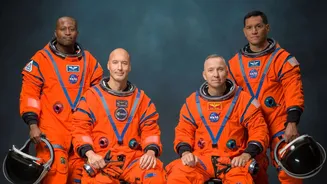
Before anyone can land, a different crew will pave the way. In 2023, NASA announced the four astronauts for Artemis II, a mission that will fly around the Moon and back, testing the Orion spacecraft’s life-support systems on a crewed flight for the first time. Think of them as the final dress rehearsal. This is the crew we know for sure is heading to the Moon’s vicinity:
- **Reid Wiseman (Commander):** A decorated former naval aviator and test pilot, Wiseman has previously lived and worked aboard the International Space Station (ISS).
- **Victor Glover (Pilot):** Another naval aviator, Glover piloted the first operational flight of SpaceX's Crew Dragon capsule to the ISS. He will become the first Black astronaut to travel to the Moon.
- **Christina Koch (Mission Specialist):** An electrical engineer who holds the record for the longest single spaceflight by a woman. Her experience on the ISS will be invaluable, and she is set to become the first woman to fly to the Moon.
- **Jeremy Hansen (Mission Specialist):** A Canadian Space Agency astronaut and former fighter pilot, Hansen’s inclusion highlights the international collaboration at the heart of the Artemis program. He will be the first Canadian to venture to the Moon.
The 'Artemis Generation' in Waiting
So, if that’s the Artemis II crew, who will be chosen for Artemis III’s landing? The answer will come from a select group of highly trained individuals known as the “Artemis Generation.” This pool consists of NASA’s active astronaut corps, a diverse and accomplished group of scientists, doctors, engineers, and pilots. These are the men and women currently undergoing rigorous training for lunar missions. They are learning to work in bulky spacesuits, practicing lunar geology in the Arizona desert, and mastering the complex systems of the Orion capsule and the Human Landing System (HLS) that will ferry them to the surface. The final selection will likely come from this group and will be based on a complex mix of technical skills, teamwork, and mission-specific needs. The two landing astronauts will be chosen from a crew of four, with two remaining in lunar orbit aboard the Orion spacecraft.
What It Takes to Be a Moonwalker
Becoming an Artemis astronaut isn’t just about being a great pilot. The challenges of the lunar south pole demand a new kind of explorer. Unlike the flat, equatorial regions visited by Apollo, the south pole is a land of extreme shadows and terrain. Astronauts need to be field scientists, capable of identifying and collecting valuable geological samples that could unlock the secrets of our solar system. The training regimen is grueling. It involves everything from survival skills to robotics operation. They spend hours underwater in NASA’s Neutral Buoyancy Laboratory to simulate the feel of spacewalks, and they pilot advanced simulators to prepare for the nail-biting descent to the lunar surface. The psychological component is just as critical; the crew must be able to work flawlessly as a team under immense pressure, millions of miles from home.
The Road to the Launchpad
The Artemis III mission depends on more than just a crew. Its timeline is contingent on the readiness of two key pieces of hardware: NASA's own Space Launch System (SLS) rocket and Orion capsule, and the Human Landing System, which is being developed by SpaceX. This lander, a version of the company’s massive Starship vehicle, must complete a successful uncrewed test landing on the Moon before it’s certified to carry astronauts. All eyes are on the progress of these technologies. Once Artemis II successfully completes its lunar flyby, the focus will shift entirely to III. It’s at that point, likely a year or so before the mission itself, that NASA will make its historic announcement and finally reveal the names of the next humans to walk on the Moon.