



What 'Another Earth' Really Means
Before we get carried away, let's define our terms. When astronomers talk about an “Earth-like” planet, they aren’t necessarily talking about a world with oceans, forests, and Starbucks on every corner. They're looking for a much simpler set of criteria.
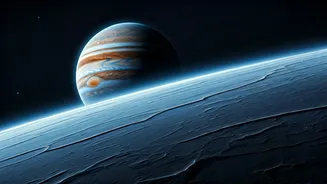
First, the planet has to be rocky, like Earth, Mars, or Venus, not a gas giant like Jupiter. Second, it needs to be roughly Earth-sized—too small and it can't hold an atmosphere; too large and it becomes something else entirely, like a 'super-Earth' or 'mini-Neptune.' The most famous criterion is the 'habitable zone,' often nicknamed the 'Goldilocks Zone.' This is the orbital band around a star where the temperature is just right for liquid water to exist on a planet's surface. Not too hot that it boils away, not too cold that it freezes solid. But even this is a simplification. A planet in the zone could still be a barren, toxic wasteland. Its atmosphere, magnetic field, and geologic activity are all critical factors we are just beginning to be able to probe.
How We Find These Hidden Worlds
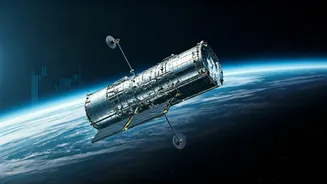
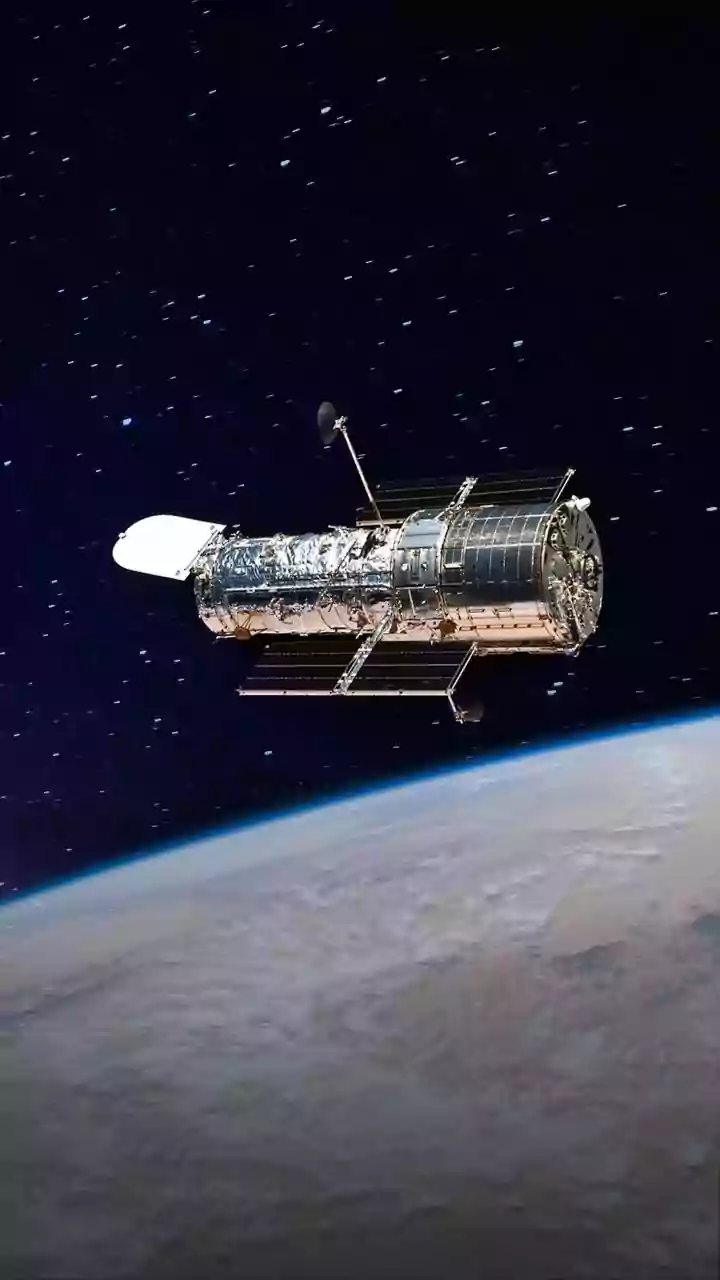
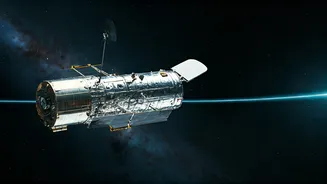
You can’t just point a telescope and see an exoplanet—a planet outside our solar system. They are incredibly small and faint, completely washed out by the glare of their parent stars. Instead, astronomers become cosmic detectives, looking for indirect clues. The most successful method is the 'transit method,' used by missions like NASA’s Kepler and TESS space telescopes. Imagine a moth flying in front of a distant streetlight. You can't see the moth, but you can detect the tiny, periodic dip in the streetlight’s brightness as it passes. That's how the transit method works. By monitoring hundreds of thousands of stars for these faint, regular dips in light, scientists can infer the presence of an orbiting planet, calculate its size, and determine how long its 'year' is.
This single technique is responsible for the discovery of thousands of the more than 5,000 confirmed exoplanets we know of today. It has turned the search for other worlds from a question of speculation into a statistical game with a rapidly growing dataset.
Meet a Few Promising Candidates
So, have we found any contenders? Absolutely. One of the most tantalizing discoveries is the TRAPPIST-1 system, just 40 light-years away. It features not one, but seven rocky, Earth-sized planets orbiting a small, cool star. At least three of them are squarely within the habitable zone. While their star is much dimmer than our sun, these planets huddle so close that they receive comparable energy. However, they are likely 'tidally locked,' meaning one side always faces the star in perpetual daylight, and the other is in permanent night.
Another famous example is Kepler-452b, once dubbed 'Earth’s Cousin.' It’s a rocky planet about 60% larger than Earth, orbiting a sun-like star within its habitable zone. Its year is 385 days long, eerily similar to our own. But at 1,400 light-years away, it’s too distant for us to study its atmosphere in detail with current technology. Every promising candidate comes with its own set of fascinating possibilities and frustrating unknowns.
The Next Frontier: Sniffing Atmospheres
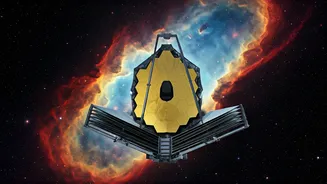
Finding a planet in the right spot is just step one. The real game-changer is figuring out what's in its air. This is the mission of the James Webb Space Telescope (JWST). As a planet transits its star, a tiny fraction of starlight filters through its atmosphere. Webb's incredibly sensitive instruments can analyze that light, breaking it down to look for the chemical fingerprints of gases like water vapor, methane, and carbon dioxide. These are known as 'biosignatures'—gases that, on Earth, are associated with life. Finding them wouldn't be definitive proof of aliens, as geological processes can also create them. But finding a combination of these gases, in a specific ratio that's hard to explain without biology, would be the most profound discovery in human history. Webb is already giving us our first glimpses into the atmospheres of these distant worlds, turning them from simple data points into complex places.