



The Summer Awakening
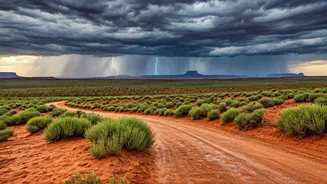
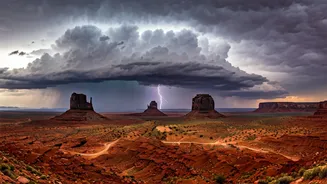
Every summer, a dramatic weather pattern shifts across the American Southwest. The North American Monsoon, typically running from July through mid-September, draws moisture from the Pacific Ocean and Gulf of Mexico, unleashing it in spectacular, often-violent
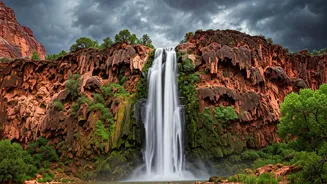
afternoon thunderstorms. For nine months of the year, landscapes in Arizona, Utah, and New Mexico are defined by their aridity—dry riverbeds, or arroyos, snake through dusty plains, and sheer sandstone cliffs bake in the sun. But during the monsoon, this same terrain is transformed. Suddenly, the parched earth can no longer absorb the deluge. Water cascades over rock ledges that were bone-dry an hour before. Creeks reappear in long-forgotten channels. This seasonal rebirth creates one of nature’s most fleeting and dramatic spectacles: the monsoon waterfall. These are not the gentle, moss-lined cascades of the Pacific Northwest; they are powerful, often muddy torrents of water that roar to life and can vanish just as quickly.
Meet the Chasers
This phenomenon has given rise to a unique subculture of outdoor enthusiasts: the waterfall chasers. They aren't just casual hikers who stumble upon a pretty scene. They are a mix of storm chasers, landscape photographers, and seasoned adventurers who meticulously plan their weekends around meteorological forecasts. Their toolkit includes Doppler radar apps, topographic maps, and a deep, hard-won knowledge of the local terrain. They know which canyons are most likely to flood, which cliff faces will produce a fall, and how long they have to get in and out safely.
On social media, groups dedicated to the chase buzz with activity. Members share intel on storm cell movements, road conditions, and trail accessibility. A post might read, “Good cell building over the Superstitions, potential for flow in First Water Creek,” sending a ripple of excitement through the community. For them, the thrill is in the hunt—the successful prediction and the race against time to witness a waterfall that might only exist for a few hours in an entire year.
The Ephemeral Prize
The rewards are singular. One of the most famous examples is Arizona’s Grand Falls, often called “Chocolate Falls.” For most of the year, it’s a wide, terraced cliff in the middle of the Painted Desert. But after heavy monsoon rains upstream on the Little Colorado River, it transforms into a thundering, sediment-heavy cascade wider than Niagara Falls and just as powerful. Capturing it in full flow is a badge of honor.
Elsewhere, hikers venture into slot canyons and remote mountain ranges, seeking more secluded and pristine displays. In places like Zion National Park or the canyons near Sedona, a sudden downpour can activate dozens of temporary waterfalls, creating a scene of almost unbelievable beauty as silver ribbons of water pour down iconic red rock formations. These moments are brief, precious, and profoundly moving, offering a glimpse of the desert’s hidden life force.
A Calculated—And Necessary—Risk
But the beauty is matched by an equal measure of danger. The same force that creates these waterfalls—a massive, sudden volume of water—is also what makes flash floods one of the most significant dangers in the Southwest. A storm happening miles away can send a wall of water, debris, and mud surging down a narrow canyon with no warning. Experienced chasers know the signs: a sudden change in water color, a roaring sound upstream, or an increase in floating debris.
This is not a pursuit for the novice or the unprepared. Every year, search-and-rescue teams are called out to save hikers trapped by rising waters. The community’s ethos is built on respect for the landscape’s power. They emphasize checking forecasts obsessively, always having an escape route, and knowing when to turn back. The goal is to witness the storm’s creation, not to become its victim. The “owning” of monsoon weekends isn’t about conquering nature, but about understanding it well enough to safely appreciate its most powerful displays.