



The Architecture Is Otherworldly
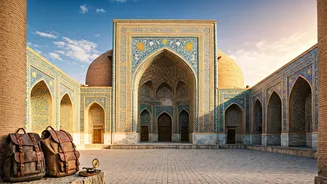
Imagine stepping into a real-life version of *Aladdin*. That’s the feeling you get in cities like Samarkand, Bukhara, and Khiva. We’re talking about vast, intricate mosques, madrassas, and mausoleums covered in shimmering blue, turquoise, and azure tiles.
Samarkand’s Registan Square is the showstopper—a trio of colossal, ornately decorated Islamic schools that will make your jaw drop, especially when they’re lit up at night. In the protected old city of Khiva, you can wander through sandy-colored alleyways that look virtually unchanged for centuries. Unlike some historical sites that feel like sterile museums, these places are alive, humming with a sense of history that’s both epic and deeply personal.
Your Wallet Will Thank You
Let’s get right to it: Uzbekistan is incredibly affordable. For Americans accustomed to European prices, the value here is shocking in the best way. A delicious, hearty meal of *plov* (the national rice pilaf dish) at a local restaurant might set you back just a few dollars. A clean, comfortable room in a family-run guesthouse can easily be found for under $40 a night. Even the bigger expenses are manageable. A ticket on the modern, high-speed Afrosiyob train connecting Tashkent, Samarkand, and Bukhara often costs less than $20. You can travel for weeks in Uzbekistan for what a long weekend might cost in Paris or London, making it a perfect destination for those who want a grand adventure without the grand expense.
It’s Surprisingly Easy to Visit Now
For decades, Central Asia felt remote and bureaucratically challenging for Western travelers. That has changed dramatically. In recent years, Uzbekistan has thrown its doors open to tourism. U.S. citizens can now easily obtain an e-visa online in a few days, eliminating the old hassle of embassy visits and letters of invitation. Furthermore, the country has invested heavily in tourist infrastructure. The aforementioned high-speed trains make zipping between the main Silk Road cities fast, comfortable, and efficient. English is increasingly spoken in hotels and restaurants in tourist hubs, and the metro system in the capital, Tashkent, is a work of art in itself—each station a unique, subterranean gallery of chandeliers and mosaics.
You’re Walking Through Living History
This isn’t just a country with old buildings; it’s a land where the ghosts of history’s giants still roam. This was the crossroads of the world, a vital artery of the Silk Road connecting China with the Mediterranean. It’s the land of Tamerlane (Amir Timur), the formidable 14th-century conqueror who made Samarkand his glittering capital. You can stand in the same courtyards where legendary scientists like Ulugh Beg mapped the stars, and walk through markets that have been haggling hubs for a thousand years. It’s one thing to read about figures like Genghis Khan and Alexander the Great; it’s another to explore the cities they conquered and shaped. The history here feels tangible, not trapped behind velvet ropes.
The Culture Is Warm and Welcoming
For all its monumental architecture, the true heart of Uzbekistan lies in its people. Hospitality is a cornerstone of the culture, and locals are often curious, friendly, and eager to share their world with visitors. You’ll experience this warmth in the bustling chaos of a bazaar, where vendors will enthusiastically offer you samples of nuts and dried fruits. You’ll feel it when a family invites you for a cup of green tea. And you’ll taste it in the food—from savory *samsas* baked in a tandoor oven to the rich, communal experience of sharing a massive platter of plov. This human connection turns a sightseeing trip into a memorable journey.
It Still Feels Like a Real Adventure
While Uzbekistan is becoming more popular, it hasn’t yet reached the point of being overrun. You won’t find yourself stuck in a two-hour line to see the main attraction or fighting through crowds just to take a photo. It occupies that sweet spot for travelers: it’s safe, accessible, and comfortable, but still feels refreshingly off the beaten path. It offers a sense of genuine discovery that’s increasingly hard to find in a hyper-connected world. For the American traveler tired of the same old European vacation, Uzbekistan is an opportunity to see something truly different, to have stories that none of your friends have, and to experience a part of the world that is finally, deservedly, having its moment.