







An Ocean of Humanity
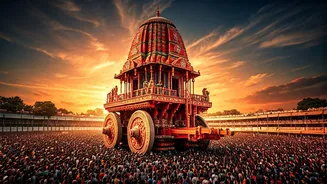
This is the Rath Yatra, or Chariot Festival, in the coastal city of Puri in eastern India. It’s one of the oldest and largest religious gatherings on Earth, yet it remains a vibrant, almost overwhelming sensory experience. The air thrums with the sound
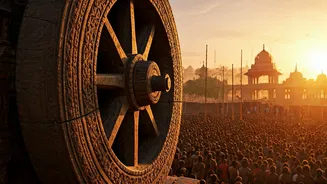
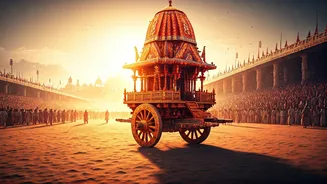
of gongs, conch shells, and rhythmic chants. The streets, packed shoulder-to-shoulder, become a sea of color and motion. For nine days each summer, the city transforms into a grand stage for a divine procession that feels less like a parade and more like a force of nature. It’s a spectacle of collective faith so immense and powerful that it can be felt in your bones, a pulsating energy that has drawn pilgrims and the curious for centuries.
A Journey for the Gods
At its heart, the festival is a story of a journey. The central figures are three deities from Puri's main temple: Lord Jagannath (a form of Vishnu or Krishna), his elder brother Balabhadra, and their sister Subhadra. For most of the year, these deities reside within the inner sanctum of the 12th-century Jagannath Temple, accessible only to Hindus. But during Rath Yatra, they do something extraordinary: they come out. Placed in their magnificent chariots, they travel about two miles to the Gundicha Temple, said to be their aunt’s home, for a nine-day vacation. This annual excursion is a powerful symbol. The gods are leaving their sacred, restricted space to meet the public, allowing anyone and everyone to see them, regardless of faith or social standing. It’s a profound act of divine accessibility.
The Living, Breathing Chariots
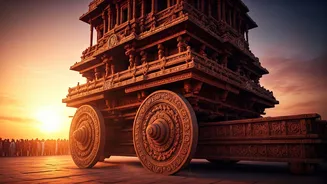
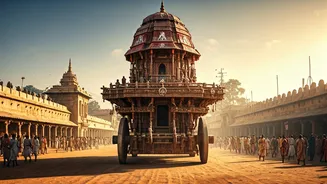
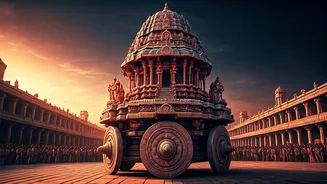
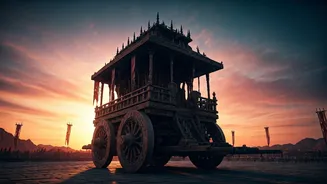
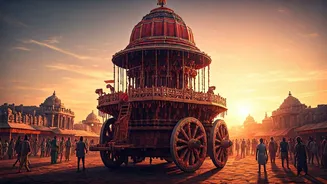
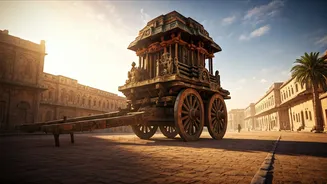
These are not just floats in a parade; the chariots are temporary, mobile temples, each a masterpiece of sacred architecture. They are built fresh every year from specific types of wood, following ancient specifications, by a dedicated community of carpenters. Lord Jagannath’s chariot, Nandighosha, stands roughly 45 feet tall, rolling on 16 massive wooden wheels. Decked out in brilliant red and yellow fabrics, it’s a staggering sight. His siblings’ chariots are similarly grand, though slightly smaller, each with its own unique color scheme and design. The construction process itself is a ritual, starting months in advance. When the festival ends, the chariots are dismantled, and the wood is often used as fuel in the temple's massive kitchen, reinforcing the cycle of creation and dissolution.
The Power of the Pull
The most iconic and electrifying moment of the Rath Yatra is when the chariots begin to move. They have no motors or animals attached. Instead, they are pulled by thousands of devotees using long, thick coir ropes. To lay a hand on these ropes is considered an act of immense devotion and a way to gain spiritual merit. The sight is unbelievable: a tsunami of people straining together, their collective effort slowly, painstakingly inching the multi-ton structures forward. It’s a physical manifestation of communal faith. The progress is slow and often chaotic, with the chariots swaying and sometimes stopping for long periods. But the energy never wanes. This shared struggle and triumph is what makes the festival so intensely personal for everyone involved, turning passive observers into active participants in a divine narrative.