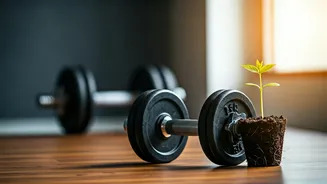






Redefine Your Idea of a Workout
First, let's dismantle a myth: a 'workout' does not have to involve a gym, special clothes, or an hour of uninterrupted, sweat-drenched effort. For many, this all-or-nothing thinking is the biggest barrier. If you can't make it to the spin class, you do nothing.
Instead, redefine exercise as simply 'intentional movement.' Can you walk around the block? Can you do five squats while your coffee brews? Can you take the stairs instead of the elevator? Yes? Then you can work out. By lowering the bar for what 'counts' as fitness, you dramatically increase the opportunities to be active. The goal isn't to run a marathon tomorrow; it's to intentionally move your body today, in a way that feels good and accessible.
Embrace the Power of Walking
Walking is perhaps the most underrated form of exercise in America. It’s free, requires no equipment, and can be done almost anywhere. More importantly, its benefits are profound. According to the CDC, regular brisk walking can help you maintain a healthy weight, strengthen your bones and muscles, improve your mood, and reduce your risk of serious conditions like heart disease and type 2 diabetes. That 'one step' in the headline can be taken literally. Start with a 10-minute walk. Don't worry about pace or distance. Just walk. Notice how you feel. The fresh air, the change of scenery, the simple act of putting one foot in front of the other—it's a mental reset as much as a physical one. It’s the perfect foundation upon which all other fitness goals can be built.
Master the Two-Minute Rule
In his book 'Atomic Habits,' author James Clear introduces a brilliant strategy called the 'Two-Minute Rule.' The concept is simple: when you start a new habit, it should take less than two minutes to do. The idea is to make it so easy to start that you can't say no. 'Read before bed' becomes 'read one page.' 'Do yoga' becomes 'take out my yoga mat.' And 'go for a run' becomes 'put on my running shoes.' The point isn't about the immediate result; it's about mastering the art of showing up. By making the first action ridiculously small, you short-circuit the brain's resistance to change and build the identity of someone who follows through. After you’ve put on your shoes, you might just feel like walking out the door.
Focus on How You Feel, Not Numbers
We often tie fitness goals to external metrics: pounds on the scale, miles on the treadmill, or the size of our jeans. These are long-term, often frustratingly slow-moving targets. A more powerful motivator is to focus on the immediate, internal rewards. Pay attention to how you feel right after you move your body. Do you feel a little less stressed? A bit more energized? Is your mind clearer? These are the real-time benefits of activity. Chasing this feeling—the post-walk mood boost or the sense of accomplishment from a few simple stretches—is far more sustainable than chasing a number. When the goal becomes 'feel better now' instead of 'weigh less in three months,' your motivation system gets a powerful, daily-reinforcing upgrade.
Make a Simple, Concrete Plan
Vague goals lead to vague results. 'I will be more active' is a wish. 'After I finish my morning coffee, I will walk around the block' is a plan. This technique, known as an implementation intention, links a new behavior to a specific time and place or an existing habit. It removes the guesswork and the need for in-the-moment decision-making, which is where good intentions often go to die. So, what is your one step? And, more importantly, when and where will you take it? Write it down. Tell a friend. Set a reminder on your phone. Make it real. The simple act of creating a concrete, bite-sized plan is often the difference between thinking about starting and actually doing it.