



Know Your Numbers (Briefly)
Before we get to the hacks, let’s set the stage. Health authorities recommend women aim for about 25 grams of fiber per day, and men about 38 grams. The average American? We’re getting about 15 grams. That’s a significant gap, but it’s one you can close
without completely overhauling your life. Fiber comes in two main forms: soluble, which dissolves in water to form a gel-like substance (think oats and beans), helping to lower cholesterol and blood sugar; and insoluble, which adds bulk to stool (think whole grains and nuts), promoting regularity. You need both, and these tips will help you get them.
Hack 1: Make Breakfast Your Fiber Anchor
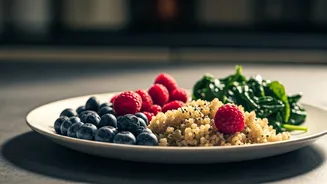
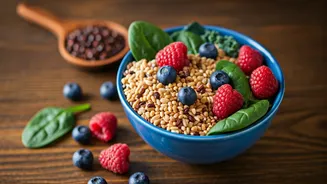
Don’t let your first meal of the day be a fiber-free zone. Swapping your usual cereal for one with “whole grain” as the first ingredient and at least 5 grams of fiber per serving is a powerful first step. Even better? A bowl of oatmeal. A cup of cooked oatmeal has about 4 grams of fiber. Supercharge it by adding a tablespoon of chia seeds (5 grams of fiber) or ground flaxseed (2 grams) and a handful of raspberries (4 grams). Suddenly, you’ve knocked out a huge chunk of your daily goal before you’ve even left the house.
Hack 2: Weaponize Your Grains
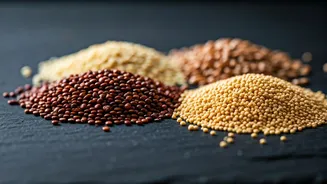
You don't need to go low-carb to be healthy; you just need to choose better carbs. This is one of the easiest swaps. Instead of white bread, rice, and pasta, opt for their whole-grain counterparts. A slice of whole-wheat bread can have 2-3 grams of fiber versus less than 1 gram for white. A cup of brown rice has over 3 grams, while white has less than 1. And look for high-fiber pastas, often made with chickpeas or lentils, which can pack a whopping 8-10 grams of fiber per serving. It's the same meal, just with a powerful digestive upgrade.
Hack 3: Embrace the Humble Legume
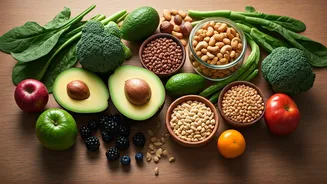
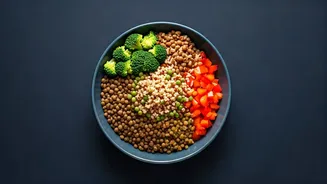
Beans, lentils, and chickpeas are fiber superstars. A single cup of black beans contains 15 grams of fiber—more than half the daily recommendation for many people. Intimidated by cooking them? Don't be. Canned beans are your friend; just rinse them to reduce sodium. You can toss a can of chickpeas into a salad, add black beans to your tacos or soup, or mash up cannellini beans to thicken a sauce instead of using cream. Even simpler: snack on roasted chickpeas or edamame (a cup has 8 grams of fiber).
Hack 4: Turn Snacks into Fiber Opportunities
Mindless snacking can be a source of empty calories, or it can be a strategic tool for hitting your fiber goals. Instead of reaching for chips, grab a handful of almonds (3.5 grams per ounce), an apple with the skin on (4.5 grams), or a pear (6 grams). One of the best and most overlooked fiber-rich snacks is air-popped popcorn. Three cups of it contain over 3 grams of fiber for less than 100 calories. It’s about making small, intentional choices that deliver a nutritional punch.
Hack 5: Go Slowly and Stay Hydrated
This is the most important hack of all. If you’re going from 10 grams of fiber a day to 30 overnight, your digestive system is going to protest—loudly. You may experience gas, bloating, and cramping. The key is to increase your intake gradually over a few weeks to give your gut microbiome time to adjust. As you add more fiber, you must also drink more water. Fiber works by absorbing water, so if you’re dehydrated, it can actually worsen constipation. Aim for at least eight glasses of water a day as you level up your fiber game.