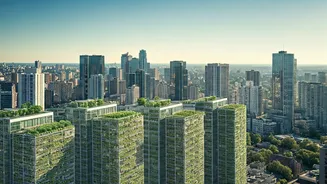










India's Silicon Valley Has a Problem
To understand the push for rooftop farms, you first need to understand Karnataka’s capital, Bengaluru. Often called the “Silicon Valley of India,” it’s a sprawling metropolis of 13 million people, home to the country’s top tech firms and a magnet for ambitious
talent. But this explosive growth has come at a cost. Like many American tech centers, the city is grappling with the consequences of rapid, often unplanned, urbanization. Traffic is notoriously gridlocked, air quality is a persistent concern, and the urban heat island effect makes summers increasingly brutal. More critically, the city's infrastructure is strained. Water is scarce, and the logistics of feeding millions mean that fresh produce travels long distances, losing nutritional value and contributing to carbon emissions along the way. The city’s green cover has shrunk dramatically, replaced by an endless sea of concrete and glass. It's a classic 21st-century urban paradox: a city of the future facing age-old problems of environmental sustainability and resource management.
The Rooftop as a Radical Solution
Enter the humble rooftop garden, reimagined as a strategic urban asset. The Karnataka government’s initiative isn't just about encouraging a nice hobby; it's a multi-pronged policy tool. First and foremost, it addresses food security and nutrition. A small, well-maintained rooftop garden can provide a family with a surprising amount of fresh, organic vegetables, from tomatoes and chilies to leafy greens and gourds. This reduces reliance on long, fragile supply chains and gives citizens direct control over a portion of their food source. But the benefits extend far beyond the dinner plate. These green spaces act as natural insulators, cooling the buildings beneath them and reducing the need for expensive and energy-guzzling air conditioning. This, in turn, helps mitigate the urban heat island effect on a micro-level. Furthermore, rooftop gardens create miniature ecosystems, attracting pollinators like bees and birds, and providing a much-needed patch of biodiversity in a concrete desert. They also offer a practical solution for organic waste management, as kitchen scraps can be composted on-site to create nutrient-rich soil.
How the Government Is Seeding Growth
Recognizing that good intentions alone don't create a movement, Karnataka’s Horticulture Department has stepped in with tangible incentives. The government is actively subsidizing the cost of entry for aspiring urban farmers. Citizens can purchase “terrace garden kits” at a reduced price, which typically include everything needed to get started: grow bags, seeds for local and seasonal vegetables, potting mix, and organic fertilizers. But the support isn't just financial. The department runs workshops and training programs to teach citizens the principles of urban farming, from pest control to water conservation techniques like drip irrigation—a crucial skill in a water-stressed region. This combination of subsidized materials and free education lowers the barrier to entry, making urban agriculture accessible not just to wealthy enthusiasts but to middle-class families across the city. By promoting the program through public awareness campaigns, the government is framing rooftop gardening as a civic duty and a smart, modern lifestyle choice.
The 'Now' Is About Building Resilience
The timing of this intensified push is no accident. The “now” is less about a single trigger and more about a convergence of pressing realities. The COVID-19 pandemic exposed the vulnerability of global and national supply chains in a way few could ignore; when trucks stopped rolling, the importance of local food sources became startlingly clear. At the same time, the impacts of climate change are becoming more acute. India has experienced increasingly frequent and intense heatwaves, and cities like Bengaluru bear the brunt of it. Rooftop greening is now seen as a critical, decentralized tool for climate adaptation. It’s a proactive step towards building urban resilience, preparing the city and its residents for a future that promises to be hotter and more unpredictable. The initiative has moved from a “nice-to-have” beautification project to a “must-have” strategy for survival and sustainability.
A Blueprint for Global Cities?
While the context is specific to Karnataka, the strategy holds valuable lessons for cities worldwide, including in the United States. Urban farming initiatives are already taking root in cities like New York, Detroit, and Chicago, often as grassroots movements to combat food deserts and revitalize neighborhoods. The Karnataka model offers a compelling case study of how municipal and state governments can actively accelerate this trend through strategic support. By viewing empty rooftops not as wasted space but as potential farms, cities can unlock a powerful tool to enhance food security, improve public health, combat climate change, and foster a stronger sense of community. It’s a powerful reminder that sometimes the most innovative solutions are found not in a new app, but in a simple pot of soil, high above the urban fray.