




The Double-Edged Sword of Rain
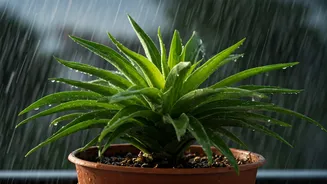
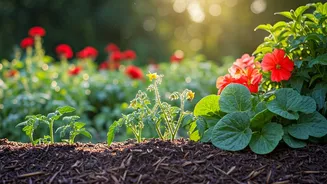
For gardeners, especially in the American Southwest, the arrival of monsoon season feels like a blessing. The air cools, the dust settles, and thirsty plants receive a much-needed drink. But this abundance of moisture, combined with summer heat, creates
the perfect breeding ground for fungal and bacterial diseases. Pathogens like powdery mildew, root rot, and various leaf spot fungi thrive in these humid conditions. Every time you prune, you create an open wound on your plant. During a dry season, this wound might callus over in hours. During a monsoon, it remains a moist, open doorway for opportunistic diseases to invade and take hold, potentially devastating your roses, fruit trees, or vegetable patch.
Anatomy of a Healthy Cut
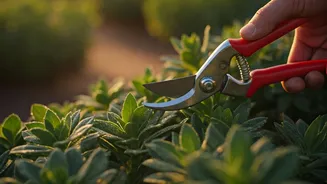
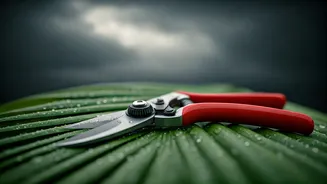
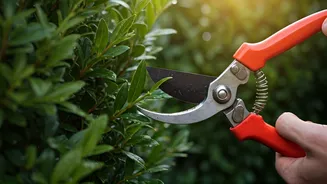
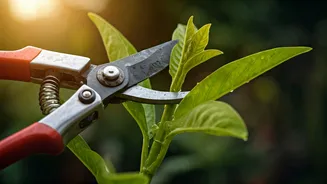
When we talk about a “clean cut,” we’re referring to a slice that is smooth, precise, and made with a sharp tool. A dull or poorly designed pruner doesn't slice through plant tissue; it crushes and tears it. This creates a ragged, messy wound with a larger surface area that takes far longer to heal. The shredded tissue holds more moisture and provides countless nooks and crannies for fungal spores to settle. A clean cut, by contrast, heals quickly. The plant can efficiently seal off the wound, forming a protective layer of callus that acts as a natural bandage. The faster this happens, the less time pathogens have to establish an infection. Think of it as the difference between a surgical incision and a scraped knee—one is designed for minimal trauma and rapid healing, while the other is an invitation for trouble.
Sterilization: Your Best Defense
Making a clean cut is only half the battle. If your tools are dirty, you’re acting as a vector, potentially spreading invisible pathogens from one plant to another. Before you start pruning, and especially between moving from one plant to next, you must sterilize your tools. This is non-negotiable during the high-risk monsoon season. The process is simple. First, wipe any dirt or plant resin from the blades. Then, disinfect them. A quick and easy method is to use a spray bottle or wipes with 70% isopropyl (rubbing) alcohol. You can also dip your blades in a solution of one part household bleach to nine parts water for about 30 seconds, then rinse and dry them to prevent corrosion. This simple habit can mean the difference between a healthy garden and a sick one.
Proper Pruning Technique
Even with a clean, sharp tool, technique matters. Your goal is to encourage healing and direct the plant’s future growth. Always aim to make your cut at a 45-degree angle, about a quarter-inch above an outward-facing bud or leaf node. The slant allows water to run off the surface of the cut, preventing it from pooling and encouraging rot. Cutting above an outward-facing bud encourages new growth to branch out and away from the center of the plant, improving air circulation. Good airflow is another key defense against fungal diseases, as it helps leaves and stems dry more quickly after a downpour. Start by removing any wood that is obviously dead, damaged, or diseased—this is known as the “three D’s” of pruning and is the most essential maintenance you can do.
Timing Is Everything
While maintenance pruning is crucial, try to schedule your work strategically. The ideal time to prune during monsoon season is on a dry, breezy morning. This gives the plant’s wounds the entire day to begin drying and callusing over before the next inevitable afternoon shower or rise in evening humidity. Avoid pruning during or immediately after a rainstorm when everything is saturated. Furthermore, this is the time for light, selective trimming—not major structural renovation. Save heavy pruning, which creates larger wounds and causes more stress, for the dormant season. Focus on thinning out dense canopies to improve airflow and removing problematic branches. This light touch ensures your plants get the benefits of pruning without the overwhelming risk.