


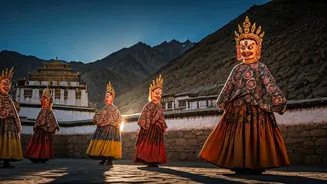
A Land Above the Clouds
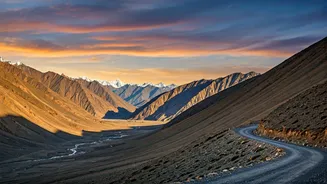
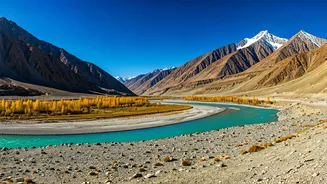
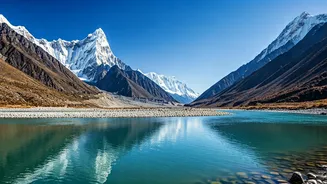
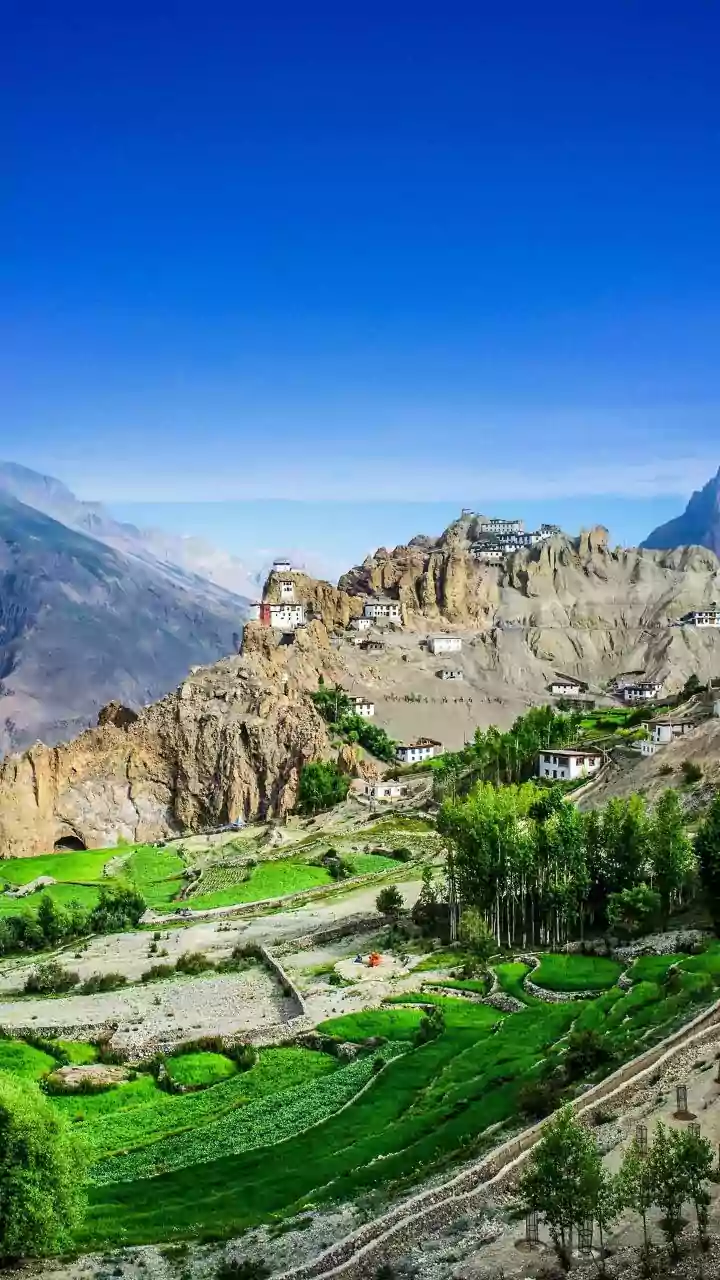
Imagine a place often called “the roof of the world.” This is Ladakh, a high-altitude desert nestled between the Karakoram and Himalayan mountain ranges in northern India. It's a starkly beautiful landscape of barren, ochre-colored mountains, deep blue
skies, and ancient Buddhist monasteries clinging to dramatic cliffs. For centuries, this region, sometimes known as “Little Tibet,” was a remote and isolated kingdom on the Silk Road. Today, it’s a destination that draws adventurers and spiritual seekers alike, a place where the sheer scale of nature forces a sense of perspective.
The River That Named a Nation
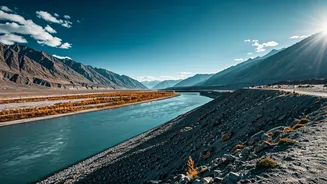
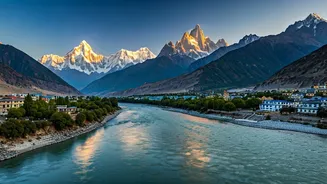
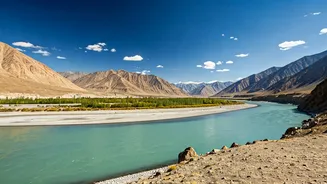
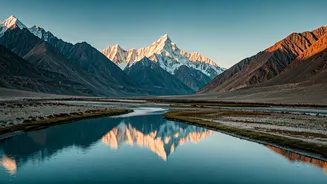
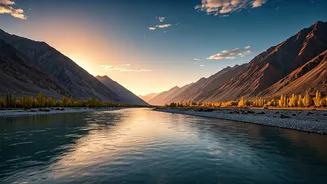
Flowing through this dramatic terrain is a river of immense historical and spiritual significance: the Sindhu, known to the Western world as the Indus. This is not just any river. It is one of the great waterways of Asia, the cradle of the Indus Valley Civilization, one of the world's earliest urban cultures. The very name “India” is derived from “Indus.” For millennia, the Sindhu has been revered in Hindu scriptures as a sacred source of life and purification. It represents a living link to an ancient past, a thread of continuity running through the subcontinent’s complex history. To see the Sindhu is, in a sense, to witness the origins of a civilization.
A Festival of Unity and Water
Against this backdrop, the Sindhu Darshan festival takes place. While the river’s sacredness is ancient, the festival itself is a modern tradition, inaugurated in 1997. Its purpose is twofold: to honor the sacred river and to promote a sense of national unity. “Darshan” is a Sanskrit term meaning to see or behold, often in a spiritual or reverential context. So, Sindhu Darshan is the act of beholding the Indus River. The festival, held each June on the river’s banks near the Ladakhi capital of Leh, brings together people from every corner of India. In a powerful symbol of unity in diversity, participants carry water from their own local rivers in earthen pots and merge it with the waters of the mighty Indus. It’s a vibrant celebration featuring traditional music, dance, and cultural performances from various Indian states, all set against the breathtaking Himalayan scenery.
A Celestial and Symbolic Alignment
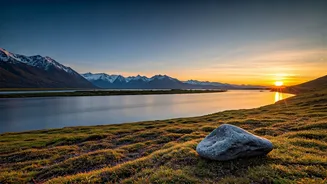
This brings us to the timing. The festival is intentionally held in June to coincide with the full moon, but its proximity to the summer solstice (around June 21st) is what lends it a deeper, more poetic power. The solstice is a universal marker of peak solar energy—the longest day of the year, when light triumphs over darkness. In a high-altitude region like Ladakh, where the sun’s warmth is crucial for life, this astronomical event is especially potent. Aligning a festival that celebrates a life-giving river with the day of the year’s most abundant light creates a perfect symbolic harmony. It’s a moment where human ritual mirrors a celestial cycle. The celebration of national unity and cultural heritage on the banks of the Sindhu becomes intertwined with the celebration of nature at its most powerful and generous. The solstice provides a natural, astronomical anchor for a festival dedicated to the enduring flow of culture and life itself.