



The Pacific Northwest's Liquid Symphony
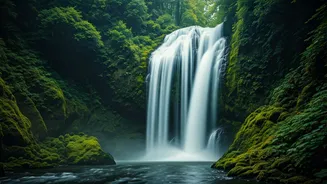
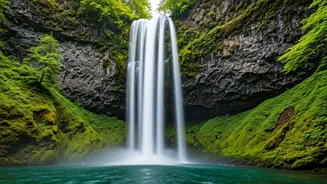
Nowhere in the U.S. is the connection between rain and beauty more apparent than the Pacific Northwest. From late spring to early summer, the region's legendary rainfall culminates in a breathtaking display. The Columbia River Gorge, a canyon straddling
the border of Oregon and Washington, becomes an outdoor cathedral of falling water. The iconic, 620-foot Multnomah Falls swells to its most thunderous peak, but it’s just the beginning. Dozens of other falls, like Latourell, Wahkeena, and Horsetail, line the Historic Columbia River Highway, making for an unforgettable driving or hiking tour. The air is thick with mist, the forests are a vibrant, impossible green, and the sheer power of the water is something you feel in your chest. This isn't just seeing a waterfall; it's experiencing an entire ecosystem at its most dynamic.
Yosemite's Ephemeral Spring Power
If the PNW’s season is a long, drawn-out performance, Yosemite National Park’s is a spectacular, short-lived explosion. The ideal time to visit is a small window in May and early June when the massive Sierra Nevada snowpack, baked by the spring sun, finally melts. This torrent of water feeds the park’s granite cliffs, creating some of the world's most famous waterfalls. Yosemite Falls, one of North America's tallest, roars back to life, its upper and lower sections connected by a cascade of whitewater. The mist from Bridalveil Fall is so intense that it can drench the road and nearby viewing areas, creating rainbows in the afternoon light. It's a fleeting phenomenon. By late summer, many of these giants can be reduced to a mere trickle. To see them in their spring glory is to witness the valley at its most powerful and alive.
The Southern Appalachians' Lush Cascades
Unlike the snowmelt-driven falls of the West, the waterfalls of the Southern Appalachians are a direct result of rainfall, making them a year-round attraction with dramatic peaks after a good storm. This region, particularly in North Carolina, Tennessee, and Georgia, is home to a dense concentration of beautiful, intimate cascades that tumble through lush, temperate rainforests. In areas like North Carolina's Blue Ridge Parkway or Tennessee’s Great Smoky Mountains National Park, a rainy day isn’t a bust—it’s an opportunity. The waterfalls are fuller, the colors of the forest are deeper, and the crowds are often thinner. From the stunning, multi-tiered falls in Gorges State Park to the popular drive-up Dry Falls (which you can walk behind), the experience is less about epic scale and more about immersion in a verdant, misty wonderland.
New York's Gorge-ous Finger Lakes
The waterfall season in Upstate New York’s Finger Lakes region is a story of geology and glacial force. During the spring thaw and after heavy summer rains, water carves its way through dramatic shale and limestone gorges, creating a unique and concentrated waterfall experience. Watkins Glen State Park is the star attraction, where a two-mile trail guides you over, under, and behind an astounding 19 waterfalls in a single gorge. It feels like stepping into another world. Nearby, Robert H. Treman and Buttermilk Falls state parks offer similarly stunning, hike-able gorge trails. While the individual falls might not have the sheer height of Yosemite's, the density and accessibility make this region a premier destination for travelers who want to be completely enveloped by the sound and sight of moving water.