





The Anti-Tourist Trap
For many travelers in India, the term “hill station” conjures a specific image: a bustling “Mall Road” packed with tourists, vendors selling roasted corn, and shops hawking identical wooden trinkets. These colonial-era mountain towns, like Shimla and Manali,
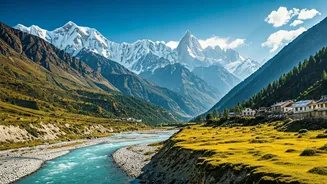
were designed as escapes from the summer heat. But today, their popularity has often led to the very congestion people hope to flee. The “madness” isn't just about crowds; it’s the pressure to consume, to see the prescribed sights, and to navigate a commercialized version of nature. Tirthan Valley, nestled in the Kullu district of Himachal Pradesh, is the quiet rebuttal to this entire model. There is no central Mall Road. There are no sprawling hotel complexes. The valley isn’t a single town but a string of small, serene villages scattered along the pristine, turquoise Tirthan River. It’s a destination that has deliberately chosen a different path, prioritizing ecology over a quick tourist buck.
Life by the River
The entire rhythm of life in Tirthan is dictated by the river that gives it its name. The sound of its rushing water is the valley's constant soundtrack. This isn't a place for a frantic, sight-seeing itinerary. The main activities are refreshingly simple and immersive. Travelers come here to go trout fishing (the valley is famous for it, with a permit system in place to maintain fish populations), to take long walks through dense pine forests, and to simply find a smooth boulder by the water and read a book for an entire afternoon. The valley is dotted with charming wooden bridges that cross the river, connecting small hamlets and apple orchards. The air is clean, the sky is vast, and the sense of tranquility is profound. It’s a destination built for unwinding, not for checking boxes.
A Gateway to the Great Himalayas
Tirthan Valley's biggest draw for adventurers is its status as the gateway to the Great Himalayan National Park (GHNP), a UNESCO World Heritage Site. This protected area is a bastion of biodiversity, home to elusive species like the snow leopard, Himalayan tahr, and Western tragopan. The park is a trekker's paradise, offering everything from gentle day hikes to strenuous multi-day expeditions into its core zone. From the village of Gushaini in Tirthan, you can embark on trails that lead you deep into pristine, untouched wilderness. Unlike more accessible trekking routes in the Himalayas, the paths here are quiet. You are more likely to encounter a local shepherd and his flock than another group of tourists. This proximity to raw, protected nature is what gives Tirthan its wild, untamed spirit.
Homestays Instead of Hotels
Perhaps the most defining feature of Tirthan's tourism model is its emphasis on homestays. Instead of faceless hotels, visitors stay in the homes of local families. These aren’t just rooms for rent; they are invitations into a way of life. You eat delicious, home-cooked meals made with ingredients from the family garden. You learn about local customs and hear stories about the valley from people who have lived there for generations. This approach has allowed the local community to benefit directly from tourism without ceding control to large corporations. It fosters a more intimate and respectful relationship between visitors and hosts, turning a simple vacation into a genuine cultural exchange. It’s a sustainable model that preserves the very authenticity that makes Tirthan so special.