







The Wettest Place on Earth
Tucked away in the Khasi Hills of northeastern India, the village of Mawsynram holds the Guinness World Record for the highest average annual rainfall on the planet. We’re not talking about a few extra inches; we’re talking about an average of 467 inches (nearly
39 feet) of rain per year. To put that in perspective, Seattle, a city famous in the U.S. for its drizzle, gets about 38 inches annually. Mawsynram receives more than that in a typical two-day period during the peak of its monsoon season, which runs from roughly June to September. Here, rain is the default setting. The sound is not a gentle pitter-patter but a constant, percussive roar that becomes the soundtrack of daily life, muffling all other noises and demanding your full attention.
A Landscape Reborn in Water
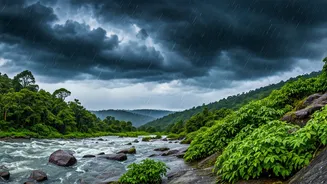
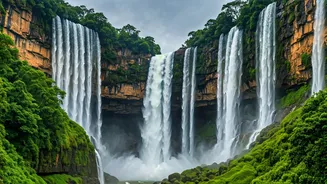
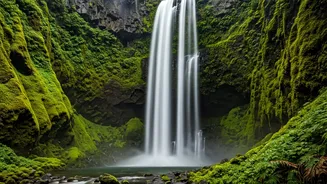
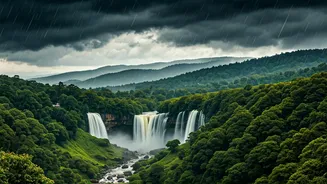
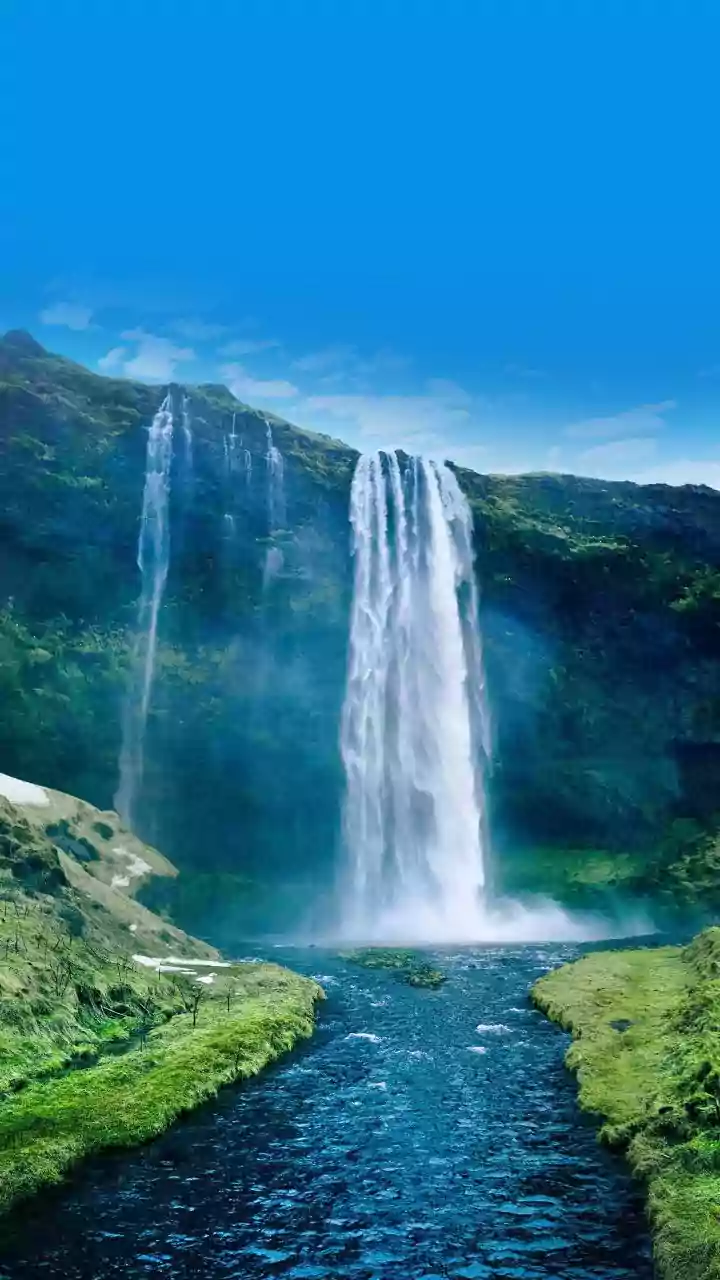
The true spectacle of Mawsynram isn't just the quantity of rain, but the dramatic transformation it causes. As the monsoon winds sweep in from the Bay of Bengal, laden with moisture, they are forced up by the Khasi Hills, where they cool and unload their watery cargo. The result is a world washed anew. The rolling green hills, already lush, turn an almost fluorescent shade of emerald. Thick blankets of fog and low-hanging clouds drift through the valleys, often descending right into the village streets, blurring the line between earth and sky. And then there are the waterfalls. Hundreds, if not thousands, of them burst forth from cliffs and hillsides, appearing overnight where there was only bare rock before. These ephemeral cascades create a stunning, dynamic water world that is constantly in motion.
Life in Harmony with the Rain
For the local Khasi people, living with this deluge isn't a struggle; it's a way of life built on centuries of ingenious adaptation. Instead of flimsy umbrellas, villagers use traditional, full-body rain shields called 'knups.' These are turtle-shell-shaped baskets woven from bamboo and banana leaves, worn on the back to keep the head and shoulders dry, leaving hands free for work. During the heaviest downpours, life moves indoors. The marketplace quiets, and the community turns to indoor activities. Schoolchildren might get a 'rain holiday,' not because of a storm, but because the sheer volume of water makes the journey too difficult. Roofs are soundproofed with grass to dull the deafening roar of the rain, allowing for conversation and sleep. It's a testament to human resilience and the ability to find rhythm and peace within an extreme environment.
Bridges Grown, Not Built
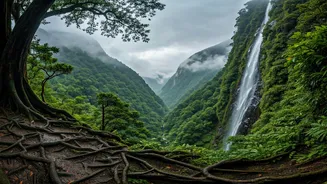
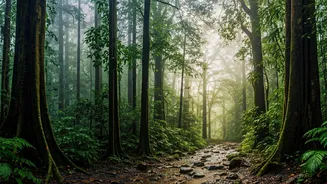
Perhaps the most iconic symbol of this harmony is found throughout the Meghalaya region: the living root bridges. In a place where a wooden or bamboo bridge would quickly rot and be washed away by swollen rivers, the Khasi people developed a breathtakingly patient form of bio-engineering. They guide the aerial roots of the Ficus elastica tree (a type of rubber tree) across rivers and gorges, weaving them through hollowed-out logs. Over decades, these roots grow, strengthen, and intertwine to form a solid, living bridge capable of supporting human weight and withstanding the monsoon's fury. Some of these bridges are centuries old, becoming stronger with each passing year. They are a powerful, beautiful metaphor for life in Mawsynram—a life not built against nature, but grown in partnership with it.