







A Lunar Landing Heard Around the Nation
For a generation of Americans, the Apollo missions are a touchstone—a defining national project that proved anything was possible and inspired countless careers in science and engineering. In 2023, India had its own version of that moment. The successful
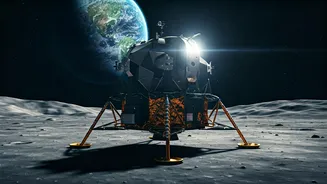
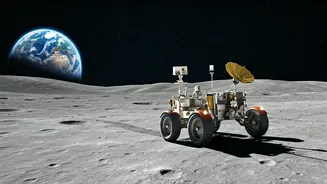
landing of the Chandrayaan-3 rover wasn’t just a win for the Indian Space Research Organisation (ISRO); it became a deeply personal victory for 1.4 billion people. Millions gathered in city squares, offices, and homes, glued to screens as the lander made its final, nail-biting descent. When it landed safely, the eruption of joy was palpable. This wasn't just another space mission. It established India as only the fourth country to land on the Moon and the very first to reach the unexplored, resource-rich lunar south pole. More poignantly, it came just days after Russia's Luna-25 probe crashed while attempting the same feat, and four years after India's own Chandrayaan-2 mission ended in a heart-breaking last-minute failure. This story of resilience—of learning from failure and achieving the impossible—has proven to be an incredibly powerful narrative.
The 'Chandrayaan Effect' in Schools
The most profound impact of the landing may not be on the Moon, but in India’s classrooms. In the weeks and months that followed, a phenomenon dubbed the 'Chandrayaan effect' swept the nation. Suddenly, 'ISRO scientist' became a dream job on par with the traditionally coveted roles of doctor or software engineer at a multinational tech firm. Educators across the country reported a surge in students' curiosity about astronomy, physics, and robotics. School science fairs saw a proliferation of model rockets and rovers. This isn't just anecdotal. The mission provided a tangible, awe-inspiring answer to the age-old student question: 'When will I ever use this?' By demonstrating what's possible with a strong foundation in STEM, ISRO gave teachers a real-world lesson plan that no textbook could ever match. The landing transformed abstract scientific principles into a visible, thrilling reality, making science not just important, but cool. It represents a powerful form of soft power, one that shapes a country from the inside out by directing its most valuable resource—its young minds—toward building the future.
Fueling a New Generation of 'Astropreneurs'
The inspiration isn’t limited to future government scientists. India’s space success has supercharged its burgeoning private space-tech ecosystem. For years, ISRO operated largely as a government monopoly. But recent policy shifts have opened the doors for private companies, and the Chandrayaan-3 mission just kicked that door wide open. The mission's success has served as a massive validation for the entire Indian space sector, boosting investor confidence and attracting top-tier talent. A new wave of startups—sometimes called 'astropreneurs'—is emerging to build everything from satellites and launch components to data analytics platforms that leverage space-based assets. These companies are now seen as high-growth, high-impact ventures, not niche scientific pursuits. Graduates from India's elite engineering institutes, who might have once aimed for Silicon Valley, are increasingly choosing to join or found these domestic space startups. The mission effectively created an entire industry halo, signaling that India is a place where you can do world-class, deep-tech work.
A Blueprint for Frugal Innovation
Perhaps the most globally significant aspect of India's space story is how it was achieved. The Chandrayaan-3 mission cost an estimated $75 million. For context, that’s less than the production budget for Hollywood movies like *Interstellar* or *Gravity*, and a fraction of the cost of similar missions undertaken by other nations. This principle of 'frugal innovation'—achieving complex, high-tech goals with limited resources—is central to ISRO's identity. This model does more than just save taxpayer money; it democratizes space exploration. It demonstrates to other developing nations that a robust space program is not an unaffordable luxury reserved for superpowers. By proving that ingenuity can be as powerful as a massive budget, India is not just exploring space but also rewriting the rules of entry. For the United States and other established space powers, it's a compelling case study in efficiency and a reminder that the next great leap could come from anywhere.