


The Instagram Itinerary
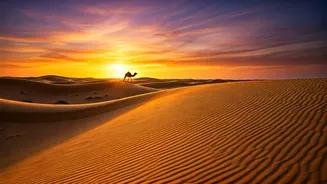
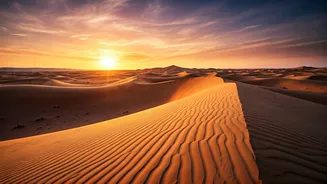
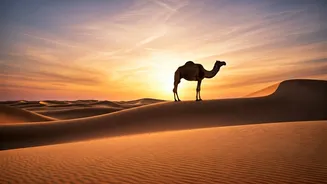
Let’s be honest: the Jaisalmer you’ve seen online is probably a camel silhouetted against a fiery sunset. It’s a man in a vibrant turban, a night under the stars in a desert camp, a whirlwind of shopping for mirrored textiles and leather goods. These
are the expected beats of a trip to India’s most famous desert outpost. And while a sunset camel ride has its undeniable romance, it has also become a well-oiled, commodified experience. You are one of dozens, sometimes hundreds, following a familiar path for a familiar photograph. This isn't to say it’s not worthwhile. But it’s the postcard version of Jaisalmer, the one that’s easily packaged and sold. It’s a performance for visitors. The city’s true soul, however, doesn’t put on a show. You have to find it. And the place to find it is where the city began—and in many ways, where it continues—within the ancient walls of its fortress.
The Climb in the Quiet
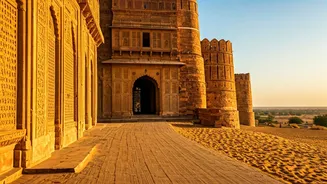
Jaisalmer Fort, a UNESCO World Heritage site, is not a ruin or a museum. It is one of the last living forts in the world, a colossal sandstone masterpiece where thousands of people still reside. Before the sun crests the horizon, the fort is a sleeping giant. The massive gates, which will later throng with tourists and shopkeepers, are nearly empty. The air is cool and still. As you walk the winding cobblestone path upward, the city below is a dark, silent map.
The only sounds are your own footsteps, the distant bark of a dog, or perhaps the first call to prayer echoing faintly from a mosque. The sandstone walls, a pale honey color in the moonlight, seem to absorb the silence. This is the approach, the pilgrimage before the revelation. You are entering not a tourist attraction, but a neighborhood that is about to wake up, just as it has for nearly 900 years.
When the Walls Turn to Gold
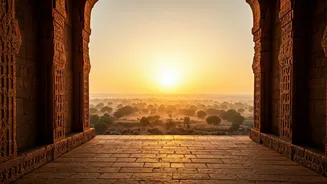
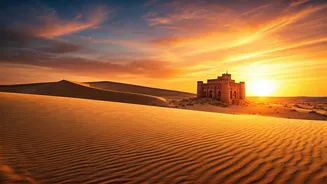
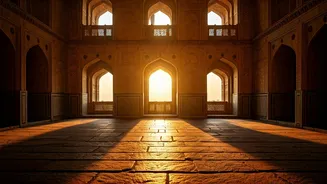
Then, it happens. The first rays of sun strike the highest bastions of the fort. The magic of Jaisalmer’s nickname becomes literal. The sandstone doesn’t just get brighter; it transforms. It ignites from within, shifting from tan to honey, then to a deep, burnished gold. Every carving, every latticed jharokha window, every turret is thrown into sharp, brilliant relief. This is the moment.
Inside the walls, life stirs. The air fills with the scent of woodsmoke and frying dough. A chai wallah clanks his kettle, preparing the first sweet, milky tea of the day for residents heading to work. Temple bells begin to ring from the fort's ancient Jain and Hindu temples, a gentle, percussive rhythm that underpins the morning. Children in school uniforms, laughing and chasing each other, clatter down alleyways that have been trod by generations. You are not a spectator watching a reenactment; you are an observer witnessing life.
The Living, Breathing Flex
This is the real Jaisalmer flex. It's not about an activity you can book or a photo you can perfectly stage. It’s the profound feeling of being immersed in living history. You stand on a rampart, sipping hot chai from a clay cup, watching eagles circle above as the city below comes to life. You see families hanging laundry from windows carved in the 15th century. The fort is not an exhibit; its alleyways are arteries, and the morning pulse is the flow of daily life.
That quiet half-hour, when the golden light is perfect and the sounds are of a community waking, offers a connection far deeper than any desert safari. It’s a powerful reminder that this incredible fortress, this fairy-tale castle in the sand, is, above all else, a home.