




Why Sweet and Savory Works
The magic of adding a ripe peach or a handful of cherries to a bed of greens isn't just about adding sweetness. It's about creating complexity. Professional chefs live by the principle of balancing flavors: sweet, salty, sour (acidic), and bitter. A perfectly
ripe piece of stone fruit provides a burst of natural sugar and a touch of acidity that plays beautifully against salty cheeses, bitter greens, and tangy vinaigrettes. Think of prosciutto wrapped around melon—it’s the same glorious concept. The fruit’s juicy, soft texture also offers a delightful contrast to crunchy nuts or crisp lettuce. This isn't just about throwing fruit on a salad; it's a strategic move that builds a more complete and satisfying flavor profile in every single bite.
Choose Your Peak-Season Player
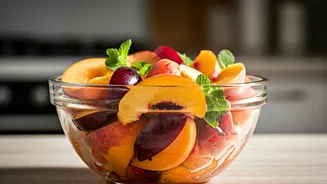
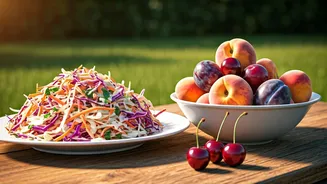
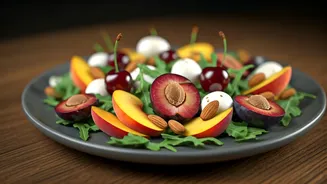
The key to success is using fruit at its absolute peak. A hard, mealy peach will do you no favors. Seek out fruit that is fragrant, gives slightly to gentle pressure, and feels heavy for its size. Peaches and nectarines offer a classic, honeyed sweetness that pairs with almost anything. Plums, especially darker varieties, bring a deeper, tarter flavor that can stand up to bold cheeses like blue or gorgonzola. Apricots have a delicate, floral character perfect for lighter salads with mild herbs. And don't forget cherries; pitted and halved, their intense sweetness and tart skin provide perfect little jewels of flavor that pop in your mouth. Visit a local farmers market and ask what’s best—you’ll be rewarded with the best possible ingredients.
Build a Savory Foundation
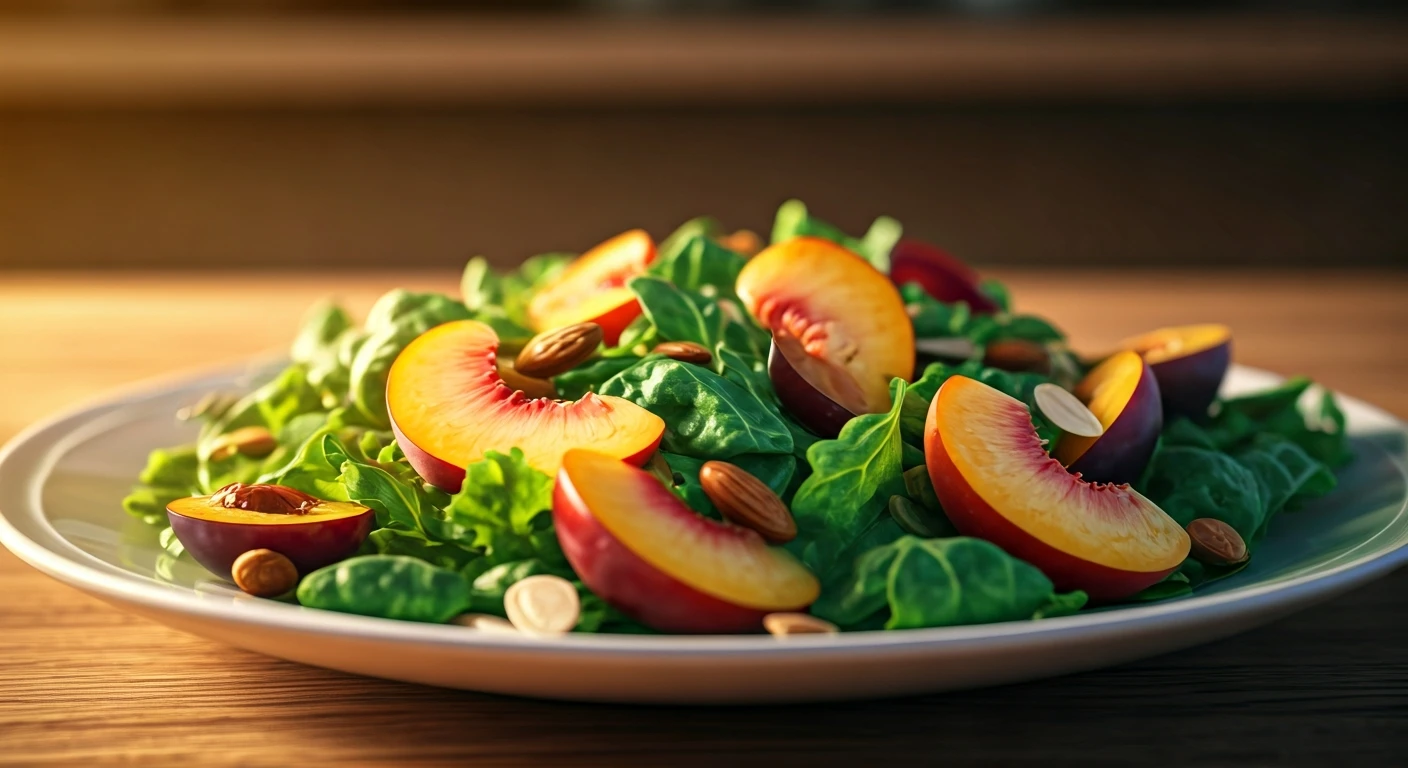
With your sweet element chosen, build a savory base to support it. The greens you choose matter. Peppery arugula is a fantastic counterpoint to a sweet peach, its bitterness balancing the sugar. Softer greens like butter lettuce or baby spinach create a more delicate canvas, letting the fruit and other toppings shine. Don't be afraid to mix in fresh herbs. Basil has a natural affinity for peaches and nectarines, creating an aroma that screams summer. Fresh mint is incredible with cherries and plums, adding a cooling finish that is uniquely refreshing on a hot day. The goal is to create a backdrop that complements, rather than competes with, the star fruit.
Add Creaminess and Crunch
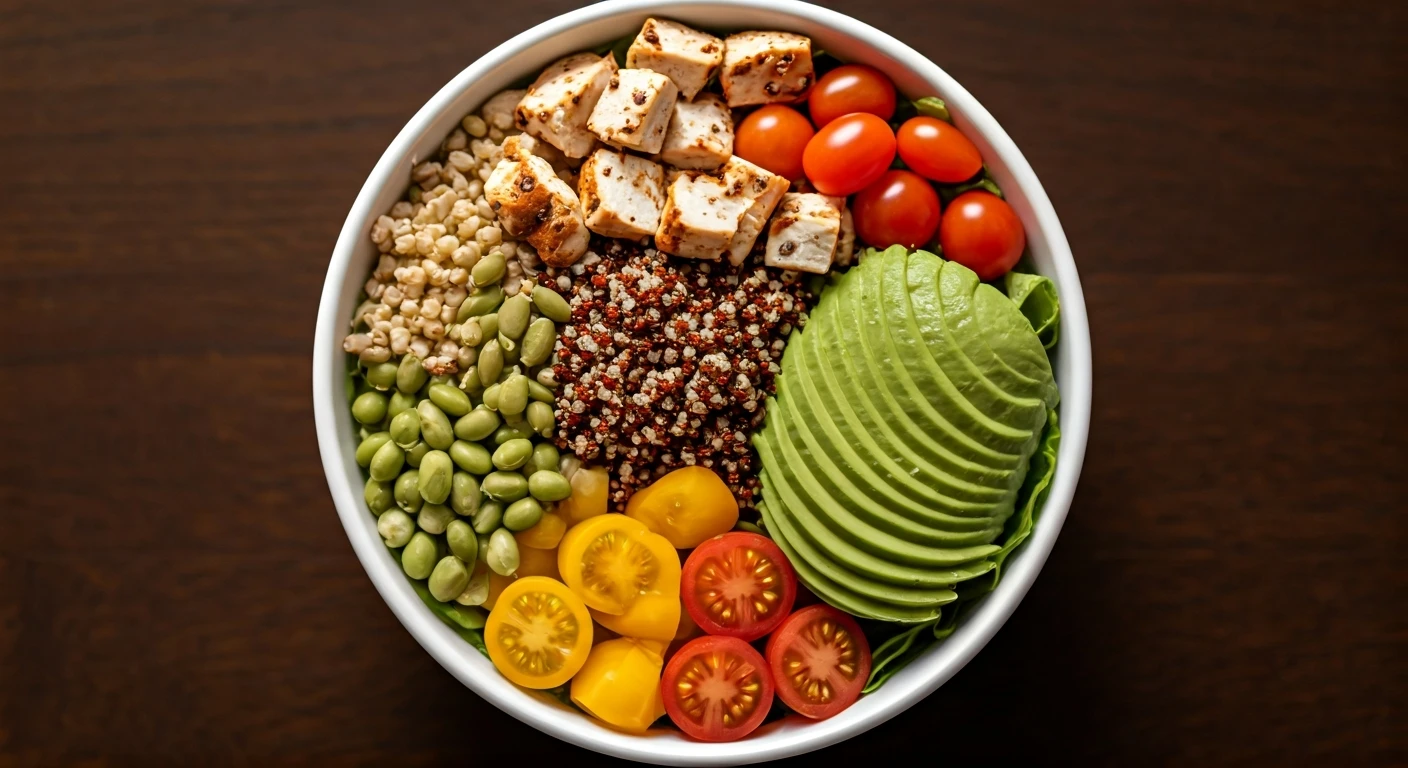
This is where the salad truly starts to feel “fancy.” Texture is what separates a forgettable salad from a memorable one. For creaminess, cheese is your best friend. Crumbled goat cheese offers a tangy, earthy element that works with all stone fruits. Salty, briny feta is another classic pairing, especially with nectarines. For something bolder, a pungent blue cheese or gorgonzola can stand up to a rich, sweet plum. For crunch, think beyond croutons. Toasted nuts like pistachios, slivered almonds, or pecans add a rich, savory crunch. For a different kind of texture, try adding a cooked grain like quinoa or farro, which makes the salad a more substantial, meal-worthy dish.
Dress It Simply
With so many wonderful flavors already in the bowl, the dressing should be simple and supportive. A heavy, creamy dressing will weigh everything down and mask the fresh fruit. Your best bet is a light vinaigrette. The formula is foolproof: about three parts good olive oil to one part acid. For the acid, you can use lemon juice, which brightens everything, or a vinegar that complements the fruit. Balsamic vinegar is a classic for a reason—its syrupy sweetness enhances the fruit. White wine vinegar or apple cider vinegar are also excellent, clean-tasting choices. Just whisk them together with a pinch of salt, pepper, and maybe a tiny bit of Dijon mustard to help it emulsify. Drizzle lightly, toss gently, and serve immediately.