






From Merchant Mansion to Modern Muse
Before they were boutique hotels dotting the Instagram feeds of discerning travelers, havelis were the grand private mansions of wealthy merchants and nobles in India and Pakistan, particularly flourishing in regions like Rajasthan and Gujarat during
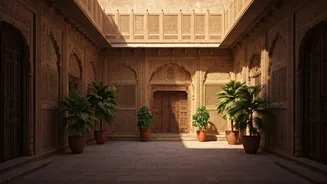
the 18th and 19th centuries. The word 'haveli' itself, derived from Persian, means 'enclosed place.' These were not just houses; they were statements. Built as sprawling, multi-story complexes arranged around a series of courtyards, they served as both a family home and a fortress of privacy. The outer courtyards were for business and public life, while the inner sanctums were reserved for the family. Each haveli was a self-contained world, designed to shield its inhabitants from the bustling streets and the harsh desert sun, creating a cool, shaded oasis within.
A Symphony in Stone and Fresco
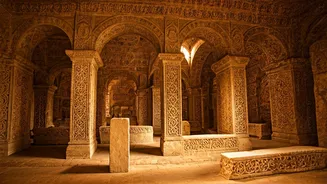
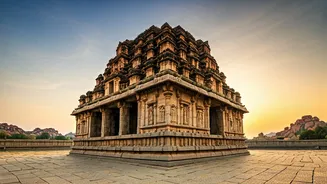
To step into a well-preserved haveli is to be completely enveloped by art. The architecture is a masterclass in functional beauty. Ornately carved sandstone facades give way to doorways framed by elaborate arches. Look up, and you’ll see 'jharokhas'—enclosed balconies with intricate screens that allowed the women of the household to observe the world outside without being seen. But the real spectacle is often on the walls. The merchants who built these homes competed to display their wealth and sophistication, commissioning artists to cover nearly every surface with detailed frescoes. These paintings tell stories of mythology, epic battles, colonial-era trains, and daily life, turning the building itself into a vibrant, open-air art gallery. In some, entire rooms are covered in 'thikri,' a mesmerizing form of mirror-work mosaic that shimmers and dances in the candlelight, creating an effect of being inside a jewel box.
The Art of Thoughtful Restoration
For decades, many of these architectural treasures fell into disrepair as trading routes shifted and family fortunes waned. The cost of maintaining such large, complex structures was immense. But a new chapter began when enterprising families and conservation-minded hoteliers saw the potential not to replace, but to restore. Resurrecting a 200-year-old building is a delicate balancing act. It involves painstakingly repairing crumbling frescoes with traditional pigments, sourcing artisans who still practice centuries-old carving techniques, and weaving modern plumbing and electricity into the ancient floorplan without destroying its character. The goal isn’t to create a sterile museum piece, but a living, breathing space that honors its past. The result is a hotel where your room might have a hand-painted ceiling and your bathroom is tucked into what was once a turret, complete with modern comforts that a 19th-century spice merchant could only dream of.
Beyond the #InstaWorthy Shot
Yes, the headline is true. Every archway frames a perfect portrait. Every courtyard is a ready-made vignette. The vibrant blue doorways, sun-drenched terraces, and shimmering plunge pools are, without question, 'travel feed gold.' It’s impossible not to take a thousand pictures. But the real magic of staying in a haveli is what happens between the photos. It’s the feeling of your footsteps echoing in a stone corridor that has absorbed two centuries of secrets. It's the quiet moment sipping chai in a courtyard, listening to the birds and the distant sounds of the city. It’s tracing the faded outline of a painted elephant with your finger and feeling an undeniable connection to the person who painted it. The photos will get the likes, but the experience itself reshapes your understanding of what a hotel can be. It’s not just a place to sleep; it’s an opportunity to inhabit history.