



The Slow Disappearance of a Signal Bar
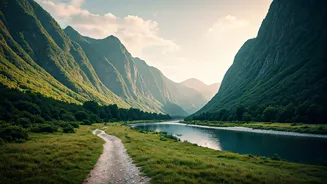
The journey into India’s Tirthan Valley is a gradual letting go. As your car winds its way from the bustling hub of Aut, deeper into the Kullu district of Himachal Pradesh, you watch the modern world recede. The billboards fade, the traffic thins, and
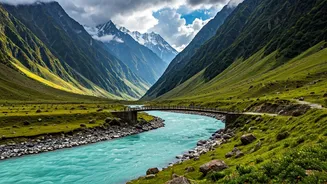
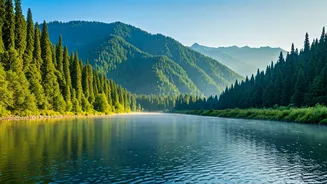
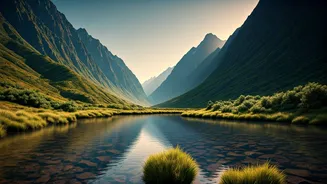
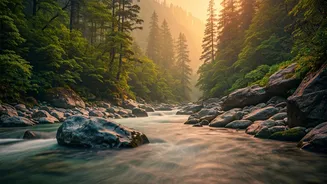
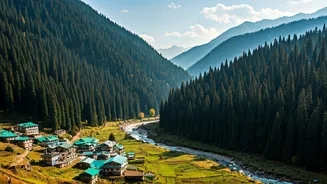
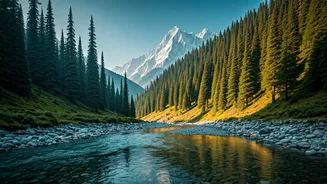
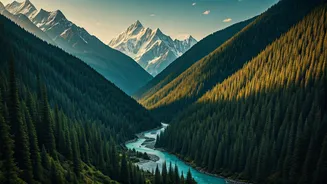
eventually, so does the cellular signal. One by one, the bars on your phone screen vanish, not with a sudden cutoff, but a slow, gentle surrender. For the chronically online, this moment induces a familiar flicker of panic. No email, no doomscrolling, no Instagram stories. But as the road narrows and the turquoise Tirthan River comes into view, flanked by towering deodar pines, that panic is replaced by something else: a profound sense of arrival. You haven't just reached a destination; you've entered a different state of being, one where the only notifications come from the chirping of a Himalayan bulbul or the rush of water over ancient stones.
Finding a Better Connection
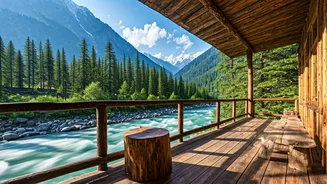
The 'romance' of Tirthan isn't just for couples, though many find it an idyllic escape. It’s a romance with the present moment. In the absence of a digital tether, your senses awaken. The air, crisp and scented with pine, feels sharper in your lungs. The food at your riverside homestay—perhaps fresh-caught trout and local red rice—tastes more vibrant. Conversations, uninterrupted by pings and buzzes, deepen. You talk to your travel companions, your hosts, and fellow wanderers with an attentiveness that feels almost radical in its simplicity. Without Google Maps, you ask for directions from a local villager, a simple transaction that often blossoms into a shared cup of chai and a story. This is the connection Tirthan offers: analog, human, and wonderfully inefficient. It reminds you that the most important networks are not built by cell towers but by shared experiences.
An Itinerary Written by Nature
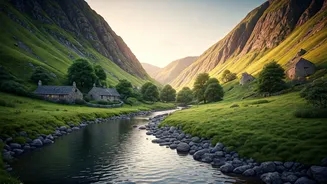
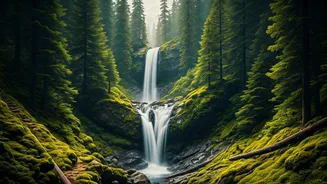
So, what do you do when you can’t look at your phone? You look up. You look around. Tirthan, a gateway to the Great Himalayan National Park (a UNESCO World Heritage Site), doesn’t have a checklist of tourist traps. Its itinerary is written by the landscape itself. Mornings are for lazy walks along the river, searching for the perfect flat stone to skip. Afternoons are for ambitious treks to hidden waterfalls or serene alpine meadows, where the only sound is the wind. The valley is famous for its trout fishing, a meditative exercise in patience and focus. You can spend an entire day with a book by the river, your reading punctuated only by the desire for another cup of tea. Instead of planning your next move on a screen, you follow a path because it looks interesting, you stop because the view is breathtaking, and you rest when your body tells you to. It's a rhythm dictated by sunlight and appetite, not by a digital calendar.
The Luxury of Being Unreachable
In our hyper-connected world, being unreachable has become the ultimate luxury. Tirthan Valley delivers this not through expensive, curated wellness retreats, but through its very geography. The steep valley walls and remote location have naturally insulated it from the relentless march of 5G. While some guesthouses offer spotty Wi-Fi (often just strong enough to send a reassuring “I’m alive” message), the true spirit of the place encourages you to forget it exists. The experience is a powerful lesson: boredom is a gateway to creativity, silence is a pathway to reflection, and being fully present with the person in front of you is more fulfilling than connecting with a hundred people online. You don’t go to Tirthan to escape life; you go to find it again, stripped of all the digital noise.