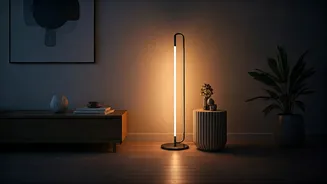









More Than a Mood Light
For many Americans, smart lighting is a nice-to-have luxury—a way to dim the lights for movie night without leaving the couch. In India, however, the adoption of connected LEDs from brands like Philips, Wipro, and Xiaomi represents something far more
significant. It’s the entry point into the connected home for a massive and aspirational middle class. While the ability to change a room’s color from warm white to magenta with a voice command is a popular feature, the real drivers are more practical. It’s about convenience in bustling, multi-generational households, a tangible sign of upward mobility, and a clever solution to uniquely local challenges.
The Voice-First Revolution
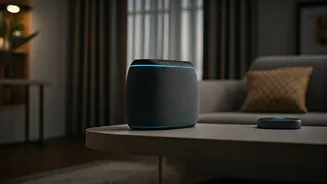
You can't talk about India's smart home boom without talking about voice assistants. Amazon's Alexa and Google Assistant have become the primary operating systems for the Indian smart home, far more so than in the U.S. Why? Because voice leapfrogs literacy and language barriers. In a country with 22 official languages and hundreds of dialects, typing on a small screen can be a hurdle. Speaking a command in “Hinglish” (a mix of Hindi and English) to an Echo Dot or a Google Nest Mini is far more intuitive. Smart lights are often the first, and cheapest, device people pair with these assistants. Asking Alexa to “turn on the living room light” is a simple, almost magical interaction that demonstrates the power of a connected ecosystem in a way that’s instantly understandable.
Solving for India's Infrastructure
While India's infrastructure has made incredible leaps, power fluctuations and outages are still a reality in many areas. Smart lighting offers an unexpected degree of control and efficiency. Many smart bulbs are LED-based, consuming significantly less power than the incandescent or CFL bulbs they replace, leading to tangible savings on electricity bills—a powerful motivator in any market. Furthermore, the ability to schedule lights to turn on or off, or control them remotely via a smartphone, provides a sense of security and management that resonates deeply. If you’re away on vacation, you can make it look like someone is home. If a power surge trips a breaker, you know exactly which lights are off. These aren't futuristic luxuries; they are practical solutions for everyday life.
Affordability Unlocks the Market
For years, smart home technology was the exclusive domain of the wealthy. A single Philips Hue bulb could cost as much as a mid-range smartphone. The game changed when both international and strong local players aggressively targeted the middle of the market. Brands like Xiaomi, and Indian giants like Wipro and Syska, introduced reliable, feature-rich smart bulbs at a fraction of the cost of their premium counterparts. Often priced under $10, a smart bulb is now an impulse buy or a popular gift. This aggressive pricing strategy transformed smart lighting from a niche gadget into a mass-market product, making it the most common and accessible entry point for millions of Indians curious about building a smart home.
The Gateway to a Connected World
Ultimately, the smart light bulb is a Trojan horse. It’s a low-cost, high-impact product that introduces consumers to the concept of an interconnected home ecosystem. Once a user gets comfortable telling Google to dim the lights, the next logical step is a smart plug for the coffee maker, a smart speaker in the bedroom, or a smart security camera for the front door. Companies like Amazon, Google, and their hardware partners know this. They aren't just selling light bulbs; they are vying for control of the home's next-generation operating system. By winning the lighting war in India, they are positioning themselves to dominate a market of over a billion consumers who are just beginning their smart home journey.