




Artemis: Not Your Grandfather’s Moonshot
The Apollo program of the 1960s was a magnificent, singular expression of American will—a Cold War sprint to beat the Soviets. The Artemis program, NASA’s 21st-century return to the Moon, is built on a different philosophy entirely. The goal isn’t just
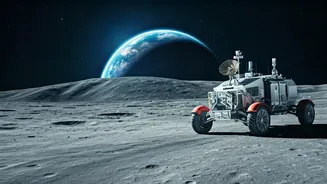
to plant a flag and come home; it’s to build a sustainable, long-term presence on and around the Moon, creating a stepping stone for eventual missions to Mars. This monumental task—building lunar habitats, mining resources, and conducting long-duration science—is too vast and expensive for any one nation to shoulder alone. Unlike the geopolitical solo act of Apollo, Artemis is designed from the ground up as a team sport, codified in the Artemis Accords, a set of principles signed by dozens of nations committed to cooperative space exploration.
A Seat at the Table (and in the Rocket)
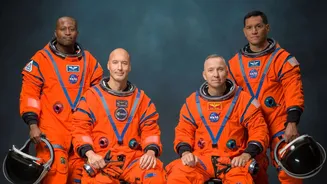
This collaborative approach isn’t just theoretical. Key international partners are contributing critical hardware in exchange for seats on future missions. The European Space Agency (ESA), for example, is building the European Service Module (ESM) for the Orion spacecraft—the capsule’s “engine room,” providing power, water, oxygen, and propulsion. Without it, Orion can’t fly. In return for this and other contributions to the Lunar Gateway space station, ESA has secured seats for its astronauts on future Artemis missions. While NASA has not yet announced the full four-person crew for the historic Artemis III landing mission, the agreements mean it is not a question of *if* an international partner will walk on the Moon, but *when*. And when that time comes, the candidate will likely fit a very specific mold.
The Astronaut Archetype: Samantha Cristoforetti
To understand the kind of astronaut who could join Americans on the Moon, look no further than Italy’s Samantha Cristoforetti. A fighter pilot, engineer, and polyglot (she speaks Italian, English, German, French, Russian, and is studying Chinese), Cristoforetti is a superstar of the ESA astronaut corps. She already holds the record for the longest single space flight by a European woman (199 days) and was the first European woman to command the International Space Station. Her call sign during her first mission was “AstroSamantha,” and she gained a massive public following by making the first TikTok from space and brewing the first espresso in orbit. Her technical prowess, operational experience, and proven ability to perform under pressure—not to mention her talent for public engagement—make her a perfect archetype for a lunar pioneer. An astronaut like Cristoforetti isn’t just a passenger; she’s a force multiplier.
More Than Just Good Diplomacy
Including an international astronaut on a lunar landing is more than a diplomatic handshake. It’s a strategic decision. These partners bring tangible assets: funding, technological innovation, and a diverse pool of scientific and engineering talent. When a European astronaut flies, they bring the full weight of the ESA’s scientific community and the political support of its member states with them. This diversifies the mission’s capabilities and ensures its longevity. If one nation’s political winds shift or its budget tightens, a broad international coalition provides the stability needed to see a multi-decade project like lunar settlement through to completion. It turns a national project into a global human endeavor, making it harder to abandon and easier to fund.