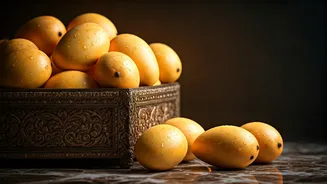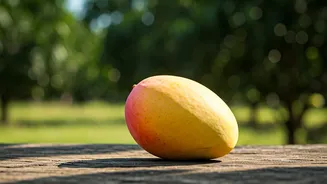




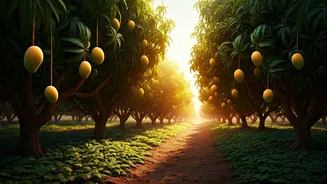
India's Legendary Mango Belt
Forget the handful of mango varieties you see at the average American grocery store. In India, the mango is a cultural touchstone, with hundreds of regional cultivars, each with its own history and passionate following. At the heart of this world lies
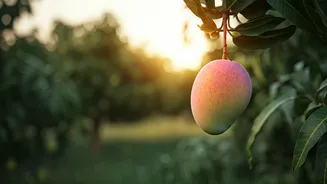
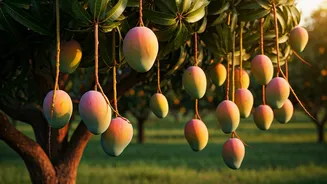
the Malihabad-Kakori belt, a lush stretch of land near Lucknow in the state of Uttar Pradesh. For centuries, this area has been synonymous with the legendary Dasheri mango, a fruit so prized it has earned a Geographical Indication (GI) tag, like Champagne in France or Parmesan in Italy. It’s not just a place; it's an epicenter of mango heritage, where the orchards are living museums, and the farmers are curators of a delicious tradition passed down through generations.
The Wisdom of Stress and Patience
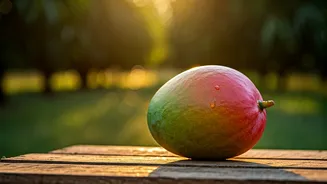
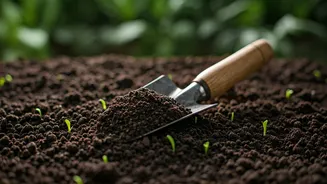
The phrase 'ancient secrets' might sound like marketing spin, but in Malihabad, it refers to a deep, intuitive understanding of the trees' life cycle—knowledge that often defies modern, high-yield agriculture. One of the key practices involves intentionally 'stressing' the trees. Weeks before the flowering season, farmers dramatically reduce or even stop irrigation. This controlled drought shocks the tree, shifting its energy from producing leaves to producing an abundance of flowers, which in turn leads to a more bountiful fruit set. It’s a counterintuitive method that requires immense patience and precise timing. After the fruit begins to form, a careful, calibrated watering schedule is resumed, ensuring each mango swells with the perfect balance of sugar and moisture. This is not about flooding the fields; it’s a nuanced dialogue between the farmer and the orchard, guided by the sun, the soil, and generations of observation.
An Artful Harvest
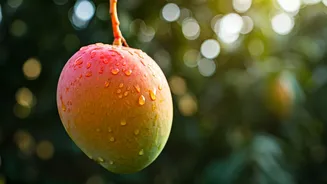
The quest for the 'most juicy' mango doesn’t end with cultivation. While industrial farms often harvest fruit hard and green for long-distance shipping, Malihabad’s traditionalists know that a truly exceptional mango must be picked at the precise moment of maturity. Harvesters, known as 'tappakars,' use long poles with nets to gently catch the fruit, preventing the bruising that occurs when mangoes fall to the ground. This delicate handling is crucial. Once picked, the mangoes aren't gassed with ethylene to force ripening. Instead, they undergo a slow, natural ripening process. They are carefully layered in crates, often with hay or specific leaves, and stored in ventilated rooms. This patient, low-tech method allows the fruit's complex starches to convert slowly into sugars, developing the deep, aromatic flavor and melt-in-your-mouth, non-fibrous texture that defines a world-class Dasheri mango.
A Legacy in Every Bite
This dedication to tradition is a legacy from the Nawabs, the lavish rulers of the Awadh kingdom who were renowned connoisseurs and patrons of horticulture during the 18th and 19th centuries. They established many of the first great mango orchards in the region, sponsoring competitions and rewarding farmers who could cultivate the most exquisite fruit. The famed 'mother tree' of the Dasheri mango, said to be over 200 years old, still stands in the village of Dasheri and is a testament to this history. For the farmers of Malihabad today, continuing these methods is about more than just business; it’s an act of cultural preservation. They are safeguarding a flavor profile and a piece of India’s history, ensuring that the taste cultivated for royalty can still be enjoyed centuries later.