




What Creates This Natural Light Show?
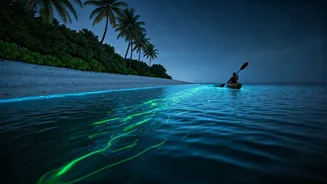
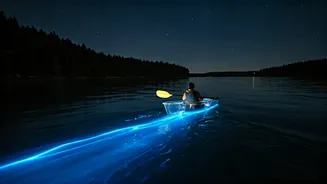
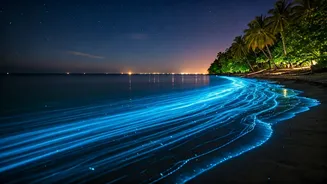
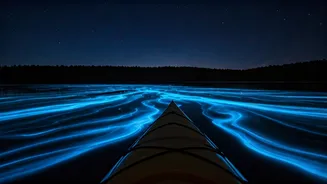
The ethereal blue-green glow you see in the water is created by living organisms. In most popular kayaking spots, the culprits are microscopic, single-celled creatures called dinoflagellates. When the water they live in is disturbed—by a paddle, a kayak hull,
or even a swimming fish—they emit a flash of light as a defense mechanism. It’s a chemical reaction inside the cell, a process known as bioluminescence. Think of it as millions of tiny, natural glow sticks that only light up when you move through them. The more dinoflagellates concentrated in the water, the brighter and more spectacular the show.
Why It's an Unforgettable Experience
A bioluminescence tour is more than just a novelty; it’s a deeply immersive and almost meditative experience. On a moonless night, far from city lights, the world is reduced to sound and touch until you disturb the water. The first time your paddle ignites a swirl of light, it feels like pure magic. Fish darting beneath you look like passing comets. The wake of your kayak becomes a glowing trail. There’s a profound sense of connection to a hidden, living world that is invisible during the day. It’s quiet, surreal, and reminds you that nature holds wonders that no screen can replicate. This is precisely why it’s not just an activity you do on vacation—it’s an event you build a vacation around.
Prime U.S. Spots for Glowing Waters
While this phenomenon occurs worldwide, the U.S. has several world-class destinations for seeing it. **Florida's Space Coast:** The Indian River Lagoon and Mosquito Lagoon are famous for their incredibly bright bioluminescence, especially during the warm summer months (June through October). The high concentration of dinoflagellates here creates one of the most reliable and brilliant displays in the country. **Puerto Rico:** The U.S. territory is home to three of the world’s five 'bio bays,' with Mosquito Bay on the island of Vieques being the brightest. A trip here is the holy grail for bioluminescence chasers. Laguna Grande in Fajardo is another excellent, more accessible option. **Tomales Bay, California:** Just north of San Francisco, this bay offers a more subdued but still beautiful experience, typically from spring to fall. The setting is rustic and wild, offering a different vibe from the tropical warmth of Florida or Puerto Rico. **San Juan Islands, Washington:** In the colder waters of the Pacific Northwest, a different organism—a tiny jellyfish-like creature—can create a sparkling 'milky seas' effect. It’s a different kind of glow, often appearing as shimmering green flecks in the water.
Timing Is Everything: Plan for Darkness
To get the full, jaw-dropping effect, you need two things: the right season and the right phase of the moon. The bioluminescence is strongest during the warmest months of the year, as the dinoflagellate populations boom in the heat. For most U.S. locations, this means planning your trip between May and October. Even more important is the moon. You want the darkest night sky possible to allow the faint glow to pop. The absolute best time to go is during the new moon, or the few days immediately before or after it. A bright full moon can wash out the effect almost completely. Most tour operators schedule their trips around the lunar calendar, so when you book, pay close attention to the moon phase for your chosen dates.
Tips for the Best Experience
First, book a guided tour. Experienced guides know the best spots, provide all the necessary safety gear, and can share fascinating details about the local ecosystem. Second, leave your phone behind or keep it in a waterproof bag. The light from the dinoflagellates is notoriously difficult to capture with a standard camera and the glow of your screen will ruin your night vision. This is an experience to be lived, not documented. Wear clothes and shoes you don’t mind getting wet, and consider bringing bug spray, especially in Florida. Finally, go with an open mind and a sense of wonder. The less you try to control the experience, the more magical it will be.