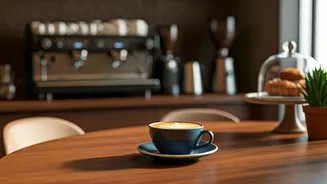









More Than Just a Cup of Coffee
When we talk about a "cafe-style morning" in India, it's about much more than switching from tea to coffee. It’s the adoption of an entire experience. This new routine involves lingering over a cappuccino or a flat white, often paired with a croissant
or avocado toast—foods that were, until recently, a rarity. The environment is key: air-conditioning, reliable Wi-Fi, minimalist decor, and a playlist of soft indie pop create a bubble of calm and productivity. It's a stark contrast to the traditional Indian breakfast, which is typically a quick, hearty, home-cooked meal like idli or parathas, consumed with family before a hectic day begins. The cafe offers a 'third space,' a neutral ground between the pressures of home and the office, where one can work, socialize, or simply be alone in public.
The Rise of the Specialty Bean
For generations, India was a nation of tea drinkers, with coffee largely confined to the southern states and a specific style of filter 'kaapi.' The new wave is different. It’s driven by a burgeoning specialty coffee scene. Homegrown chains like Blue Tokai, Third Wave Coffee Roasters, and Araku Coffee have become cultural beacons, educating a new generation of consumers about single-origin beans, roasting profiles, and brewing methods like pour-overs and cold brews. They operate alongside global giants like Starbucks, which has strategically partnered with Tata Group to expand its footprint. This isn't just a corporate push; it's a pull from a curious and increasingly affluent consumer base. These brands have successfully positioned coffee not just as a caffeine delivery system, but as an affordable luxury and a marker of modern, globalized taste.
Who Is Driving This Trend?
This shift is being led by a specific, influential demographic: urban millennials and Gen Z. With rising disposable incomes and exposure to global trends through travel and social media, they are the primary patrons of these new cafes. For young professionals and freelancers in cities like Mumbai, Delhi, and Bengaluru, cafes have become de facto co-working spaces. The reliable internet and power outlets are practical, but the atmosphere of quiet, collective focus is the real draw. Furthermore, cafes have become crucial social hubs, especially for young women seeking safe, respectable places to meet friends outside the family home. They offer a level of freedom and anonymity that is hard to find elsewhere, allowing for conversations and connections on their own terms.
A 'Soft' Revolution, Not a Replacement
The headline's term "soft habit" is apt. This trend isn't erasing the centuries-old tradition of chai; morning tea remains an integral part of life for the vast majority of India's 1.4 billion people. Rather, the cafe morning is an *additive* habit, a new option for a growing urban middle class. It exists in parallel to tradition. A young professional might grab a flat white for a morning work session on a Tuesday but still share a pot of masala chai with their family on a Sunday. This duality is a hallmark of modern India, where global aspirations and deep-rooted traditions constantly negotiate space. The cafe habit is 'soft' because it's a choice, not a mandate—a flexible ritual adopted for work, pleasure, or social connection, rather than a rigid daily necessity.
A Barometer of a Changing India
Ultimately, the rise of the cafe-style morning is a telling indicator of broader economic and social change. It reflects a country with a growing consumer class that values experience over mere consumption. It signals a shift in work culture, with the rise of the gig economy and remote work creating a need for flexible, professional-casual spaces. And it points to an evolution in social norms, where public life is becoming more individualized and diverse. Watching a cafe fill up on a weekday morning in Bengaluru or Gurugram is like watching a live data-visualization of India's economic growth and cultural transformation—one well-brewed cup at a time.